What’s Coming in 2026: Translation Tech Predictions
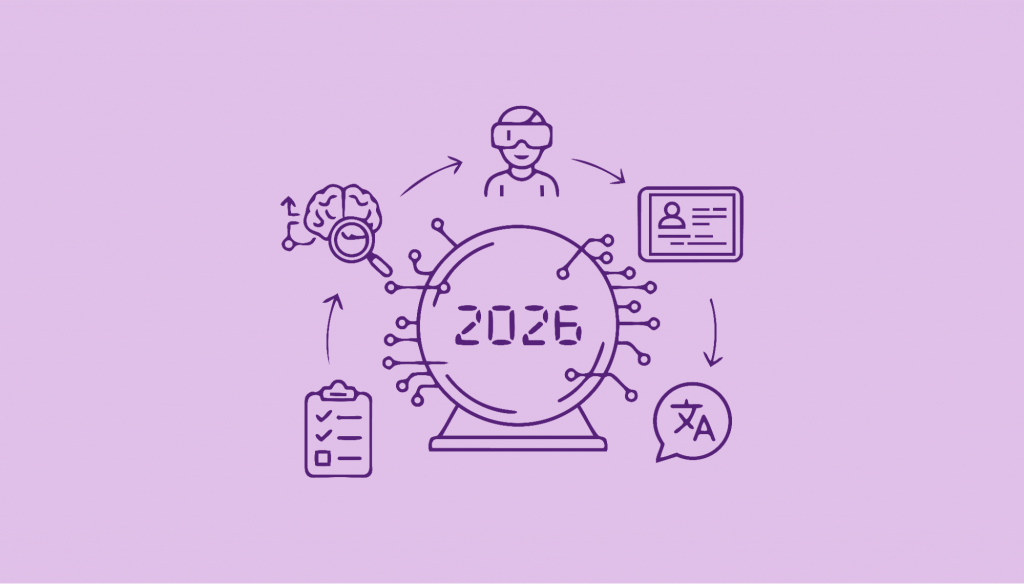
Prediction posts are usually garbage. They're either so vague as to be useless ("AI will be important!") or so specific that they're wrong within six months.
But we're heading into 2026, and translation technology is genuinely at an inflection point. Not because of hype, but because several trends that have been building for years are finally hitting practical, everyday reality.
Here are our predictions for translation technology in 2026. Not fantasies about what might happen in a decade. Actual trends that will impact how LSPs operate next year.
Some will make your life easier. Some will make it harder. All of them will require you to adapt.
Prediction #1: The LSP Tech Stack Will Consolidate
Right now, most agencies are running 5-8 different tools: a CAT tool, a TMS, accounting software, a CRM, communication tools, file storage, and whatever else got added over the years.
In 2026, this becomes unsustainable. The administrative overhead of managing multiple systems that don't talk to each other properly becomes too expensive.
What this means for LSPs:
All-in-one platforms will win. Not because they have every feature, but because the pain of integrating separate tools outweighs the benefit of best-of-breed individual solutions.
We're already seeing this at Awtomated, agencies choose integrated LSP management over cobbling together separate tools, even if the separate tools have slightly better features in isolation. The value is in everything working together seamlessly.
Expect more consolidation in 2026. Platforms that do project management + financials + client communication + translator management in one place will pull market share from fragmented toolsets.
How to prepare:
Audit your tech stack. How many different tools are you logging into daily? How much time do you spend moving data between them? How much are you paying in total subscriptions?
If the answer is "too many," start planning a migration to a more integrated platform. The cost of switching feels high, but the ongoing cost of fragmentation is higher.
Prediction #2: Client Portals Become Mandatory, Not Optional
Self-service client portals have existed for years, but adoption has been slow. Agencies worry clients won't use them. Clients are used to email.
In 2026, this flips. Clients will expect portal access the same way they expect to track packages from Amazon or check their bank balance online.
What this means for LSPs:
"Email us your files, and we'll send a quote" will feel as outdated as "fax us your request."
Clients will expect to:
- Submit projects through a portal
- Check project status in real-time
- Access completed deliverables immediately
- View invoices and payment history
- Download past translations
Agencies without self-service portals will lose to agencies that have them, especially for high-volume clients tired of email coordination.
How to prepare:
If you don't have a client portal yet, add it to your 2026 Q1 roadmap. If you have one but clients aren't using it, figure out why. Usually, it's because you're not actively pushing adoption; old habits persist unless you force the change.
Platforms like Awtomated include client portals as standard, making it easy for clients to self-serve without agencies building custom solutions. This will become table stakes.
Prediction #3: Quality Will Mean Speed + Accuracy, Not Just Accuracy
For decades, "quality" in translation meant accuracy and cultural appropriateness. Speed was separate.
In 2026, speed becomes part of the quality equation. A perfect translation delivered three days late is lower quality than a 95% accurate translation delivered on time that meets the actual business need.
This is already happening in tech, e-commerce, and media industries where content velocity matters. It accelerates in 2026.
What this means for LSPs:
Clients will push for faster turnarounds without sacrificing too much accuracy. "Good enough fast" beats "perfect slow" for many content types.
This requires different workflows. Traditional translate→edit→proofread cycles are too slow. You need MT + post-editing, or single-pass translation with AI-assisted QA, or hybrid models.
Agencies stuck in "we take 5 days for a 2,000-word translation because that's what quality requires" will lose to agencies delivering in 24 hours with 95% of the quality.
How to prepare:
Develop fast-turnaround workflows that don't compromise accuracy for content types where speed matters. Differentiate between content that needs perfection (legal, medical, marketing) and content that needs speed (internal docs, support articles, user-generated content).
Price accordingly. Fast should cost more, not less.
Prediction #4: Specialization Beats Generalization
The era of "we translate everything into any language" is ending.
Clients want translators who understand their specific industry, terminology, and context. Generic translation agencies can't compete with specialized ones, especially as AI handles the "basic translation" part.
In 2026, successful LSPs are the ones with clear specializations: legal translation for international contracts, medical translation for pharmaceutical companies, technical translation for software documentation, and marketing transcreation for e-commerce brands.
What this means for LSPs:
Trying to be everything to everyone becomes a losing strategy. Clients will choose specialists over generalists, even if specialists are more expensive.
This also means translator networks need to be curated. You can't have 500 translators across every subject. You need 30 excellent translators in your specific niche.
How to prepare:
Pick a specialization. If you're currently a generalist, look at your most profitable clients and identify the pattern. Double down there.
Build your marketing, positioning, and translator network around that specialization. "We're a translation agency" is not compelling. "We translate clinical trial documentation for pharmaceutical companies launching in Europe" is compelling.
Prediction #5: Translator Payment Speed Becomes a Competitive Advantage
Right now, most agencies pay translators net-30 or worse. Translators tolerate this because it's industry standard.
In 2026, agencies that pay fast (weekly, even daily) will poach the best translators from slow-paying agencies.
Payment platforms make this technically easy now, such as Wise and Payoneer, with instant transfer options. The barrier isn't technology; it's agency cash flow and systems.
What this means for LSPs:
Your best translators will have multiple agency options. They'll prioritize agencies that pay the fastest. If you're stuck in net-30 payment cycles while competitors offer weekly payments, you'll lose access to top talent.
How to prepare:
Figure out your cash flow. Can you pay translators before clients pay you? If not, you need better payment terms with clients, a financial buffer, or different project pricing.
Implement systems that make fast payments easy to manage. Using tools like Awtomated to track translator work and automatically calculate payments makes weekly payment cycles manageable instead of administrative nightmares.
Fast payment becomes a recruitment and retention tool.
Prediction #6: Compliance and Security Become Differentiators
Data privacy regulations are getting stricter globally. GDPR was just the beginning. More countries are implementing similar frameworks.
In 2026, clients, especially in regulated industries, will demand documentation of your data handling practices, translator NDAs, security protocols, and compliance certifications.
What this means for LSPs:
"We're careful with data" won't cut it. You'll need documented processes, signed NDAs on file, secure file transfer protocols, and potentially certifications like ISO 27001 for information security.
This creates a barrier to entry that benefits established agencies with proper systems and hurts small agencies operating casually.
How to prepare:
Audit your data practices now. How do you transfer files? How do you store client data? Do all your translators have signed NDAs? Can you prove compliance if audited?
Get your processes documented and tightened before clients start asking. This becomes a competitive advantage for agencies that take it seriously and a barrier for agencies that don't.
Prediction #7: The Freelance-Platform Model Disrupts Traditional LSPs
Platforms like Upwork, Fiverr, and translation-specific marketplaces aren't new. But in 2026, they'll get significantly better at handling complex projects, not just one-off gigs.
What this means for LSPs:
Clients will increasingly question why they need an agency intermediary when they can hire translators directly through platforms with built-in project management, payment processing, and dispute resolution.
Traditional LSPs that only provide "we find translators and manage projects" will struggle. That's increasingly commoditized.
The LSPs that survive offer genuine value platforms can't replicate: deep industry expertise, complex workflow management, quality assurance systems, strategic consultation, and relationship management.
How to prepare:
Clearly articulate what value you provide beyond "project management." If your value proposition is "we coordinate translators," you're competing with platforms. If it's "we ensure regulatory-compliant medical translation for FDA submissions," you're differentiated.
What Won't Change
Amid all this technology shift, some things stay constant:
Humans will still do translation. AI assists, but complex, nuanced, creative, and culturally sensitive content still requires human expertise.
Relationships will still matter. Technology improves efficiency, but client relationships are built on trust, reliability, and understanding of their business needs.
Quality will still differentiate. Fast and cheap options will exist. But clients with quality requirements will pay for agencies that consistently deliver.
Specialization will still win. Being excellent at one thing beats being mediocre at everything, regardless of technology.
The Bottom Line
2026 won't be a revolution. It'll be an acceleration of trends already in motion.
MT gets better but stops being exciting. Tools consolidate. Client expectations rise. Speed becomes part of quality. Specialization matters more. Compliance becomes mandatory. Platforms compete with traditional agencies.
The agencies that see these shifts coming and adapt will thrive. The ones that ignore them will struggle.
Technology is a tool. It enables better service, faster delivery, and more efficient operations. But it doesn't replace strategy, positioning, relationships, or expertise.
Use the technology to amplify what you're already good at. Don't use it as a substitute for figuring out what makes your agency valuable.
2026 is going to be interesting. Make sure you're ready for it.

Building software that helps small and medium-sized language service providers run their business.
About Rishi →