Boutique LSP: How a Specialized Partner and Affordable TBMS Can Supercharge Your Localization
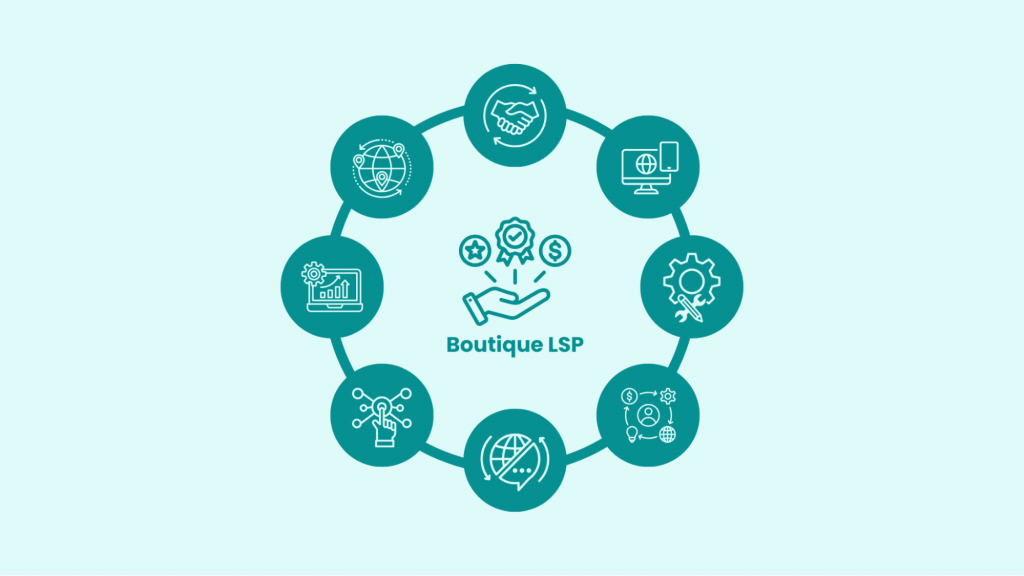
Answering the core question: What is a boutique LSP and why does it matter in 2026?
A boutique LSP is a smaller, highly specialized language service provider that focuses on specific industries, think SaaS, e-commerce, fintech, or legal, and tailors its workflows to match the unique demands of those verticals. Unlike large agencies that serve everyone from automotive manufacturers to pharmaceutical giants, a boutique LSP deliberately narrows its scope to deliver deeper expertise and faster responsiveness.
The difference between working with a niche LSP and a large generalist vendor comes down to structure and access. With an agency boutique model, you deal with fewer layers of management. Senior linguists and decision-makers are often directly involved in your project, which means faster answers, more relevant feedback, and processes that adapt to your needs rather than forcing you into a rigid template.
As of 2026, when AI-enabled CAT tools, machine translation, and Translation Business Management Systems have become standard expectations across the language industry, even smaller providers must operate with sophisticated infrastructure. This is where an affordable TBMS like Awtomated enters the picture. An LSP running on a modern system can match or exceed the operational efficiency of larger competitors while preserving the personalized attention that defines its value proposition.
Key benefits of working with a boutique LSP:
- Direct access to specialized translators and subject-matter experts
- Tailored workflows that match your development and release cycles
- Faster turnaround on decisions and project adjustments
- Consistent quality from a stable team familiar with your brand voice
Why affordable TBMS matters:
- Enables small teams to manage complex, multi-language projects without administrative overload
- Provides enterprise-level automation and reporting at a price point that fits boutique economics
- Supports growth without requiring proportional increases in headcount or overhead

From generalist vendor to boutique LSP: how the market is evolving
Between 2010 and 2015, the translation industry consolidated rapidly. Large multilingual vendors acquired smaller agencies, building massive rosters of freelance translators across dozens of language pairs. The promise was simple: one vendor to serve all your global needs, regardless of content type or industry.
But as companies began expanding into new markets with specialized products like SaaS platforms, fintech apps, life-science devices, they discovered that generalist vendors often struggled to deliver the domain expertise and workflow flexibility required. A company launching a compliance-heavy financial product in Germany needs more than translation; it needs cultural adaptation, regulatory awareness, and linguistic quality assurance from people who understand the target market inside out.
By 2020, the demand for niche expertise started reshaping the industry. Buyers in software, gaming, and regulated industries began gravitating toward niche LSPs that could adapt their localization process to agile sprints, continuous deployment pipelines, and specialized terminology. The shift moved the market from volume-driven, low-margin translation toward high-value, domain-specific language services.
Then vs. now:
- 2010–2015: Consolidation; large vendors promising global coverage; buyers prioritizing convenience over specialization
- 2016–2020: Growing frustration with generic processes; early adopters seeking specialized partners
- 2021–2025: Specialist LSPs gaining traction; affordable TBMS tools democratizing operational sophistication; buyers actively choosing smaller, more responsive providers
What exactly is a boutique LSP?
A boutique LSP is typically a team under 100 people. Often much smaller, that concentrates on a limited set of language pairs or industry verticals. Founders or senior staff remain directly involved in customer relationships and project execution, creating a fundamentally different dynamic than what you experience with enterprise-scale providers.
Core services commonly offered by niche LSPs include:
- Translation and localization for UI, documentation, and marketing
- Transcreation for campaigns requiring creative adaptation
- Linguistic quality assurance and in-country review coordination
- UX copy adaptation for digital products
- MT post-editing for high-volume, cost-sensitive content
- Interpretation for meetings and events
The typical tech stack for a modern boutique LSP includes CAT tools (like memoQ, Trados, or Phrase), translation memories, term bases, and connectors to client systems. At the center of operations sits a TBMS such as Awtomated TBMS, that handles the business side: CRM, quoting, project management, vendor coordination, invoicing, and reporting.
Comparing boutique vs. mid-sized vs. enterprise LSPs:
- Specialization: Boutiques focus on 1–3 verticals; mid-sized providers cover 5–10; enterprise LSPs serve nearly all industries
- Team: Boutiques offer direct access to senior linguists; mid-sized providers have account managers as intermediaries; enterprise LSPs layer multiple management tiers
- Communication speed: Boutiques respond in hours; larger providers often require days for decisions
- Tooling flexibility: Boutiques adapt their stack to client needs; larger providers typically require clients to use their standardized processes
- Pricing transparency: Boutiques often provide clear per-word or per-project rates; enterprise pricing frequently involves opaque volume tiers and hidden fees
The boutique LSP advantage for SaaS and digital products
Imagine a SaaS company preparing to launch in five new markets in Q2 2026. The product team is shipping updates weekly. Help articles change daily. Marketing needs landing pages localized before each regional launch. Traditional quarterly translation batches simply won’t work.
A specialist LSP built for this reality can plug directly into agile or continuous deployment workflows. Instead of waiting for massive content drops, they handle small, frequent tickets, sometimes dozens per week, without the administrative overhead that would cripple a less efficient operation.
Tangible advantages for SaaS buyers:
- Deep familiarity with subscription and in-app terminology: Boutique teams working primarily with SaaS clients develop native fluency in your product category’s language
- Consistent UX copy across touchpoints: The same linguists handle your website, product strings, help center, and email templates, ensuring voice consistency
- Experience with API-based flows: Modern small LSPs integrate directly with your repositories, content management systems, and design tools
- Automatic job creation: Operations powered by Awtomated TBMS can generate projects automatically when new content appears, eliminating manual handoffs
- Real-time dashboards for product managers: Project managers and stakeholders can watch progress without chasing status updates via email
- Instant quotes: Automated pricing matrices mean quotes arrive in minutes, not days
- Faster iteration cycles: When your team ships fast, your localization partner can match that pace
Affordable TBMS as the backbone of an LSP
A Translation Business Management System is more than just a project management tool. Unlike a TMS or CAT tool focused on the translation workflow itself, a TBMS handles the entire business operation: CRM and lead tracking, quote generation, project creation, vendor management, purchase orders, invoicing, and revenue reporting—all in one centralized platform.
For niche LSPs, affordability isn’t optional. These companies operate with tight margins and uneven cash flow. They can’t commit to multi-year enterprise contracts with six-figure license fees. They need systems that scale up and down quickly without requiring dedicated IT resources to maintain.
An affordable platform like Awtomated TBMS supports a boutique LSP by addressing the operational pain points that otherwise consume project managers’ time. Lost emails, missed deadlines, inconsistent quotes, manual spreadsheet tracking, and slow cash collection all disappear when the right system is in place.
Concrete TBMS capabilities especially relevant to boutiques:
- Centralized client, project, deadline, and file management
- Automated purchase orders and vendor invoices
- Automatic status notifications and overdue reminders
- Real-time translator capacity and performance tracking
- Integration with CAT and MT tools via API or connectors
- Quote generation from pricing matrices in minutes
- Profitability reporting by customer, language, and project type
- Customer portals for self-service status checks and file uploads

Key criteria: when should a buyer choose a boutique LSP?
Selecting the right language service provider is a strategic decision. The following framework helps localization managers, marketing leads, and product owners evaluate whether a boutique LSP, especially one backed by a modern TBMS, fits their needs.
1. Your volumes, languages, and industry focus
Boutique LSPs are ideal when your requirements fall within a manageable scope. If you’re targeting 2–20 languages, processing thousands to hundreds of thousands of words monthly (rather than billions), and operating in sectors like SaaS, fintech, med-tech, HR tech, or specialized B2B services, a boutique partner likely delivers better results than an enterprise vendor.
Start by mapping your current and 12-month forecast volumes. Export reports from your existing TMS or CMS to get accurate numbers. A boutique LSP running on Awtomated TBMS can show you capacity dashboards, historical throughput data, and language-pair performance metrics, reassuring evidence of their ability to handle your growth.
Good fits for boutique LSPs:
- 3–15 target languages with specialized terminology
- Monthly volumes between 10,000 and 500,000 words
- Content types requiring domain expertise (software UI, regulatory docs, technical support)
- Companies prioritizing relationship continuity over vendor anonymity
Borderline cases (evaluate carefully):
- 50+ languages requiring simultaneous coverage
- Extremely high volumes demanding 24/7 global teams
- Content requiring no specialization (commodity translations)
2. Your workflow: waterfall vs agile vs continuous localization
Understanding your development workflow determines which LSP model fits best.
- Waterfall: Major software releases every 6–12 months; large content batches; traditional project handoffs
- Agile: Sprints every 2–4 weeks; regular but predictable content drops; need for responsive turnaround
- Continuous: Daily or multiple releases per day; small, frequent updates; tight integration with CI/CD pipelines
Boutique LSPs running on Awtomated TBMS excel at agile and continuous flows. Automations, triggers, and integrations reduce overhead on small jobs that would otherwise accumulate administrative costs. The system creates jobs automatically, tracks status in real time, and eliminates the email chains that slow down high-frequency workflows.
Questions to ask potential boutique LSPs:
- “How do you handle dozens of small tickets per week without administrative overload?”
- “Which tools do you use to avoid minimum-fee creep on micro-tasks?”
- “Can you show me your TBMS dashboard and how it tracks continuous localization jobs?”
- “How quickly can you turn around a 500-word UI update?”
- “Do you integrate directly with GitHub, GitLab, or Figma?”
- “What’s your process for handling hotfix content with same-day turnaround?”
3. Technology stack and integrations
Tech compatibility matters as much as linguistic expertise. Modern SaaS companies need localization partners who connect seamlessly to their existing infrastructure: Figma for design files, GitHub or GitLab for repositories, Jira for issue tracking, HubSpot for marketing automation, WordPress for content management.
A TBMS sits at the center of this ecosystem. It receives jobs from content systems, routes files through CAT and MT tools, and returns localized content back to source platforms. The right boutique LSP should demonstrate working integrations, not just theoretical capabilities.
Integrations to look for in 2026:
- REST API access for custom automation
- Webhooks for real-time status updates
- Connectors to major CAT tools (memoQ, Trados, Phrase, Lokalise)
- MT engine integration (DeepL, Google Cloud Translation, custom models)
- Design tool connections (Figma, Sketch)
- Developer platform integrations (GitHub, GitLab, Bitbucket)
- Marketing platform connectors (HubSpot, Marketo, WordPress)
Ask for a live demo of the provider’s TBMS views. You should see their project board, client portal functionality, and reporting capabilities firsthand.
4. Quality, QA, and collaboration model
Boutique LSPs typically approach quality assurance through dedicated resources rather than anonymous reviewer pools. Look for providers that maintain dedicated language leads per key language pair, people who know your product, your terminology, and your brand voice intimately.
Strong quality practices include:
- Co-maintained style guides and term bases that evolve with your product
- Structured LQA (linguistic quality assurance) with defined error categories and severity levels
- UX testing for software flows to catch contextual issues human review alone might miss
- Regular feedback loops between your team and the LSP’s linguists
TBMS features reinforce these practices. Awtomated TBMS tracks error categories and severity, links issues to specific jobs, translators, and languages, and generates quality scorecards over time. This data transforms quality from a subjective impression into measurable performance.
QA practices to look for:
- Dedicated language leads per major language pair
- Terminology management with client-accessible term bases
- Defined error taxonomy (critical, major, minor categories)
- Regular quality scoring and trend analysis
- Clear escalation paths for disputed issues
- In-country review coordination when required
- UX validation for interactive content
5. Turnaround times, SLAs, and capacity
Boutique LSPs balance speed and quality through smaller, more consistent rosters. This creates a tradeoff: you get stable voices and deep product familiarity, but coverage may be limited outside standard business hours unless processes are well automated.
An affordable TBMS helps boutiques navigate this challenge. Real-time capacity visualization, accurate delivery forecasting, and automated SLA breach alerts keep projects on track even when team sizes are modest.
Realistic benchmarks to discuss with potential partners:
- 2,000–3,000 new-content words per linguist per day for standard translation
- 4,000–6,000 words per day for MTPE (machine translation post-editing)
- Faster rates possible for repetitive content with high TM leverage
- Slower rates for complex technical, legal, or creative content
How to write meaningful SLAs with a boutique LSP:
- Define turnaround by word count ranges and content complexity
- Specify how weekends, holidays, and emergency requests are handled
- Include quality metrics alongside delivery metrics
- Build in escalation procedures for capacity constraints
- Review SLA performance quarterly using TBMS reports
6. Pricing transparency and total cost of ownership
Boutique LSPs typically offer straightforward pricing models:
- Per-word or per-character rates for translation and localization
- Per-hour rates for UX copy, consultancy, and specialized QA
- Per-project minimum fees for micro-tasks that would otherwise be uneconomical
A TBMS enables precise quoting, margin control, and consolidated invoicing. This operational efficiency allows boutiques to stay affordable while maintaining profitability, a balance that benefits customers through competitive pricing and reliable service continuity.
When evaluating pricing, look beyond the per-word rate. Consider the total cost of ownership, including automation levels, reduction of internal admin for your team, and fewer defects requiring rework.
Questions to ask about pricing and value:
- “What’s your per-word rate by language and content type?”
- “How do you handle minimum fees for small jobs?”
- “Can you provide volume discount tiers for committed annual volumes?”
- “How does your TBMS generate quotes and track project profitability?”
- “What’s included in the base rate vs. charged separately (PM, QA, DTP)?”
- “How do you invoice, and what payment terms do you offer?”
Building a boutique LSP on Awtomated TBMS: internal maturity and productivity
If you’re running, or planning to build, a boutique LSP, operational infrastructure determines your ability to compete effectively against larger players while preserving the personalized service that defines your value.
Awtomated TBMS supports the complete boutique LSP lifecycle. The journey typically flows as follows:
Lead capture and CRM: Track prospective clients from first contact through active engagement. Log communications, store key contacts, and maintain visibility into your sales pipeline.
Pricing matrices and quote generation: Define rates by language pair, content type, and service level. Generate quotes in minutes instead of hours by pulling from standardized pricing with customer-specific adjustments.
Project creation and job assignment: Create job-works from quotes with a few clicks. Assign jobs to qualified linguists based on availability, specialization, and workload. Set deadlines that automatically cascade through the workflow.
Purchase orders and vendor payables: Generate POs for translators. Track amounts owed, payment status, and vendor profitability. Maintain healthy vendor relationships through timely, accurate payments.
Client invoicing and revenue reporting: Convert completed projects to invoices. Track payment status and chase overdue accounts. Analyze revenue by customer, language, and content type.
Automations multiply the impact of this arrangement. Job creation triggers from API calls or email parsing. Status notifications flow automatically to clients and vendors. Overdue reminders protect SLAs without requiring manual monitoring. Project managers focus on strategy, customer relationships, and quality oversight instead of administrative tasks.
Metrics to track with your TBMS:
- Per-client profitability
- Per-language margins
- Average turnaround per job type
- On-time delivery rate
- Quote-to-project conversion rate
- Days sales outstanding (cash collection speed)
Minimum viable TBMS setup:
- Customer database with contact information
- Basic pricing matrix
- Project tracking with status updates
- Invoice generation
- Vendor payment tracking
Advanced setup:
- Automated job creation from integrations
- Client portal for self-service access
- Quality scoring and error tracking
- Capacity planning and forecasting
- Profitability dashboards by segment
Case-style example: a boutique SaaS LSP scaling with an affordable TBMS
Consider a boutique LSP founded in 2018, specializing in B2B SaaS localization. The company started with a founder who had deep experience in software localization and a network of trusted partner linguists across European and Asian markets.
Pre-TBMS state:
- Project tracking lived in a sprawling spreadsheet with multiple tabs per client
- Quotes were created manually in Word, requiring 30–60 minutes each
- Invoices were generated monthly in PDF, then tracked in a separate spreadsheet
- Communication fragmented across email, Slack, and WhatsApp with different vendors
- No visibility into true profitability by customer or language pair
- Missed deadlines discovered reactively, often after customer complaints
- Cash collection averaged 45–60 days due to manual invoice follow-up
After adopting Awtomated TBMS:
The transition takes approximately six weeks, including data migration, team training, and process refinement.
- Quote creation time dropped from 45 minutes to under 10 minutes
- Project managers reported 30–40% reduction in administrative tasks
- On-time delivery improved from 82% to 94% within six months
- Days sales outstanding decreased from 52 to 31 days
- Client profitability became visible for the first time, revealing that two accounts were consistently unprofitable
- Vendor relationships improved through consistent, on-time PO generation
- The team scaled from 3 to 5 people without proportional increase in admin overhead
The boutique LSP now serves 28 active clients across 14 language pairs, with monthly throughput exceeding 400,000 words. The company competes effectively with larger agencies by delivering faster turnaround, deeper product familiarity, and transparent communication, all enabled by the operational backbone of an affordable TBMS.

How to get started: steps for buyers and boutique LSPs
For buyers considering a boutique LSP
Your path to finding the right specialized partner involves five key steps:
- Map your languages, content types, and volumes. Export data from your existing systems. Understand what you’re translating, how much, and how frequently.
- Define your desired workflows and tools. Document whether you operate on waterfall, agile, or continuous cycles. List the platforms you need integrations with.
- Shortlist boutique LSPs with strong domain alignment. Research providers specializing in your industry. Look for case studies, customer lists, and team expertise that match your needs.
- Request demos of their tech stack. Ask to see their TBMS views, not just their CAT tool interface. Watch how they create quotes, track projects, and report on quality.
- Run a 2–3 month pilot with clear KPIs. Define success metrics upfront: turnaround time, quality scores, communication responsiveness, and total cost. Evaluate before committing long-term.
For boutique LSPs seeking an affordable TBMS
Building operational maturity starts with honest assessment:
- Audit your current processes and admin time. Track how many hours per week go to spreadsheet management, manual invoicing, and email coordination. Quantify the problem.
- Select an affordable TBMS like Awtomated TBMS. Evaluate based on features relevant to boutique operations, pricing that fits your scale, and integration capabilities with your existing CAT tools.
- Migrate clients and vendors in phases. Start with new projects and gradually move historical data. Train your team incrementally rather than attempting a big-bang transition.
- Build basic automations first. Focus on high-impact, low-complexity automations: quote generation, status notifications, invoice creation. Add sophisticated workflows later.
- Review profitability and SLA performance after 3–6 months. Use your TBMS data to identify unprofitable clients, underperforming language pairs, and process bottlenecks. Adjust your business accordingly.
The combination of boutique expertise and affordable TBMS infrastructure creates a path for sustainable growth through 2026 and beyond. Clients get the personalized attention and domain specialization they increasingly demand. Boutique LSPs gain the operational efficiency needed to compete on both quality and price.
Whether you’re a localization buyer navigating the choice between generalist vendors and specialized partners, or a boutique LSP owner seeking the tools to scale without sacrificing what makes you valuable, the reality is clear: modern localization success requires both specialized expertise and operational infrastructure working together.
The future belongs to boutique LSPs that invest in the systems enabling them to deliver multilingual content efficiently, maintain localized content quality at scale, and serve as a trusted partner rather than a commoditized vendor. An affordable TBMS like Awtomated makes that future accessible today.
Table of Contents
- Answering the core question: What is a boutique LSP and why does it matter in 2026?
- From generalist vendor to boutique LSP: how the market is evolving
- What exactly is a boutique LSP?
- The boutique LSP advantage for SaaS and digital products
- Affordable TBMS as the backbone of an LSP
- Key criteria: when should a buyer choose a boutique LSP?
- Building a boutique LSP on Awtomated TBMS: internal maturity and productivity
- Case-style example: a boutique SaaS LSP scaling with an affordable TBMS
- How to get started: steps for buyers and boutique LSPs
Ready to manage your Translation company easily?
Get Started for Free