Translation Business Management System: Awtomated for Modern LSPs

Running a translation company without a proper business management system is like trying to excavate tunnels without a tunnel boring machine, technically possible, but painfully slow and prone to collapse.
If you’ve ever lost track of a project deadline buried in email threads, spent hours reconciling vendor payments in spreadsheets, or watched a client walk because you couldn’t produce a quote fast enough, you already know the problem. The translation industry has evolved, but many LSPs still manage their daily operations with tools that weren’t built for the job.
This guide breaks down what a Translation Business Management System actually does, why it’s become essential for modern language service providers, and how platforms like Awtomated are reshaping how translation companies operate.
What is a Translation Business Management System (TBMS)?
Think of a TBMS as the operating system for your translation business. It’s the central software layer that connects everything-projects, clients, vendors, pricing, invoicing, and reporting into one platform where your entire team can work.
Translation Business Management System (TBMS): A specialized software platform designed to manage the business operations of translation companies and LSPs, including project workflows, vendor relationships, client management, quoting, invoicing, and financial reporting.
Here’s what makes a TBMS different from other solutions in the market:
A TBMS handles the business side of running a translation company. It manages quotes, purchase orders, invoices, vendor capacity, client relationships, and financial analytics. A Translation Management System (TMS), on the other hand, focuses on the linguistic production work-CAT tools, translation editors, translation memory, terminology databases, and quality assurance at the segment level.
| Feature Area | TBMS | TMS |
| Project quotes and estimates | ✓ | - |
| Client invoicing | ✓ | - |
| Vendor payments and POs | ✓ | - |
| CRM and client management | ✓ | - |
| Financial reporting | ✓ | - |
| Translation editor | - | ✓ |
| Translation memory | - | ✓ |
| Terminology management | - | ✓ |
| Linguistic QA | - | ✓ |
As of 2024, the market includes over 40 TBMS products according to the Nimdzi TBMS Navigator. However, only a handful of these platforms were built natively with AI and automation at their core.
Awtomated represents this new generation of TBMS platforms. It’s designed specifically for translation companies and LSPs, with a focus on automation, seamless integrations, and pay-for-what-you-use pricing that lets you scale features as your business needs grow.
Why LSPs Need a TBMS Today
If your translation business still runs on spreadsheets, email chains, and manual invoicing, you’re not alone-but you’re increasingly at a disadvantage.
Consider the daily operations of a mid-size LSP managing 200+ projects per month, coordinating 300+ vendors, and serving 50+ active clients. Without a centralized system, every status check requires digging through inboxes. Every vendor payment involves cross-referencing multiple spreadsheets. Every client quote means copying data between tools and hoping nothing breaks.
The inefficiencies add up fast. Industry discussions suggest that project managers typically waste 10-20% of their time on manual status updates and data entry that a proper system would automate. That’s hours every week that could go toward actual project work or client relationships.
Client expectations have also shifted dramatically since 2020. Translation companies now face requests for:
- More languages per project (10, 20, sometimes 50+)
- Faster turnaround times with real-time status visibility
- Transparent pricing and instant quotes
- Seamless handoffs without endless follow ups
Add regulatory pressure to the mix GDPR compliance, SOC2 expectations from enterprise clients, data privacy requirements-and email-based workflows become genuinely risky. Sensitive project data scattered across personal inboxes and local spreadsheets creates liability that proper business management software eliminates.
Key problems a TBMS solves:
- Time lost to manual data entry and status tracking
- Errors from copying information between disconnected tools
- Cash-flow friction from delayed invoicing and payment reconciliation
- Missed deadlines due to poor visibility across unfinished projects
- Security risks from uncontrolled data access
Awtomated: AI-Powered Translation Business Management System
Awtomated is an AI-powered translation business management system built specifically for translation companies and LSPs not generic agencies or other industries.
The translation project management tools brings project management, vendor management, CRM, pricing, invoicing, payments, and business analytics together in one system. Everything your business needs to operate lives in a single, intuitive platform.
The numbers tell the adoption story:
- 500+ active users
- 20+ translation companies using Awtomated
- 64M+ words processed through the platform
- 100,000+ hours saved via automation
What sets Awtomated apart is how AI supports your daily operations:
- Automated job creation from client requests
- Smart vendor suggestions based on skills, rates, and availability
- Automatic quote generation from price lists and word counts
- Predictive workload estimates based on historical data
The pricing philosophy matters too. Awtomated uses a pay-for-what-you-use model, letting small LSPs start lean with core features and add modules as their specific needs evolve. You’re not locked into enterprise pricing before you need enterprise functionality.
End-to-End Project Management tool for Translation Companies
Awtomated manages the entire project lifecycle from first client request to final invoice-all inside one system.
Here’s what that looks like in practice:
Request → Quote → Order → Job Assignment → Delivery → Client Approval → Invoicing
For a multi-language website localization project, the workflow might unfold like this:
- Client submits files via email, portal, or integrated form
- System automatically calculates word counts and generates a quote based on your rate cards
- Client approves, and the project converts to an active order
- Awtomated splits the work into jobs (translation, editing, DTP, review) across language pairs
- Vendors receive automated job offers and accept directly in the system
- Project managers track progress in a single dashboard
- Completed work gets delivered to the client
- Approved projects trigger automatic invoice generation
For urgent legal document translation projects, the process compresses but stays structured. Deadlines propagate automatically. Notifications fire when tasks run overdue. Nothing falls through the cracks.
What you can do inside Awtomated:
- Create projects from emails, client portals, or integrated submission forms
- Split projects into jobs and tasks (translation, editing, DTP, review)
- Define deadlines, service types, and language combinations clearly
- Track project status in real-time instead of chasing updates via email
- Automate job creation using templates and repeatable workflows
- Auto-calculate word-count-based prices from configured rate cards
- Trigger automatic notifications for due and overdue tasks
LSPs handling 300+ translation projects per month can typically reduce manual updates by several hours per PM per week using automated workflows in a TBMS like Awtomated.
Task Assignment and Workflow Automation
When a client project lands, project managers need to break it into manageable pieces. A 50,000-word technical manual going into 8 languages isn’t one task-it’s potentially dozens of separate jobs across translators, editors, and DTP specialists.
Awtomated handles this automatically:
- Split projects into jobs by language pair and service type (EN>DE translation, EN>FR editing, DTP, QA)
- Access vendor profiles showing skills, language pairs, subject matter expertise, availability, and rates
- Receive system-suggested best-fit vendors based on historical performance and current capacity
- Send job offers automatically without writing individual emails
- Trigger confirmations and reminders through the system
Example: For that 50,000-word technical manual, Awtomated auto-splits tasks across 8 language pairs, assigns jobs to best-matching vendors based on rate cards and deadline fit, and tracks every status change-offered, accepted, in progress, delivered in real time.
Project managers and management see current status without asking. Vendors work without confusion. The translation project management handles the coordination that used to consume hours of manual effort.
Vendor Management for Translators, Editors, and Agencies
Vendor management becomes critical when you’re coordinating 50, 500, or 5,000 linguists worldwide. Spreadsheet-based vendor databases break down fast at scale.
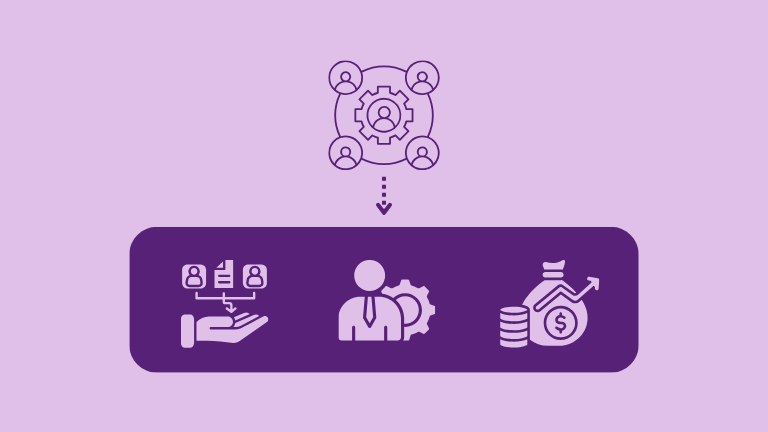
Awtomated structures vendor operations so nothing gets lost:
- Onboarding: Collect contact data, NDAs, rate cards, language pairs, services (translation, editing, MTPE), and specialization fields (legal, life sciences, games)
- Vendor portal: Vendors log in to accept jobs, upload deliverables, view POs, and track their payments
- Rate management: Configure vendor rates per client, language pair, and service type for accurate cost calculations
- Payables: Automatically calculate what you owe each vendor per project or job
- Performance tracking: Monitor on-time delivery rates, translation quality scores, and feedback history
A 200-vendor database becomes manageable when every linguist has a structured profile, clear rate cards, and a portal for self-service access to their assignments and payment status.
Streamlining Vendor Operations and Payments
End-of-month vendor payments can consume days of manual work-consolidating completed jobs, matching rates, generating statements, reconciling with accounting.
Awtomated automates the heavy lifting:
- Group completed jobs by vendor automatically
- Calculate payment totals based on agreed rates
- Generate vendor POs or payment files ready for processing
- Export data to accounting tools like QuickBooks or Xero
- Support batch payments through integrated payment providers
Practical impact: What used to take 1-2 days of manual spreadsheet work at month-end becomes a few clicks.
Vendors gain transparency too. They can see approved amounts, pending jobs, and payment timelines directly in the portal. This visibility reduces support emails and builds trust with your resources across the translator community.
Customer Relationship Management (CRM) for LSPs
Translation companies have CRM needs that generic sales tools don’t address. You’re not just tracking prospects you’re managing RFPs, negotiating language-pair-specific rates, storing client instructions, and maintaining relationships that span years of project history.
Awtomated’s CRM capabilities include:
- Client profiles with contacts, pricing agreements, SLAs, and preferred language combinations
- Quote and estimate management with templates and tracking
- Full interaction history from first contact through ongoing projects
- Sales and production data in one place (promises made during sales automatically reflect in project configurations)
- Pipeline visibility for forecasting and capacity planning
Use case: An account manager preparing for a quarterly review with a long-term client can pull up every project since 2019, see revenue trends, identify most-requested language pairs, and spot opportunities to propose additional services-all from the same interface where new projects get created.
From Lead to Long-Term Client
The journey from initial inquiry to recurring revenue follows a clear path in Awtomated:
Capture → Qualify → Quote → Convert → Manage → Grow
Consider a SaaS company that starts with 10 languages in 2022. Through consistent service and relationship management, they expand to 30+ languages by 2025-all through your LSP. Awtomated keeps the entire history:
- Rate cards per region and language
- Reference files and style guides
- Brand glossaries (linked via integrations with your CAT/TMS tools)
- Billing preferences and payment terms
- Contact changes and organizational shifts
This data supports more than account management. CRM information feeds forecasting: expected monthly revenue from your top 20 clients, pipeline visibility against current capacity, and early warnings when key accounts show declining volume.
Finance Management and Business Reporting
A TBMS becomes the financial backbone for translation companies by unifying what you’re owed, what you owe, and what you’re actually earning.
Client invoicing flow:
- Approved projects trigger automatic invoice generation
- Multi-currency support handles international clients
- Tax rules (VAT in EU, for example) apply automatically based on client location
- Export to accounting systems eliminates double-entry
Vendor payment flow:
- Payable amounts link directly to completed and approved jobs
- Scheduled payment runs keep cash flow predictable
- Reconciliation with bank statements closes the loop
Profitability analytics:
- Margin per project visible in real-time
- Client profitability tracking identifies your most (and least) valuable relationships
- Language pair analysis shows where you make money and where you don’t
| Metric | Visibility |
| Revenue by Client | Dashboard + export |
| Margin by Project | Real-time per project |
| Margin by service type | Translation vs MTPE vs DTP |
| Outstanding receivables | Aging report |
| Vendor payables | Monthly summary |
Key Metrics for Translation Business Owners
The right TBMS surfaces the numbers that matter without requiring spreadsheet exports and manual calculations.
KPIs available in Awtomated dashboards:
- Revenue per client (monthly, quarterly, annually)
- Gross margin per project and per client
- Average payment terms and collection speed
- DSO (Days Sales Outstanding) for cash flow management
- Vendor on-time payment rate and pending payables
Example: An LSP owner notices that projects for a specific client consistently show 15-20% lower margins than average. Digging into the data reveals that the language pairs involved require premium vendor rates that the current client pricing doesn’t cover. Armed with this insight from the system, the owner renegotiates rates-or adjusts vendor assignments to protect profitability.
Real-time visibility into margin by language pair (EN>DE versus EN>JA, for instance) directly informs pricing strategy and vendor sourcing decisions.
Benefits of a Translation Business Management System for Your LSP
The core benefits come down to time, accuracy, and control. A TBMS like Awtomated delivers measurable improvements across your business:
Automation of repetitive tasks:
- Quotes generated from templates and word counts
- POs created automatically when jobs are assigned
- Notifications triggered without manual email writing
- Invoices produced when projects complete
Centralized data:
- Client information in one place, not scattered across inboxes
- Vendor profiles accessible to everyone who needs them
- Project history searchable and reportable
- No more “where’s that file?” conversations
Improved collaboration:
- Project managers, sales, finance, and vendors work from the same data
- Status updates visible in real-time
- Handoffs happen in the system, not through forwarded emails
- The entire team stays aligned without constant check-ins
Higher quality and consistency:
- Structured workflows reduce missed steps
- Templates enforce standards
- Performance tracking identifies quality issues early
- Client instructions persist across projects
Scalability:
- Systemized processes support growth
- Adding projects doesn’t require adding proportional headcount
- New team members onboard faster with clear workflows
AI amplifies these benefits through automatic suggestions, smart defaults, and predictive workload estimates. The 100,000+ hours saved by Awtomated users translates to multiple full-time employees worth of capacity-redirected from admin work to actual translation business operations.

Data Security, Integrations, and Flexibility
Your data in Awtomated is accessible only to your company and authorized employees. Modern LSPs need this assurance, especially when handling sensitive client content.
Security and access control:
- Role-based access ensures users see only what they need
- Audit trails track changes to financial and project data
- Data residency options address regional compliance requirements
Key integrations for LSPs:
- Email (Gmail, Outlook) for communication tracking
- CAT/TMS tools for linguistic production handoffs
- Cloud storage for file management
- Accounting software (QuickBooks, Xero) for financial sync
Flexible configuration:
- Custom fields for clients and projects capture your specific needs
- Configurable workflows per service line (legal vs marketing translation)
- Modular features that activate as your business grows
Awtomated focuses on being the central business layer-connecting to specialized linguistic tools rather than trying to replace them. Your translators keep using their preferred CAT tools. Your accountant keeps using their preferred accounting software. Awtomated orchestrates the business in between.
Choosing the Right TBMS for Your Translation Business
Selecting a TBMS is a significant decision. Here’s a practical approach to getting it right:
Step 1: Define your requirements
- What are your biggest operational pain points?
- Which workflows consume the most PM time?
- What financial visibility do you lack today?
Step 2: Shortlist 3-5 TBMS options
- Search the market, reference the Nimdzi TBMS Navigator
- Focus on platforms built for translation companies, not generic solutions
Step 3: Evaluate based on concrete criteria
- Ease of use for project managers
- Vendor portal quality and functionality
- CRM depth for client relationship tracking
- Financial module robustness (invoicing, payables, reporting)
- Integration options with your existing tools
Step 4: Check for hidden costs
- Implementation and onboarding fees
- Training requirements
- Mandatory modules you don’t need
- Contrast with Awtomated’s pay-for-what-you-use pricing
Step 5: Run a real pilot
- 2-4 weeks with actual clients and vendors
- Use real translation projects, not demo data
- Involve PMs, vendor managers, and finance in the evaluation
Step 6: Consider long-term scalability
- Can the system grow from boutique LSP to multi-office operation?
- Does pricing scale reasonably with volume?
- Is the development roadmap aligned with industry direction?
How Awtomated Transforms Daily Operations
Adopting Awtomated changes how every role in your translation company experiences their workday. The scattered tools and manual processes that defined life before get replaced by structured, automated workflows.
For Project Managers:
- Manage all projects from a single dashboard
- Stop chasing status updates via email
- Focus on quality and client relationships instead of data entry
For Vendor Managers:
- Access structured vendor profiles with performance data
- Make assignment decisions based on history, not guesswork
- Handle onboarding and rate negotiations in one place
For Finance Teams:
- Close the month faster with automated invoices and vendor statements
- Track receivables and payables without spreadsheet reconciliation
- Report on profitability by any dimension (client, project, language pair)
For Owners:
- Get real-time visibility on revenue, margin, and workload
- Make decisions based on data, not gut feel
- Scale operations without proportional overhead growth
Before and after example: A 15-person LSP implemented Awtomated and reduced admin time per project by 30-40% within the first 3-6 months. PMs who spent hours on status tracking and manual updates redirected that time to client communication and quality control.
The scale data reinforces this transformation: 5,000+ active users, 640M+ words processed, 200+ clients trusting Awtomated for their translation business operations.
Next Steps: Evaluate Awtomated for Your LSP
If managing your translation business has started to feel like it’s managing you, it’s time to look at what a purpose-built TBMS can do.
Awtomated offers guided demos where your actual scenarios-not generic examples-get walked through. You’ll see how your specific workflows would work inside the platform.
To get the most from an evaluation:
- Invite both operations (PM, vendor management) and finance stakeholders to see end-to-end coverage
- Prepare 2-3 recent projects as test cases: a multi-language marketing campaign, a regulated-document translation job, or whatever represents your typical work
- Come with questions about your biggest pain points and watch how the system addresses them
Implementation doesn’t take months. Typical onboarding runs days to weeks, with support resources available throughout. You don’t need a dedicated IT team or a six-month project plan to get started.
The translation industry keeps evolving more languages, faster timelines, higher client expectations. The right business management system gives you the efficiency and control to keep up. Awtomated was built to be that system for modern LSPs.
Ready to see it in action? Schedule a demo and bring your toughest project scenarios along.
Ready to manage your Translation company easily?
Get Started for Free