How to Build a Translator Vendor Database That Actually Works: A Complete Guide
Key Takeaways
- A translator vendor database is a structured, searchable list of vetted freelance translators and LSPs you can reuse across projects, replacing scattered email threads and marketplace searches.
- Building a working database starts with clear requirements: languages, domains, tools, price ranges, availability, and quality criteria tailored to your business needs.
- Rigorous vetting through paid tests, reference checks, and sample job reviews is critical to avoid unreliable vendors entering your approved pool.
- Ongoing maintenance with feedback loops, performance metrics, and periodic cleanup is what keeps the database useful beyond the first year.
- Categorizing vendors into tiers (Preferred, Approved, Trial, Blocked) enables project managers to make fast, confident assignment decisions under real deadlines.
What Is a Translator Vendor Database (and Why You Need One Now)
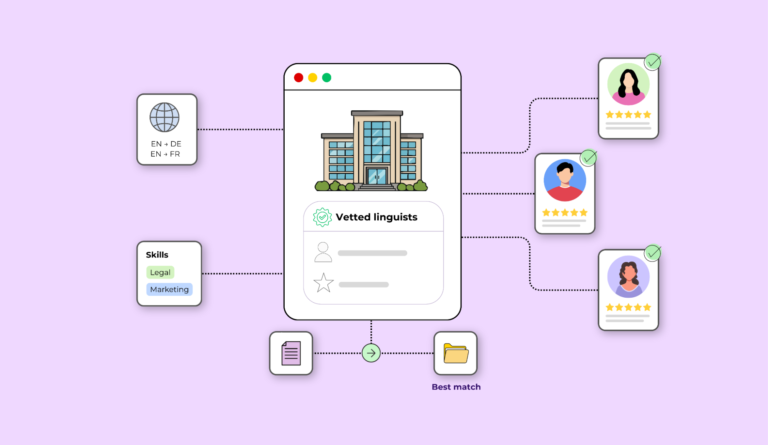
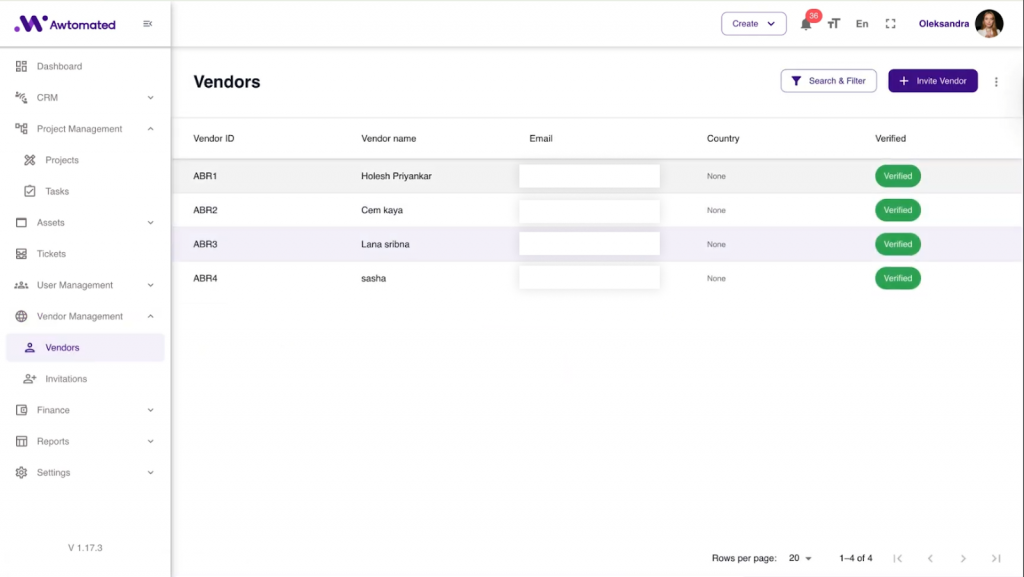
A translator vendor database is a centralized repository containing structured information about all your translators, interpreters, and translation companies. Unlike a basic contact list, it includes searchable data on skills, rates, tools, availability, and performance history.
This database replaces the chaos of ad-hoc searches across marketplaces, endless email threads, and fragmented spreadsheets by giving project managers a single source of truth. When a new localization project lands, you no longer need to spend days hunting for resources. Instead, you filter your database, identify qualified translation vendors, and assign work within minutes.
Even small teams benefit from having a basic database from day one. A SaaS startup localizing into 5–10 languages in 2024–2025 will quickly discover that memory and informal notes fail as volume grows. Without structure, you waste time repeatedly sourcing translators, risk inconsistent quality across projects, and lose visibility into performance trends.
The distinction between a simple contact list and a robust operational database matters. A contact list stores names and emails. An operational database stores searchable fields, project history, quality metrics, and compliance records. It becomes an asset you can filter by language pair, specialization, rate range, and availability.
Your database should also remain independent of any single agency or platform. Vendors recorded in your system can be reused across tools and projects, giving you flexibility as your technology stack evolves.
Step 1: Define the Scope and Purpose of Your Vendor Database
The database must be designed around actual business needs, not just a generic template copied from the internet. Before you create a single field, answer the foundational questions that shape everything else.
Start by identifying which languages you need to support over the next 12–24 months. Are you focused on European markets (EN>DE, EN>FR, EN>ES) or expanding into APAC (EN>JA, EN>KO, EN>ZH)? Each target language requires dedicated vendor coverage.
Next, define which content types your translation team will handle:
- UI strings and software localization
- Marketing copy and creative content
- Legal contracts and compliance documents
- Technical manuals and product documentation
Different content types require different expertise. A translator excellent at marketing copy may struggle with legal contracts, and vice versa.
Decide whether your database will hold only freelancers, only translation agencies, or a mix of both. Smaller companies often start with freelancers for cost efficiency and flexibility. Larger enterprises may prefer agencies for scalability and process consistency. Many organizations maintain both options to handle different project types.
Agree internally on minimum quality standards before you start sourcing. Common baseline requirements include:
- Native speakers of the target language
- 3+ years of professional translation experience
- Proficiency in CAT tools (memoQ, Trados, Phrase)
- Adherence to TEP (Translation, Editing, Proofreading) workflows
Scope decisions directly affect what data fields you track. If you need interpreters for events, you’ll add fields for modality (remote vs. onsite) and equipment requirements. If you only need written translation, you can skip those entirely.
Step 2: Decide What to Track – Essential Fields and Structure
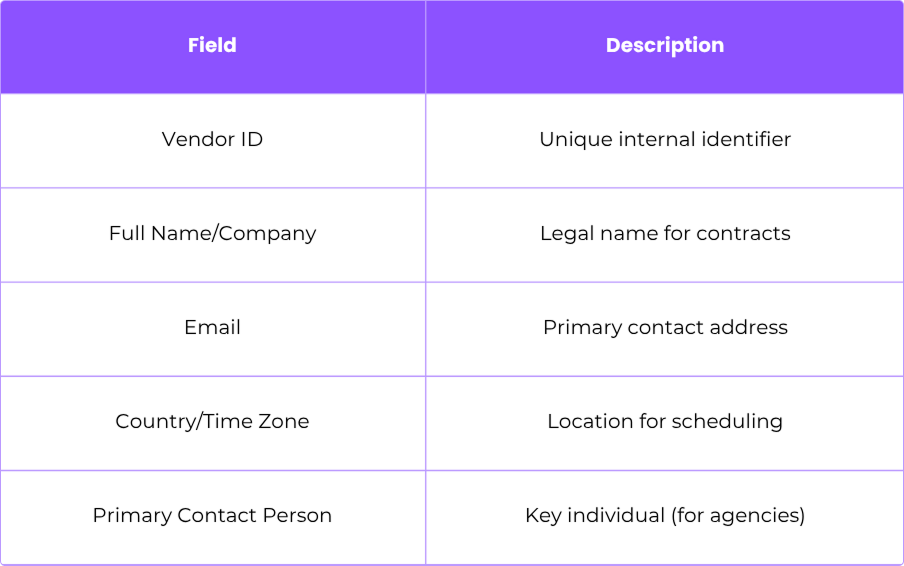
Clear, consistent data fields are what turn a list of names into a usable, filterable database. Without standardization, your filters break and reporting becomes unreliable.
Core Identification Fields
Language-Related Fields
Use standard language codes for reliable filtering:
- Source and target language pairs (e.g., EN-US, ES-MX, DE-DE)
- Native language
- Proficiency levels if relevant (for non-native working languages)
Specialization Fields
Track industries and content types separately:
- Industries: Medical devices, fintech, gaming, SaaS, e-commerce, legal
- Content types: UI strings, marketing copy, legal contracts, technical documentation
- Regulatory niches: EU MDR familiarity, HIPAA experience, GDPR compliance
Operational Fields
- Per-word rates (with minimum fees and rush fees noted)
- Per-hour rates for consulting or interpretation
- Usual daily capacity (most language professionals sustain 2,000–3,500 words per day)
- Preferred currencies and payment methods
- Payment terms (net 30, net 60, upfront)
Technical Fields
- CAT/TMS platforms used (memoQ, Trados Studio, Phrase, Smartling)
- File formats handled (HTML, JSON, XLIFF, InDesign, Markdown)
- Machine translation post-editing experience
Quality and Compliance Fields
- Certifications (ATA, ITI, ISO 17100–related training)
- NDAs signed (with dates)
- Data protection agreements
- Subject-matter degrees or training
Performance and History Fields
- Onboarding date
- Test score and reviewer notes
- Average quality rating (1–5 scale)
- On-time delivery percentage
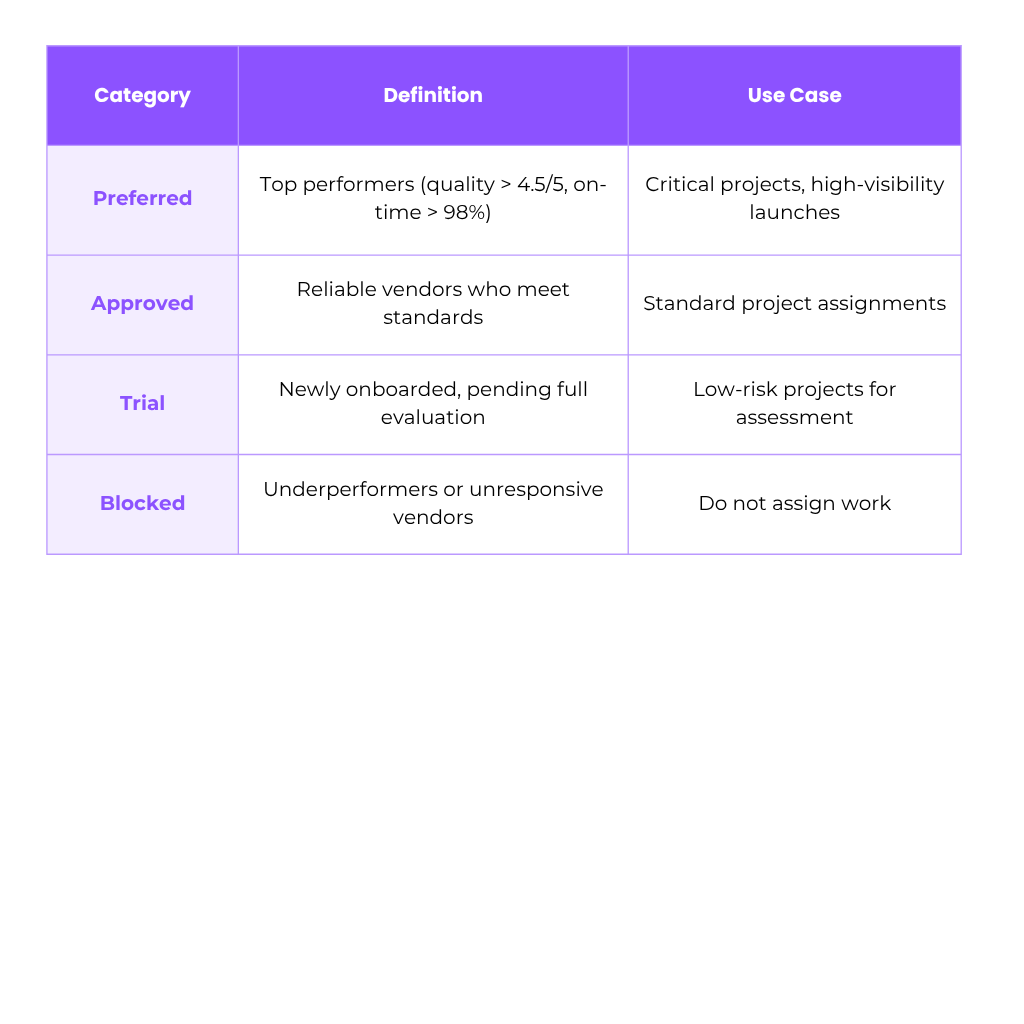
- Vendor status: Preferred, Approved, Trial, or Blocked
Step 3: Choose the Right Tool to Host Your Database
The “database” can start as a simple spreadsheet, but larger teams often move to specialized vendor management tools as complexity grows.
Spreadsheet-Based Approach
For teams with fewer than 50 vendors, Google Sheets or Excel works well:
Pros:
- Zero cost (using free tiers)
- Easy to start and familiar to most people
- Flexible structure for early experimentation
Cons:
- Limited access control (hard to restrict who sees rates)
- Prone to version issues with multiple editors
- No integration with project management or accounting systems
TMS with Built-In Vendor Management
Modern translation management systems like Phrase, Smartling, and Lokalise offer native vendor modules. Look for:
- Role-based access controls
- Vendor profiles linked directly to projects
- Rate tables integrated with invoicing
- Availability calendars for scheduling
- Notification workflows for project assignments
Integration Considerations
Whatever tool you choose, ensure it supports:
- Simple filters and searches (e.g., “Spanish > Mexico > marketing > SaaS”)
- Export options for reporting
- Potential integration with HR, procurement, or accounting systems
A database that integrates with your payment processor eliminates manual reconciliation. A standalone spreadsheet requires extra data entry for every invoice.
Step 4: Start Your Search and Populate the Database
Building a strong database is an ongoing sourcing effort, not a one-time campaign. Treat it as a continuous process that evolves with your business.
Where to Find Translation Vendors
Professional associations and directories offer the highest-credibility starting points:
- ATA (American Translators Association) directory for North American translators
- ITI (Institute of Translation and Interpreting) in the UK
- Regional equivalents in Germany, France, Canada, and other markets
Specialized job boards like ProZ.com and TranslatorsCafe host thousands of profiles. Use these to discover candidates, but treat profiles only as a first screening step, not a final decision.
Conferences and networking at events like LocWorld or regional translation association meetings let you meet individuals face-to-face and assess communication style.
Referrals from trusted colleagues often lead to the highest-quality hires. Professional translators typically know the reputations of peers in their language pair.
Building Your Initial Pool
For each key language pair and specialization, aim to collect at least 5–10 vetted translators by the end of Q2 2025. For smaller or rare languages, 2–3 reliable options may be sufficient.
When you find a new candidate, enter basic data immediately:
- Name and contact information
- Languages and domain
- Estimated rates
- Status field: “Candidate” (not yet vetted)
This lets your database grow iteratively while maintaining clear indicators about which vendors are actually approved for project work.

Step 5: Vet and Test Your Translation Vendors Before Approval
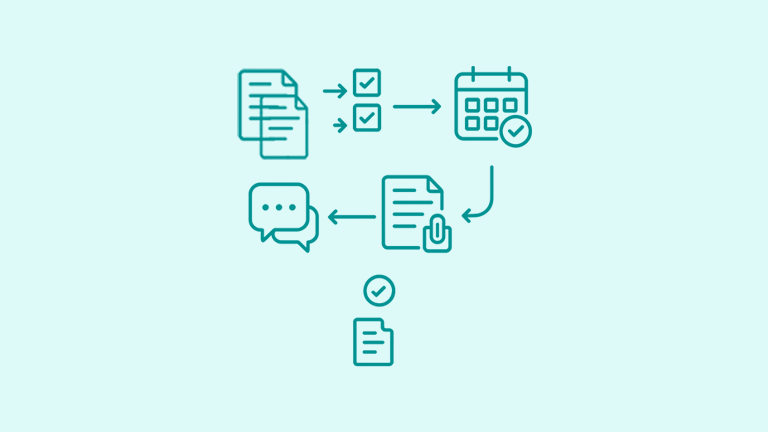
Standardized vetting prevents poor quality and saves money in the long run. A rigorous process filters out problematic vendors before they touch client work.
Multi-Step Vetting Process
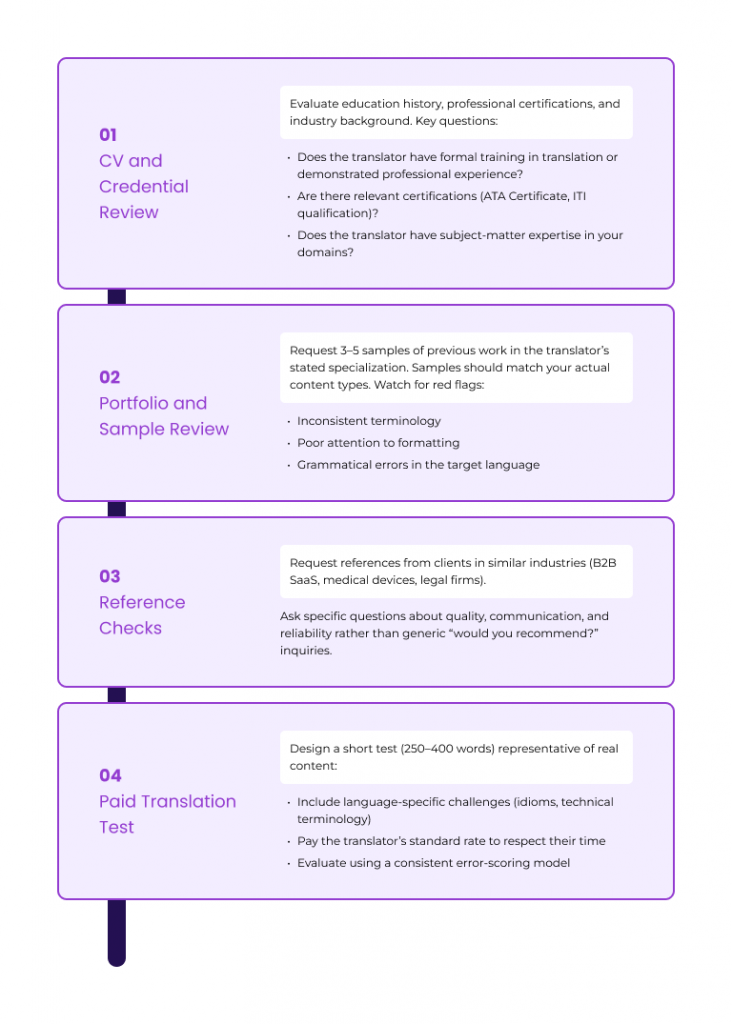
For translation agencies, vet not only sample quality but also workflow transparency: TEP process, QA tools used, terminology management, and review cycles.
Step 6: Define Clear Vendor Categories and Selection Rules
Categorizing vendors helps project managers select the right person quickly under real deadlines. Without clear tiers, assignment decisions become inconsistent and time-consuming.
Status Categories
Specialization Tiers
Beyond status, create tiers by specialization and quality level:
- Premium marketing copywriters (advanced creative skills)
- Standard technical translators (competent but not premium)
- Legal specialists (regulatory knowledge required)
This enables nuanced assignment: urgent but non-critical work goes to standard-tier vendors, while a major product launch campaign requires premium talent.
Practical Selection Rules
When assigning projects, project managers should filter on:
- Language pair
- Industry/specialization
- Quality tier
- Rate range (budget constraints)
- Time zone and availability
- Tool proficiency
Include a simple notes field for exceptions: “Great for creative work, avoid for legal” or “Excellent quality but slow, only for projects with long lead times.”
Step 7: Maintain and Improve the Database Over Time
A vendor database only stays valuable if it is actively updated with new information and performance data. Databases that go unmaintained for 12–18 months become unreliable and eventually unused.
Feedback Loops
After each project (or at least quarterly for active vendors), record performance metrics:
- Numerical quality rating (1–5 scale with clear definitions)
- On-time delivery status
- Communication quality notes
- Specific strengths or areas for improvement
Over time, individual project ratings aggregate into running averages that reveal genuine performance patterns.
Periodic Reviews
Schedule structured reviews at least every six months:
- Reach out to vendors to confirm rates, availability, tool proficiencies, and certifications
- Verify contact information is current
- Identify vendors not assigned work in 6–12 months and determine whether to keep them active
- Review overall performance trends across your vendor pool
Identifying Top Performers
Use database metrics to identify top performers (quality > 4.5/5, on-time delivery > 98%) and upgrade them to Preferred status. This recognition motivates continued excellence and ensures premium vendors receive additional opportunities.
Pruning Underperformers
Remove or downgrade vendors who:
- Repeatedly miss deadlines
- Ignore instructions
- Receive consistently low quality scores
- Are unresponsive to update requests
Document reasons for removal to inform future sourcing decisions.
Capturing Lessons Learned
Over time, patterns emerge: which translator profiles work best for certain markets or verticals? Which language pairs consistently run over budget? Capture these insights and use them to refine sourcing strategy and database fields for the upcoming year.
Step 8: Use the Database to Scale Localization Efficiently
The real value of a translator vendor database is revealed when you start scaling to more languages and higher volumes. What starts as a convenience becomes a competitive advantage.
Faster Project Setup
Centralized vendor data allows faster project setup because you no longer need to hunt for translators every time you add a new product feature or marketing campaign. Query the database, identify qualified vendors, and assign work immediately.
Advanced Workflows
The database supports sophisticated project structures:
- Dedicated teams per product line
- Backup vendors for critical launches (if primary translator is unavailable)
- Time-zone coverage for 24/7 projects
- Rapid scaling when entering new markets
Consistency and Brand Voice
When preferred vendors repeatedly translate for the same products or brands, consistency in terminology, tone, and cultural adaptation improves over time. Track which vendors have worked on specific product lines to reassign related work to the same translator when possible.
Reporting and Strategic Planning
A well-populated database enables powerful reporting:
- Spend per language
- Performance per vendor
- Capacity gaps by language pair
- Quality trends over time
These insights inform annual localization planning, budget allocation, and decisions about whether to expand your freelancer base or develop deeper agency partnerships.
Common Mistakes to Avoid When Building Your Translator Vendor Database
Many localization teams build databases that quickly become outdated or unused. Avoiding these pitfalls keeps your investment valuable.
Over-collecting unvetted names: Adding dozens of candidates without testing or categorization creates a noisy database that project managers don’t trust. Start small and grow with vetted additions.
Single-vendor dependency: Relying on one agency or freelancer per language pair creates bottlenecks. If that vendor becomes unavailable during peak periods, you face an emergency. Maintain at least 2–3 vetted options per key language pair.
Inconsistent data entry: If rates are entered in different currencies without conversion, if language codes vary (“Spanish” vs. “ES-MX”), your filters break. Establish data entry standards before populating the database.
Ignoring end-user input: A database designed without input from project managers may look good on paper but fail to answer real day-to-day needs. Involve the people who will actually use it.
Neglecting data security: Vendor databases may contain sensitive information. Use role-based access controls, ensure NDAs are signed and stored, and verify compliance status during periodic reviews. This matters especially for legal and medical content.
Failing to maintain: Perhaps the most common failure. Assign clear ownership (a specific person or team responsible for quarterly maintenance) and build maintenance into annual planning.
FAQ
How many vendors should I include per language pair in my database?
For key languages like EN>FR or EN>DE, keep at least 3–5 vetted freelancers plus 1–2 agency options to handle capacity fluctuations and ensure coverage during peak periods. For smaller or rare languages, maintain at least 2–3 reliable options where possible to avoid single points of failure.
How often should I review and update my translator vendor database?
Core data like rates, tools, and availability should be checked at least once per year through direct outreach to vendors. Performance metrics and statuses should be updated after each project or at least quarterly for active vendors to keep the database accurate and actionable.
Do I need specialized software, or is a spreadsheet enough?
Small teams can manage effectively in Google Sheets or Excel up to around 30–50 active vendors. Once you exceed that threshold or require stricter permissions, integrations with other systems, or automation features, moving to a TMS with vendor management or a dedicated platform becomes more efficient.
Should I separate interpreters and translators in my database?
Written translation and oral interpreting require different skill sets and logistics. Tag or segment them clearly using separate tabs or distinct “service type” fields to avoid confusion when assigning work. Some individuals handle both, but many are specialists in one modality.
How do I handle vendors who increase their rates over time?
Record both historical and current rates in the database with effective dates for transparency. Review the impact on your budget and decide whether to keep them as preferred, move them to a different tier, or negotiate. Rate changes are normal in the market, but documentation helps you make informed decisions about vendor allocation.
Related reading: How to Create a Translator Onboarding Process That Saves 5 Hours a Week

Building software that helps small and medium-sized language service providers run their business.
About Rishi →Table of Contents
- What Is a Translator Vendor Database (and Why You Need One Now)
- Step 1: Define the Scope and Purpose of Your Vendor Database
- Step 2: Decide What to Track – Essential Fields and Structure
- Step 3: Choose the Right Tool to Host Your Database
- Step 4: Start Your Search and Populate the Database
- Step 5: Vet and Test Your Translation Vendors Before Approval
- Step 6: Define Clear Vendor Categories and Selection Rules
- Step 7: Maintain and Improve the Database Over Time
- Step 8: Use the Database to Scale Localization Efficiently
- Common Mistakes to Avoid When Building Your Translator Vendor Database
- FAQ