Translation Memory ROI: How LSPs Are Cutting Costs Without Cutting Corners on Quality
Key Takeaways
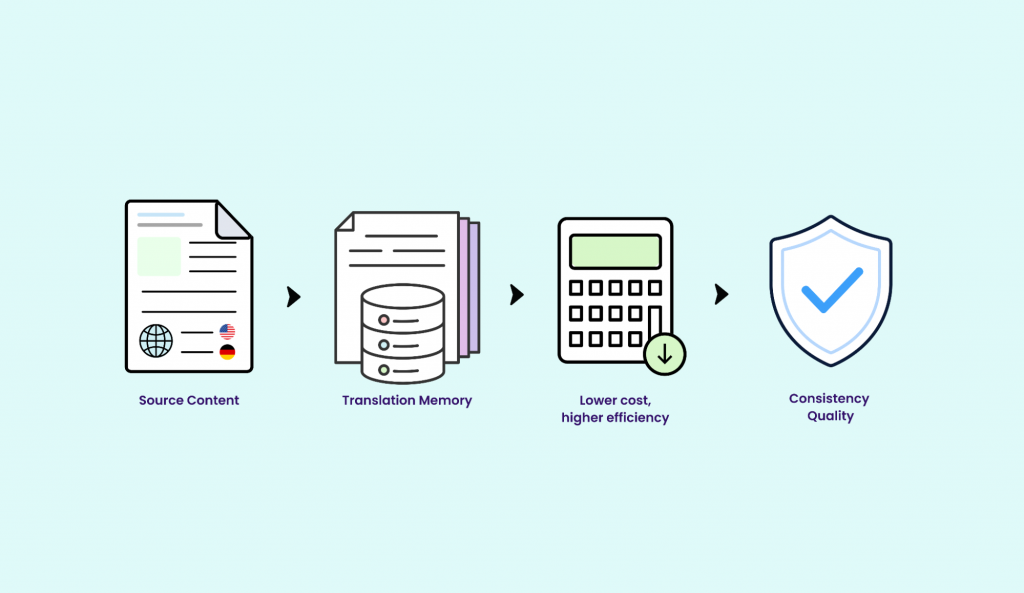
Translation memory ROI is not just a technology story. For LSPs, it is a margin, speed, and quality story.
- LSPs using a CAT tool and translation memory strategically can often cut per-word costs by 20–50% within 6–12 months, especially on repeated content.
- Translation memory allows for automated suggestions of identical or similar text, so exact matches in translation memory often require less editing effort.
- Awtomated, as a Translation Business Management Software, helps track tm leverage, linguist effort, vendor payouts, and margins per localization project in one place. See how Awtomated’s translation memory features connect segment-level savings to business-level reporting.
- Combining translation memory, machine translation, ai translation, and structured human review can reduce translation costs by 30-70% while preserving translation quality.
- A well-governed master tm becomes a long-term language asset, improving competitiveness, valuation, and delivery reliability for future projects.
Introduction: Why Translation Memory ROI Matters for Modern LSPs
Translation memory is a database of existing translations that can be reused in future translations. More precisely, translation memory stores pairs of source and target text segments, also called translation units, so a source segment in the source language can be matched with its translated equivalent in the target language.
That matters because the economics of localization have changed. Since around 2020, clients have expected faster delivery and lower translation costs because machine translation, ai translation, and automation are now part of the conversation. But clients still expect human translator judgment, brand accuracy, and professional translator quality.
For LSPs, translation memory roi is one of the few levers fully within their control. A translation management system or CAT environment may support the linguistic side, but Awtomated’s perspective is that a TBMS should make the financial impact visible in quotes, job costing, vendor management, and profitability dashboards. To understand how a TBMS integrates with translation memory at the system level, our TBMS explainer covers the full module set.
TM ROI is strategic because it helps LSPs:
- reduce repeated manual effort across the translation process;
- improve translation consistency across projects;
- reuse approved translations and previously translated content;
- launch products simultaneously in global markets using translation memory;
- protect margin while keeping human reviewers in the loop.

What Translation Memory ROI Actually Looks Like in an LSP
ROI from TM means lower production cost per word, higher translator throughput, faster turnaround, fewer revisions, and stronger client retention because the translated content stays consistent.
In practice, this is what translation memory work looks like in the business:
- A mid-size LSP translating software documentation for a software company into 8 language pairs - en–de, en–fr, en–es, en–pt-BR, en–ja, en–ko, en–it, en–nl - increases tm leverage from 18% to 42% between 2024 and 2025, cutting unit costs by about 30%.
- In one public e-commerce case, Glocco reported around 70% cost savings for Kondela after roughly one million words were processed and only about 300,000 were unique, with the rest covered by repeats and fuzzy matches (Glocco case study).
- Shure achieved a 50% translation cost reduction over two years after centralizing TM and TMS workflows (XTM case study).
- Translation memory can reduce translation costs by 20% to 40% in many recurring accounts, while translation memory can reduce translation costs by 30-70% in highly repetitive or hybrid workflows.
In the P&L, ROI appears as lower vendor invoices, fewer new-word charges, more work handled by each project manager, and fewer client change requests. Leveraging TM savings across your vendor pool is one of the most direct ways to improve per-word vendor costs without renegotiating rates. In Awtomated, translation memory matches can flow into quote templates with discount grids for 101%, 100%, and fuzzy bands, then later be compared against actual vendor payouts.
How Translation Memory Generates ROI: From Segments to Savings
Translation memory systems automatically suggest previous translations for reuse. When localization teams upload files, the CAT tool checks stored translations in the tm database and proposes matches for the same content or similar content.
Typical economic mechanics include:
- context matches or 101% matches usually require only a light check;
- 100% matches often need less editing than new translation;
- no-match segments may require full translation or MT post-editing;
- translators can approve, edit, or reject suggested segments in translation memory.
A common discount grid might look like this:
| Match band | Typical client rate basis |
| 101% / context match | 10–20% of new-word rate |
| 100% match | 20–30% |
| 95–99% fuzzy | 40–60% |
| 75–94% fuzzy | 70–80% |
| 0–74% / new | 100% |
This pricing model is the engine behind translation roi. As the translator completes reviewed work, new tm entries are added. Translation memory expands and improves with every new translation, and translation memory databases improve as organizations translate more content.
Over time, coverage compounds. A first release may show 0–10% leverage; after regular releases, a mature tm can match 60% of content in future projects. By the third release, 60% of content can match existing translations in repetitive product documentation, and by 2026, 60% of content can match existing translations in mature accounts with disciplined governance.
The benefits of translation memory are not limited to word discounts. Translation memory can speed up project turnaround times by 30% to 60%, and faster localization cycles enable faster launches of marketing campaigns across different regions.
Key Drivers of Translation Memory ROI for LSPs
TM ROI grows when LSPs treat TM as a managed business asset, not as a passive file sitting inside translation memory software.
The biggest drivers are:
- stable file formats such as XML, JSON, and XLIFF, because consistent structure improves segmentation and match rates;
- clean structured data, so source and target segments align correctly;
- domain-specific memories for legal, medical, SaaS UI, marketing content, and technical documentation;
- terminology management and style guides that help human translators apply suggestions faster;
- disciplined tm management across multiple tms, client memories, product memories, and a curated master tm.
Mixing everything into one database can reduce match relevance. Separate translation memories, or separate databases, often perform better when clients use different tone, terminology, regions, or target languages. Awtomated can reflect this operationally through client accounts, project templates, predefined TM sets, and cost centers by content domain.
Setting Up Translation Memory for Maximum ROI
The best TM programs start with structure. Before trying to cut translation costs, LSPs should decide how TM will be organized, governed, priced, and measured.
A practical setup roadmap:
- Map all active language pairs and locales, such as en-US → fr-FR versus en-GB → fr-CA. Avoid mixing the same language across different locales when terminology or tone differs.
- Import existing translations and past translations from 2018–2025 in TMX or XLIFF format, prioritizing high-volume accounts.
- Build folders for client-specific TMs, product-line TMs, and a master tm where only approved translations are promoted.
- Define who can write to each tm system, when segments move into the master tm, and how often the TM is cleaned.
- Reflect these rules in Awtomated rate cards so pre translation, tm pre translation, client pricing, and vendor payouts follow the same logic. Note that TM implementation varies significantly across platforms.
Regular TM maintenance prevents outdated content from polluting suggestions. Translation memory should be cleaned regularly to maintain quality, deduplicate old tm entries, and remove obsolete product language.
A mature translation memory can handle millions of segments without slowing down when the underlying platform and workflow are designed properly. A mature translation memory can save 30,000 words per language on a large release if repeated content and previous translations are reused well.
Human Review, Machine Translation, and TM: A Hybrid ROI Engine
The strongest translation workflow usually applies TM first, machine translation second, and human input throughout. In a typical translation memory workflow, tm matches are applied before MT; then machine translation or ai output fills low-match and no-match segments; then human translators and reviewers work in the CAT tool. For a detailed breakdown of using TM alongside MTPE workflows, see our dedicated MTPE guide.
AI-generated translations require human validation for accuracy and consistency. Storing only human-approved MT output into the master tm protects translation quality and ensures future translations use reliable existing translations rather than raw machine guesses. Explore Awtomated’s AI translation tools to see how MT and TM are managed together in one platform.
This is where ai generated output becomes economically useful. Translation memory improves AI translation quality by providing context, but structured human review is what turns speed into sustainable ROI.
A hybrid workflow should track:
- MT engine fees;
- human translator and reviewer hours;
- QA cycles;
- review time by match band;
- savings compared with human-only full translation.
Translated Right reported a 35% cost reduction, 40% faster turnaround, and about 28% TM reuse by month three in a hybrid fintech workflow (Translated Right case study). Combining TM with AI can reduce translation costs by 30-70%, and teams can see 30-70% cost reduction with structured human review.

Using Multiple TMs and a Master TM Without Losing Control
Multiple memories are useful, but only when controlled. Translation memory allows for multiple translations of the same segment, which is helpful when the same phrase needs different wording by product, region, or client.
A practical model is:
- project-level or client-level TMs capture work in progress;
- regional TMs support multiple target languages and multiple markets;
- domain TMs separate legal, technical, and marketing content;
- the master tm stores only vetted, approved, and reusable segments.
Multiple tms are especially important when an LSP handles en-US → es-MX and en-US → es-ES, or marketing and compliance content under the same brand. The CAT tool can prioritize master tm suggestions while still surfacing lower-priority matches from older memories.
Awtomated can tag jobs to specific TMs, report margin by TM set, and flag when legacy memories cause too many corrections. Reusing approved translations ensures brand consistency worldwide, and translation memory acts as an authoritative repository for maintaining tone of voice and terminology.
Operationalizing TM ROI in a Translation Business Management Software (TBMS)
A CAT tool handles the segment-level translation work. Awtomated turns that work into business intelligence. The question LSPs often face is how to choose project management software with built-in TM versus a separate CAT tool connected to a TBMS, and how to make both pay off.
Inside a TBMS, TM ROI becomes operational when the system can:
- pull analysis from integrated CAT tools, including word counts by 101%, 100%, fuzzy, and new bands;
- auto-populate client quotes and purchase orders;
- connect match bands to vendor payout rules;
- compare quoted margin against actual margin;
- track whether translators can be 2-4 times more productive with TM leverage.
This matters because many LSPs feel TM helps, but cannot prove it. Awtomated links translation volume, translation speed, invoice totals, gross margin, delivery dates, and on-time delivery rates to the same project record. That visibility is what turns TM from a linguistic tool into a driver of project-level profitability.
Translation memory helps reduce project management costs by minimizing review overhead. It also helps leadership see where a mature tm can save 10-50% on translation costs annually and where proper TM maturity can yield savings of 10-50%.
Measuring Translation Memory ROI: Metrics LSPs Should Track
If ROI is not measured, it becomes a belief instead of a management tool. Awtomated centralizes the data so LSPs do not have to combine spreadsheets from CAT tools, finance systems, and project managers manually.
Track these metrics:
- TM match-rate distribution per project: 101%, 100%, fuzzy bands, and new words.
- Effective cost per word by project, client, and language pair.
- Translator productivity, including words per hour by match type.
- QA issues on high-match segments.
- Client revisions tied to terminology, style, or stale TM suggestions.
- Average review time per 1,000 words.
- Revenue impact when lower client rates still preserve margin.
Using translation memory can provide financial returns over time as the database grows. A mature TM can save 10-50% on translation costs annually, but only if LSPs measure whether the savings reach the P&L.
Real-World Scenario: TM ROI for a Growing LSP (2024–2026)
Consider a fictional European LSP in 2024. The team managed projects by email and spreadsheets, had no centralized translation memory system, and struggled with thin margins on large software accounts.
In early 2025, the LSP migrated to a CAT tool integrated with Awtomated. The team created structured TMs for its top five SaaS clients and imported existing translations from 2019–2024 in TMX format.
By mid-2026, the results looked like this:
- TM leverage on recurring releases rose from 12% to 48%.
- Average cost per word for those accounts fell by about 32%.
- Translator throughput doubled on high-match projects.
- Review overhead dropped because terminology and previous translations were reused consistently.
- Awtomated reporting helped renegotiate a major contract with a 15% list-price reduction while keeping margin stable.
This is what healthy translation memory roi looks like: the client gets a better commercial offer, the LSP protects profitability, and quality does not depend on starting from scratch every time. If you want to see these dashboards working on your own project data, book a demo with Awtomated.
Common TM ROI Pitfalls for LSPs (and How to Avoid Them)
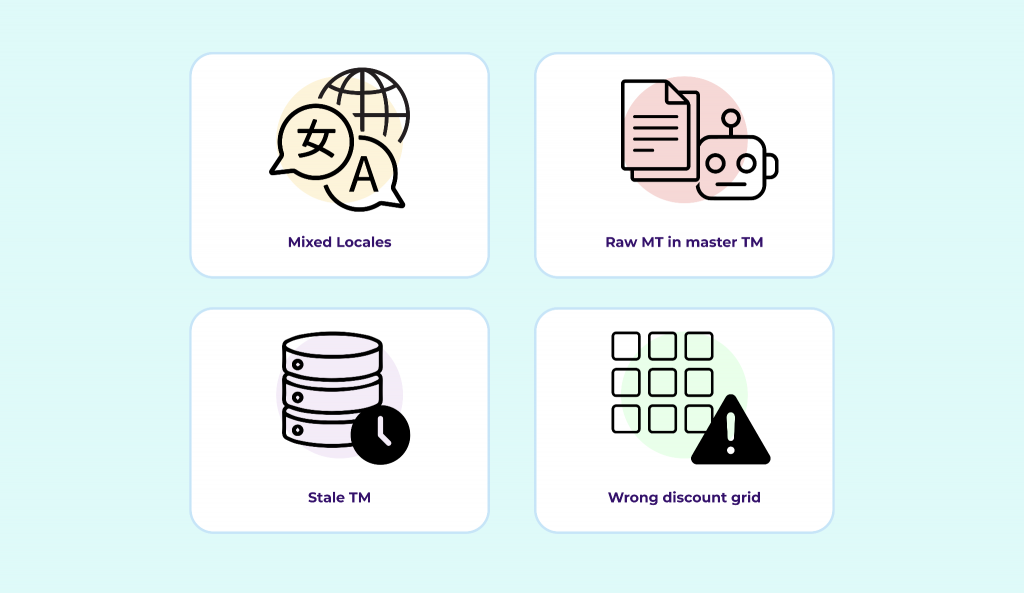
The fastest way to lose TM ROI is to treat every match as automatically good. Matches are useful because they reduce effort, not because they remove judgment.
Avoid these common mistakes:
- Mixing fr-FR and fr-CA, or other locales, in one TM when the client needs different terminology.
- Pushing raw machine translation directly into the master tm without human review.
- Ignoring deduplication, obsolete content, and outdated terminology.
- Running quotes without proper TM analysis.
- Applying the same discount grid to creative marketing content and repeated content such as ui strings.
Awtomated helps reduce these risks by enforcing TM-based quote templates, connecting analysis to pricing, and keeping actual cost visible after delivery.
The Strategic Value of TM as a Long-Term Asset for LSPs
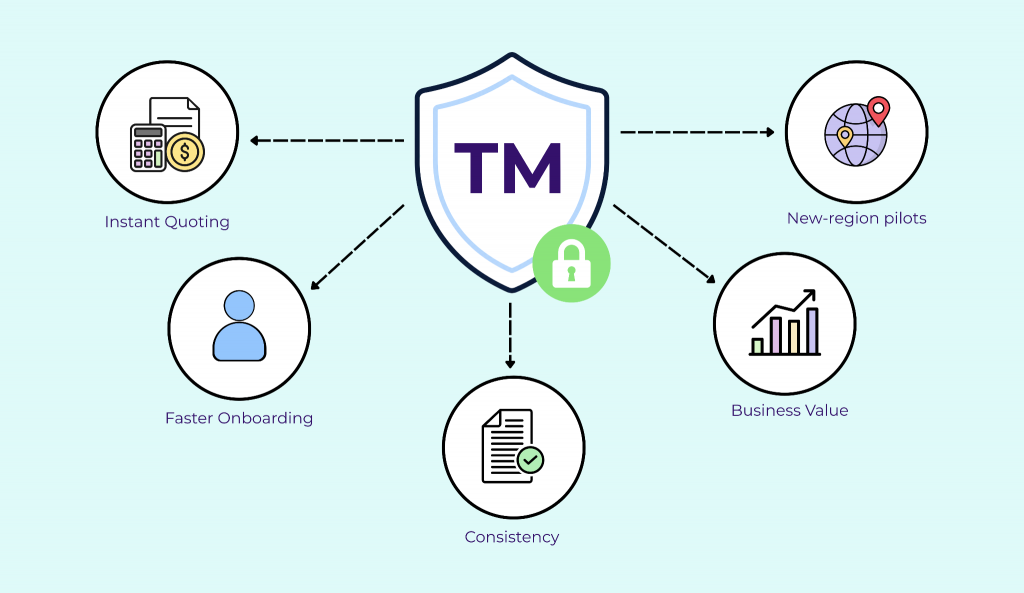
TM is more than a productivity feature. For an LSP, it is intellectual property: a structured record of language decisions across clients, industries, language pairs, and target languages.
Strong TMs help LSPs:
- onboard new translators faster;
- offer instant quotes based on historical leverage;
- support pilots in new regions;
- maintain quality across multiple translations;
- demonstrate operational maturity in partnerships or acquisitions.
In acquisition or partnership conversations, a well-structured master tm and historical leverage data inside Awtomated can increase the perceived value of the business. TM, combined with machine translation, human translators, and Awtomated’s business intelligence, is how LSPs cut costs without cutting corners. To understand what the platform costs at your scale, see Awtomated’s pricing.
FAQ: Translation Memory ROI for LSPs
How long does it typically take for an LSP to see measurable ROI from translation memory?
Most LSPs start seeing noticeable savings within 3–6 months of steady work for the same client, product line, or localization process. Organizations can see ROI within 3-6 months of TM setup when they already have existing translations to import and recurring translation volume.
Very repetitive domains such as e-commerce catalogs, user manuals, help centers, and software releases can reach 40–70% leverage within the first year. Creative campaigns usually show slower ROI, although previously approved taglines and brand terms still help.
Awtomated can help LSPs track when leverage crosses 25%, 40%, or 50%, making ROI easier to explain to clients and internal stakeholders.
Do I still need human translators if I invest heavily in TM and AI translation?
Yes. TM and AI change the work; they do not remove the need for expertise.
Human translators remain essential for:
- accuracy, nuance, and cultural fit;
- legal, medical, and brand-sensitive decisions;
- approving, editing, or rejecting TM and AI suggestions;
- ensuring only human-validated content enters the master tm.
Awtomated can reflect this shift by tracking time spent on review versus new translation and linking that effort to profitability.
What types of content deliver the strongest translation memory ROI for LSPs?
The strongest ROI usually comes from high-repetition content:
- software ui strings, in-app messages, and release notes;
- technical manuals, safety instructions, and compliance documentation;
- help center articles, FAQs, and knowledge bases;
- product catalogs where the original language changes only slightly between releases.
Highly creative work has lower TM leverage, but it still benefits from consistent terminology, tone of voice, and approved brand language.
Should an LSP centralize all clients in one TM or keep TMs separate?
Keep TMs separate per client by default. This protects confidentiality, terminology, tone, and contractual boundaries.
A shared master tm can be useful for generic phrases such as “Save,” “Cancel,” or “Next,” but only when contracts allow it. Awtomated can help enforce these boundaries by attaching the right TM set to each client account and project template.
How does a TBMS like Awtomated differ from a CAT tool when it comes to TM ROI?
CAT tools handle the linguistic side: segmentation, concordance search, translation memory matches, and in-editor suggestions. Awtomated focuses on the business side: quoting, scheduling, vendor management, purchase orders, invoicing, and financial reporting.
Awtomated consumes TM analysis from CAT tools and turns it into expected cost, margin, delivery dates, and client pricing. Without a TBMS, TM ROI is often anecdotal. With Awtomated, LSPs can connect translation memory leverage directly to revenue, margin, and profit. If you are still evaluating platforms, our buyer’s guide on what to look for in a TMS with TM features will help you ask the right questions.
Table of Contents
- Introduction: Why Translation Memory ROI Matters for Modern LSPs
- What Translation Memory ROI Actually Looks Like in an LSP
- How Translation Memory Generates ROI: From Segments to Savings
- Key Drivers of Translation Memory ROI for LSPs
- Setting Up Translation Memory for Maximum ROI
- Human Review, Machine Translation, and TM: A Hybrid ROI Engine
- Using Multiple TMs and a Master TM Without Losing Control
- Operationalizing TM ROI in a Translation Business Management Software (TBMS)
- Measuring Translation Memory ROI: Metrics LSPs Should Track
- Real-World Scenario: TM ROI for a Growing LSP (2024–2026)
- Common TM ROI Pitfalls for LSPs (and How to Avoid Them)
- The Strategic Value of TM as a Long-Term Asset for LSPs
- FAQ: Translation Memory ROI for LSPs
Ready to manage your Translation company easily?
Get Started for Free