Interpreter Scheduling Software: Do Interpretation Companies Need a Different Tool Than LSPs?
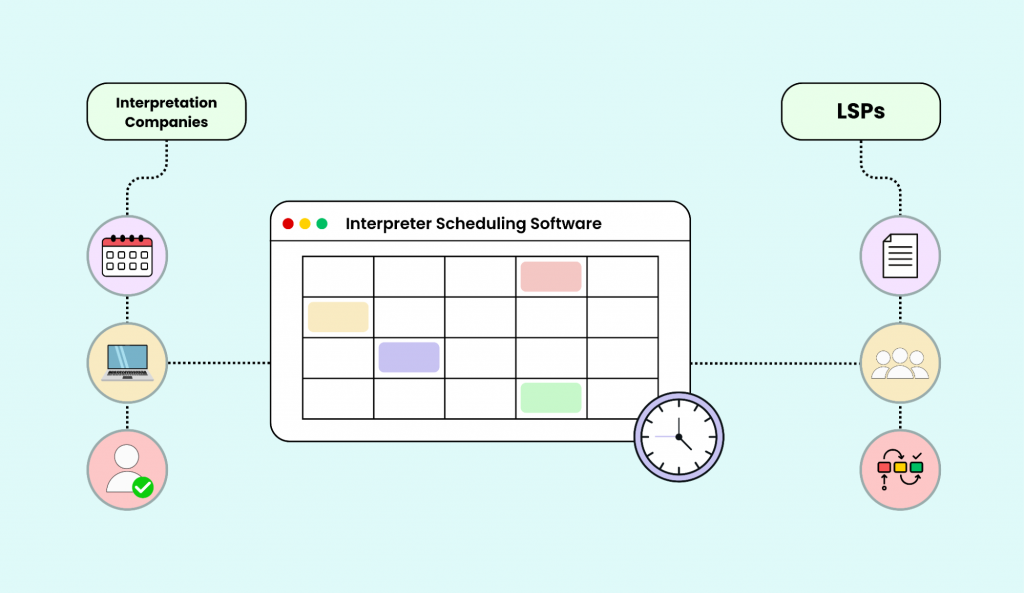
Interpreter scheduling has outgrown spreadsheets, inboxes, and generic scheduling tools. A hospital running 1,500 interpretation services per month or a court managing 40 hearings a day cannot afford delays, double bookings, or unclear ownership. Manual scheduling can lead to delays and double bookings.
By “interpretation companies,” we mean on-site agencies, OPI and VRI providers, hospital language access teams, courts, city agencies, and other service providers managing live appointments. Traditional language service providers often focus on TEP workflows: files, CAT tools, revisions, and deadlines.
This comprehensive guide looks at the scheduling process, interpreter management, hipaa compliant operations, integration with existing systems, and how awtomated acts as the right software bridging translation business management and interpreter scheduling.

Interpreter Scheduling vs. Classic LSP Workflows: What’s Actually Different?
Classic language service workflows are file-based. Interpretation is time-based, location-based, and often urgent.
- Translation: file in, translator assigned, review completed, delivery by date.
- Interpretation: service requests specify date, time, location, mode, and target language.
- Interpreter Management Systems handle variables like language pair matching and billing.
- Coordinators must track interpreter availability, travel, credentials, cancellations, and no-shows.
- The right interpreter may need medical, legal, ASL, court, or client-specific approval.
- Many agencies tried TMS, CRM, HR, or aqua schedules-style tools, then hit limits around live capacity, scheduling conflicts, and two-way communication.
What Is Interpreter Scheduling Software? Core Concepts
Interpreter scheduling software is scheduling software built for interpretation services: intake, matching, confirmations, service delivery, completion, and billing.
Such software usually manages:
- clients, locations, and requesters
- interpreters, certifications, rates, and availability
- assignments, appointments, calendars, and recurring services
- compliance documents, waivers, and expiration dates
- invoices, interpreter payouts, and performance metrics
The software connects administrators, interpreters, and clients in a cloud-based ecosystem. Cloud-based software allows access to schedules from any location. Cloud-based software allows real-time updates for interpreter schedules.
In awtomated, interpreter scheduling is a first-class module inside a centralized platform for language service operations, not an afterthought. The project management features that drive translation workflows apply equally to interpretation jobs.
Key Functionalities Interpretation Companies Actually Need
Interpretation companies need more than a calendar. They need efficient management across scheduling, communication, compliance, automation, and finance.
Real-Time Scheduling and Calendar Management
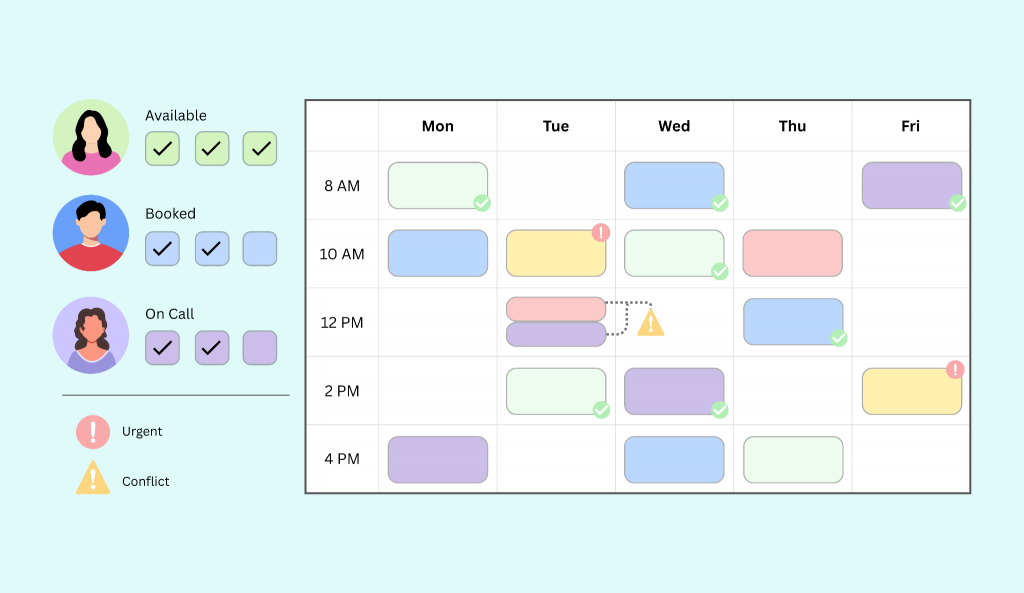
A scheduling system should show all appointments across different languages, sites, modes, and teams. Real-time insights into interpreter availability enhance scheduling efficiency; for example, who is free on 2026-06-15 from 09:00–11:00 in Boston for a Portuguese medical appointment.
Awtomated supports day, week, month, and list views, with visual cues for conflicts, status, urgency, and gaps. The system sends automated reminders to reduce no-shows after assignments. Interpreter scheduling software automates appointment confirmations and reminders. Cloud-based software increases productivity by automating scheduling tasks. Cloud-based software reduces scheduling errors and administrative costs.
Automated Interpreter Matching: Getting the Right Interpreter Every Time
Smart matching algorithms improve booking efficiency by tying requests to qualified interpreters. A strong platform considers language pair, location, specialization, certification, rate rules, and client preference. This mirrors how LSPs approach managing interpreters as vendors — with rates, credentials, and performance all tracked in one place.
Awtomated can broadcast jobs to qualified interpreters by email, SMS, or app. Platforms enable automated job broadcasting based on interpreter location and availability. That means a federally certified Spanish interpreter can be prioritized for a court hearing, while a HIPAA-trained ASL interpreter can be routed to surgery.
Automation reduces human error, but guardrails matter: missing credentials, wrong language, or expired documents should stop the assignment before it becomes a client problem.
Two-Way Communication and Self-Service Portals
Interpreters should be able to accept, decline, verify hours, and request changes without calling administrative staff. User-friendly dedicated mobile apps enhance job claiming and hour verification for interpreters.
Clients should submit requests, check status, and download confirmations without email chains. In awtomated, communication stays attached to the job record, giving users a better understanding of what happened, when, and who approved it.
Multi-Mode Support: On-Site, VRI, and OPI in One System
Modern interpretation service providers rarely use one mode. They manage on-site sessions, remote appointments, Video Remote Interpreting, and Over-the-Phone Interpreting.
Software allows for Video Remote Interpreting integration with platforms like Zoom. It should also generate links, dial-ins, room IDs, or location details as needed. A same-day OPI pharmacy call and a scheduled VRI oncology appointment should live in the same platform.
Remote work still depends on a stable internet connection, so fallback workflows matter.

Credential, Compliance, and Document Tracking
Robust profile management securely houses certifications and compliance waivers. The same profile should track NDAs, background checks, vaccination records, court approvals, hospital onboarding, and expirations. Awtomated’s vendor management module treats interpreter profiles with the same rigour as translator vendor records.
Scheduling software must comply with HIPAA and GDPR regulations. Compliance ensures confidentiality in sensitive legal cases. For healthcare, education, and government work, compliance is non negotiable.
Awtomated can warn or block assignment when an interpreter lacks required documents, such as a flu-shot record for in-hospital assignments in 2025–2026.
Timekeeping, Session Completion, and Billing Data Capture
The workflow should be simple:
- appointment scheduled
- interpreter completes service
- client or requester confirms
- time, mileage, wait time, and mode are approved
- invoice and pay record are created
All leading platforms offer end-to-end financial management for interpreter payouts and client invoices. Automated invoicing reduces errors in financial processes. Automating interpreter scheduling can reduce administrative work by 20-30 hours weekly, according to industry scheduling data from Caretap.
Do Interpretation Companies Need a Different Tool Than LSPs?
Yes and no.
Yes, because interpretation requires live scheduling, interpreter availability, location logic, credential enforcement, and urgent coverage. A classic TMS may struggle with 300–500 daily appointments, ER calls, and overlapping hospital sites.
No, because many language service providers need both translation and interpretation. The ideal platform supports separate workflows while sharing clients, services, finances, reporting, and billing. That is awtomated’s focus: translation business management software with dedicated interpreter scheduling modules. For a structured approach to choosing the right management platform for your operation, see our buyer’s guide.
Interpreter Scheduling for Different Service Providers: Healthcare, Legal, and Beyond
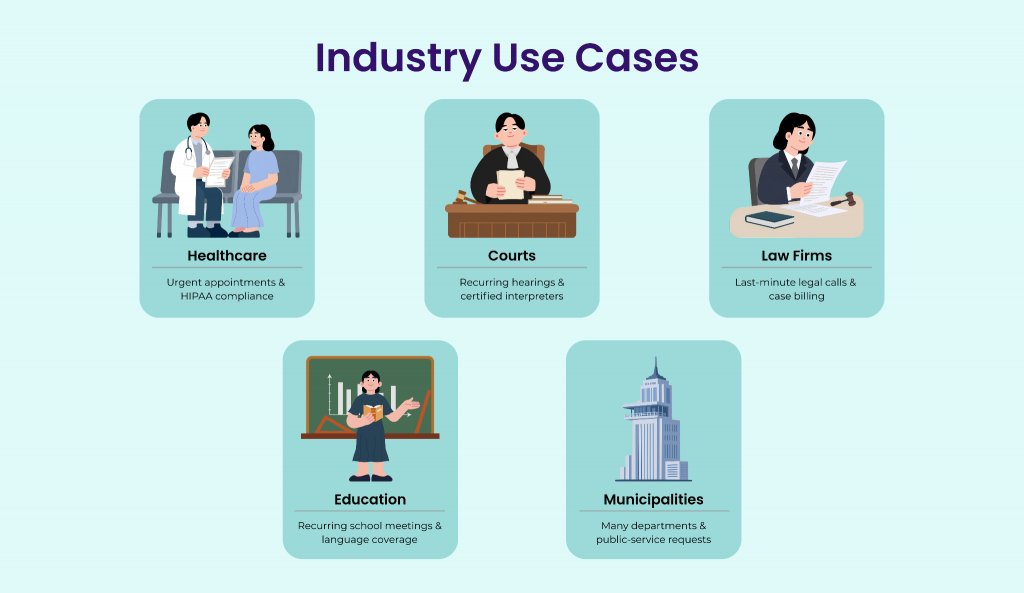
One size rarely fits all. The right software adapts through customization options, service templates, rules, and access controls.
Healthcare and Hospital Language Access Programs
Hospitals manage ED walk-ins, surgeries, follow-ups, telehealth, and 24/7 rosters. HIPAA-compliant interpreter scheduling must protect PHI, limit sensitive data, and support audit logs. Role-based access control prevents unauthorized data access.
Awtomated can support EHR-connected requests, department permissions, and priority routing, helping teams reduce time to secure an interpreter from 45 minutes to under 10 minutes.
Courts, Justice Systems, and Public Safety
Courts need recurring hearings, continuances, multi-day trials, and credentialed interpreters. Cloud-based scheduling enhances collaboration among court staff and interpreters. Compliance also protects sensitive information in criminal, immigration, and family matters.
Law Firms, Legal Aid, and Remote Legal Services
Law firms use interpreter scheduling software for urgent client calls. Interpreter scheduling software improves communication and efficiency in legal settings, especially for intake, depositions, immigration interviews, and settlement discussions across time zones.
Awtomated ties interpretation costs to matters or case IDs for accurate billing and reporting.
Education, Municipalities, and Community Programs
Schools and municipalities schedule IEP meetings, board sessions, parent conferences, and public outreach. FERPA-related privacy, recurring appointments, budget transparency, and many different languages make centralized scheduling essential.
How Interpreter Scheduling Software Should Integrate with Existing Systems
Standalone scheduling tools create silos. Mature operations need links to CRMs, EHRs, court calendars, practice management tools, HR, payroll, accounting, and business intelligence.
Scheduling software integrates with accounting tools like QuickBooks. Integration reduces duplicate entry and keeps records accurate, but integration with existing systems can be complex and challenging.
Awtomated is designed as a hub where interpreter scheduling, translation projects, finances, and reporting speak to the same operational dataset.
Security, Privacy, and HIPAA Compliance in Interpreter Scheduling
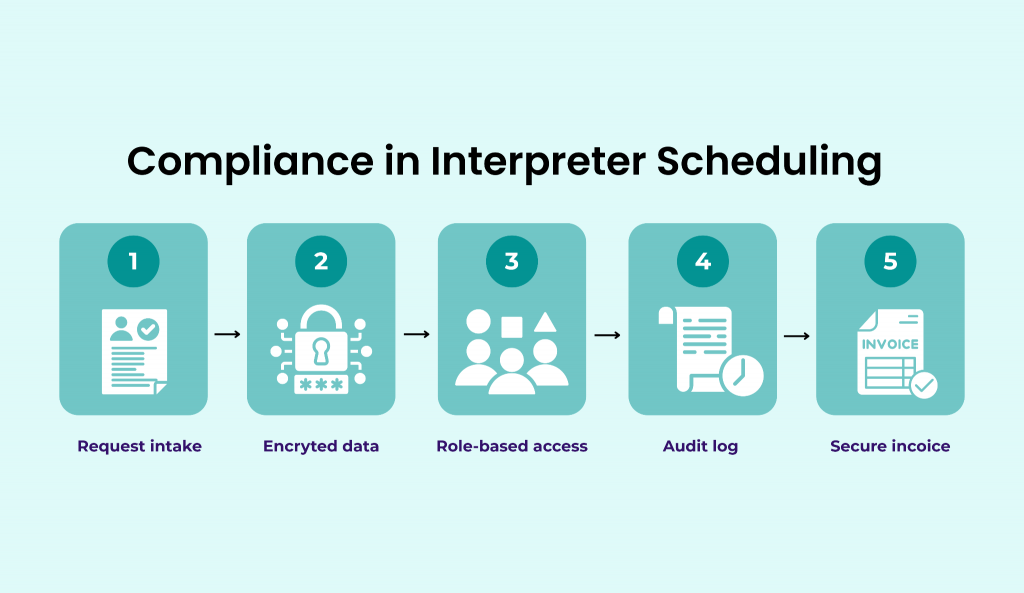
Interpreter scheduling software must protect sensitive data from intake through invoice. Cloud-based systems offer enhanced security through encryption protocols. Cloud-based systems improve data security with encryption and backups.
Strong platforms use robust security measures, encryption protocols, audit logs, MFA, secure hosting, and role-based permissions. Compliance with privacy regulations is crucial during implementation, including HIPAA and GDPR. These controls reduce the risk of data breaches and support higher security standards.
Choosing the Right Software for Interpreter Management: Evaluation Checklist
When comparing generic scheduling tools, interpreter-only apps, and a full language operations platform, test:
- Is the interface a user friendly interface for coordinators and interpreters?
- Is the platform user friendly for high-volume day to day tasks?
- Can it scale to the same number of staff while handling more appointments?
- Can it enforce credentials, rates, location, and language rules?
- Does it support OPI, VRI, on-site, billing, and interpreter payouts?
- Does it provide valuable insights for data driven decisions?
- Does it show performance metrics such as fill rate, utilization, cancellations, and margin? These are the same signals you need when auditing your interpretation workflow for efficiency and cost leakage.
- Does it fit your specific needs without forcing separate systems?
Also plan implementation carefully. Resistance to change can hinder software implementation success. Training is essential for effective software utilization. When you are ready to compare options by cost, see Awtomated’s pricing for a transparent view of what a full language operations platform costs.

How awtomated Bridges Translation Business Management and Interpreter Scheduling
Awtomated brings translation projects, interpretation sessions, clients, interpreters, services, compliance, billing, and reporting into one platform.
For agencies expanding from translation into interpretation, this avoids a second stack. For interpretation-first companies, it delivers deep scheduling features while keeping financial management, client records, and operations connected.
Awtomated helps teams manage configurable matching, on-site/VRI/OPI workflows, automated billing, interpreter utilization, and reporting in one cloud based system. See how Awtomated’s project management tools handle interpretation assignments end to end.
Conclusion: A Single Platform, Different Workflows
Interpretation companies do need tools built for their real-time scheduling process. But they do not always need a disconnected software stack from LSP operations.
The right software treats interpreter management as first-class while supporting translation and localization workflows. If you want improved efficiency without losing control, book a personalized demo of Awtomated focused on interpreter scheduling and integration with existing systems.
Table of Contents
- Interpreter Scheduling vs. Classic LSP Workflows: What’s Actually Different?
- What Is Interpreter Scheduling Software? Core Concepts
- Key Functionalities Interpretation Companies Actually Need
- Do Interpretation Companies Need a Different Tool Than LSPs?
- Interpreter Scheduling for Different Service Providers: Healthcare, Legal, and Beyond
- How Interpreter Scheduling Software Should Integrate with Existing Systems
- Security, Privacy, and HIPAA Compliance in Interpreter Scheduling
- Choosing the Right Software for Interpreter Management: Evaluation Checklist
- How awtomated Bridges Translation Business Management and Interpreter Scheduling
- Conclusion: A Single Platform, Different Workflows
Ready to manage your Translation company easily?
Get Started for Free