Translation Project Profitability: How to Know If Your Agency Is Actually Making Money Per Project
Key Takeaways
- Revenue-per-word hides the true cost of a translation project: project management time, engineering hours, discounts, rework, currency fluctuations, and payment terms risk.
- Effective translation project management means tracking margin per project, per client, and per service line, including translation, localization, desktop publishing, and MTPE.
- Awtomated centralizes quoting, scheduling, linguist payouts, vendor data, and overhead allocation so project managers see true project profitability, not just revenue. Explore Awtomated’s project management tools to see how margin data connects to every project in your pipeline.
- By 2026, profitable LSPs use estimated vs. actual costs, utilization, Time to Edit, and cash flow data to choose the clients, languages, and services worth growing.
Why Most LSPs Don’t Really Know Their Project Profitability
The translation industry is under pressure. The global language services industry is worth about $57.7 billion, but many businesses are facing rate compression, machine translation adoption, and client demands for faster turnaround. That makes translation project profitability harder to judge by instinct.
Common blind spots include:
- Many translation agency teams still report only monthly revenue and rate-per-word.
- Hidden translation costs include translator fees, project management time, and tools.
- Project management involves hours coordinating files and answering questions.
- Spreadsheets and e mail threads separate estimates from actual cost.
- Rush fees often stem from inefficient translation processes.
- Long payment terms can make profitable work risky.
- Without a TBMS, project managers rarely see gross margin by project ID. Understanding what a TBMS finance module tracks is the first step to closing that visibility gap.
Example: a 50,000-word localization project quoted at €0.10 per word brings €5,000 revenue. If linguists cost €0.06 per word, the project looks like 40% margin. But tight deadlines may require paying rush fees to translators, and turnaround speed affects pricing with rush fees ranging from 20% to 50%. Add overtime, QA, and file fixes, and margin can fall below 20%.
At Awtomated, we believe translation project profitability should be visible on every dashboard.
Defining Profitability for a Translation or Localization Project
A profitable project is not simply one that invoices well. Total revenue minus production costs determines profitability, and profitability of a translation project is assessed by net margin after direct and indirect costs.
Calculate gross profit by subtracting direct costs from total revenue. For example: €10,000 revenue minus €4,000 direct linguist cost equals €6,000 gross profit.
Key concepts:
- Direct expenses include linguist fees, software, and desktop publishing.
- Linguist rates should account for hiring translators, editors, and proofreaders.
- Indirect costs include overhead expenses necessary to run the project.
- Rates vary significantly based on language pairs.
- A healthy gross margin is often 35%–55%, depending on specialization.
- Awtomated allocates PM time and vendor payouts to each project automatically.
Two similar 20,000-word jobs can perform very differently. One software job with translation memory and machine translation may reach 55% margin. A medical localization project requiring subject-matter experts may reach 35%, even at a higher price.
From Price-Per-Word to Project Profitability: Rethinking Your Pricing Model
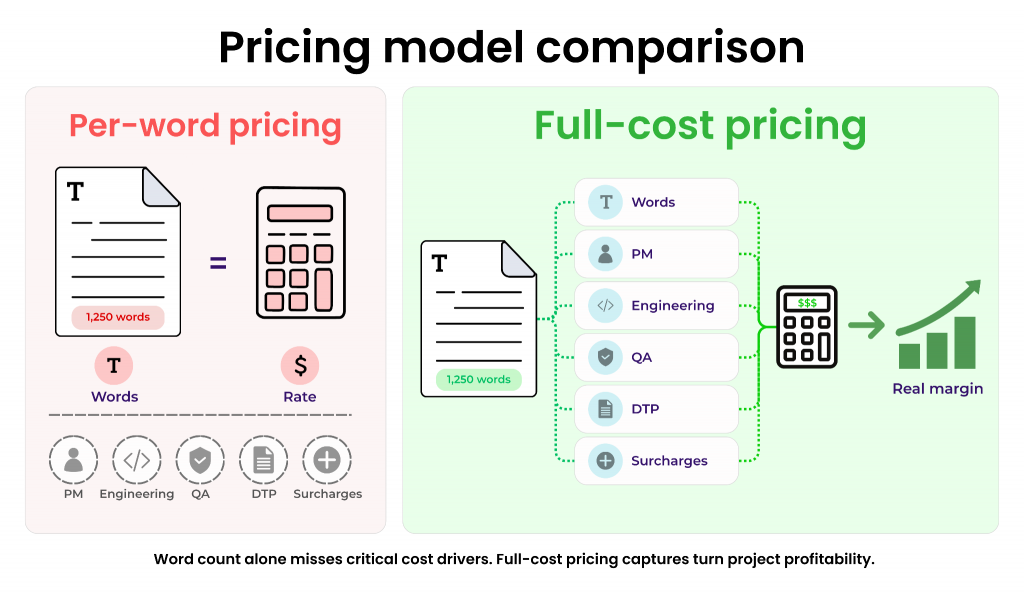
Pricing can be based on per word, per page, per hour, or flat fees. But per-word pricing alone misses file type, review cycles, quality, and operational effort. Pricing services to improve your margins means moving to a model that captures the full cost of delivery — not just the word count.
Total Cost of Ownership (TCO) provides a comprehensive financial view. Clients may care about ROI; internally, LSPs need project profitability.
Inside Awtomated, quotes can include:
- translation
- MT post-editing
- terminology work
- engineering
- desktop publishing
- weekend surcharges
- minimum fees
Larger projects offer economies of scale in translation costs, but volume discounts must still pass margin checks. Effective translation project management includes margin thresholds by service, client, and target language.

Scoping the Project Correctly: The Foundation of Profitability
Defining project scope is crucial for successful translation management. Project scope must include more than words: source material, quality level, file types, review cycles, timeline, target audience, and final product expectations.
A technical manual in PDF and InDesign may need OCR, layout repair, and original layout recreation. If scoped as simple translating, five unexpected engineering hours can erase profit.
Awtomated captures project details in structured briefs so sales, finance, the translation project manager, and the translation team stay on the same page. Out-of-scope items such as extra reviews, glossary creation, or in-country review become change orders, not free work.
Successful translation project management starts with scope that can be costed, scheduled, and tracked.
Content Complexity and Its Impact on Cost
Not every language task is equal. Marketing materials, legal contracts, medical content, UI strings, and literary translation behave differently. Literary translation accounts for only about 3% of English market books, but it shows why tone and context matter.
- Technical, legal, and medical translations require subject-matter experts.
- Specialized fields like legal or medical require higher prices.
- Specialist translation can cost double the rate of general translation.
- Specialized translation can reduce long-term costs significantly by preventing rework, support issues, and compliance risk.
- A poorly translated legal contract can lead to regulatory fines.
- Inconsistency can lead to increased support calls and product returns.
Awtomated tags domain, difficulty, native languages, and historical Time to Edit so future quoting is based on evidence.
Technical Overhead: File Types, Localized Assets, and Engineering
Common overhead-heavy formats include InDesign, Figma, complex Excel, JSON, XML, SRT, and VTT. Manual file preparation, localized assets, layout fixes, and build QA consume cost.
Awtomated tracks engineering tasks as billable or internal cost items. If five extra DTP hours at €50/hour appear after delivery, a small rush project can drop from healthy margin to below 20%.
Standardized connectors help, but modern localization project management still needs planned vs. actual engineering visibility.
Calculating and Controlling Direct Translation Costs
Direct translation costs usually drive project performance. Freelance translators can charge between $0.08 and $0.15 per word, while freelancers can earn between $3,500 and $9,000 per month depending on volume, expertise, and market.
Example: a €15,000 project with €7,500 direct linguist and MT costs has 50% gross margin before PM and overhead.
Awtomated helps by storing:
- vendor rate cards by language pair
- service rates for translation, revision, MTPE, and review
- client-specific pricing
- minimum charges and holiday rates
- CAT analyses for new words, fuzzy matches, and repetitions
Use advanced tools for matching linguists to assignments accurately. Cheap vendors can create expensive rework; professional translators with proven quality often protect margin.
Leveraging Translation Memory and Machine Translation Profitably
Using Translation Memory can reduce translation costs by up to 70%. Translation memory improves project margin by reducing the billable volume translators need to handle from scratch — a direct boost to gross margin on repeat content. Translation Memory ensures consistent translations across projects, and using Translation Memory improves consistency across translation projects.
Machine Translation can cut production time and costs with post-editing. AI-driven platforms automate translation workflows and reduce costs. AI systems can learn specific terminology to improve translation accuracy. But machine translation is profitable only when editing effort falls.
Time to Edit (TTE) measures machine translation quality objectively. Machine translation quality is measured by Time to Edit (TTE). Awtomated stores TTE, engine, client, and margin data so you know where MT helps.
Even google translate may be useful for low-risk understanding, but paid translation services require controlled quality, human translators, and accountable workflows.
Vendor Selection, Utilization, and Cost Predictability
A translation project manager oversees multiple specialists in a project: translators, reviewers, DTP experts, engineers, and client stakeholders. LSPs require project managers to scale translation services efficiently.
Awtomated tracks vendor rates, availability, quality scores, and on-time delivery. For a 12-language campaign across several languages, consistent translators working in their native speaker markets can keep rework near zero.
The most effective way to protect margin is not always the lowest freelance translator rate. It is predictable quality, capacity, and fit.
Project Management Time: The Often-Invisible Margin Killer
Translation project management ensures timely delivery and accuracy, but PM time is often treated as “free.” It is not.
Awtomated tracks time spent quoting, assigning, answering questions, chasing files, monitoring the project's progress, and reporting. Some LSPs assume 10%–15% PM cost, but actuals vary. Effective project management can reduce translation costs significantly when routine tasks are automated.
Useful metrics include:
- revenue per PM hour
- margin per PM hour
- projects per PM per month
- rework hours per client
Standardizing Workflows for Repeatability
Standardizing workflows can reduce project management costs and turnaround time. Recurring weekly emails, product release notes, or global content updates should use templates.
If setup falls from 30 minutes to 5 minutes across 100 projects monthly, that saves over 40 hours. Automated workflows can collapse project timelines from days to hours when files, POs, and notifications flow through one system.
Using Awtomated to Reduce Administrative Load
Awtomated is designed primarily for LSP operations teams that want the right technology without forcing PMs into manual admin.
It automates:
- PO creation
- quote conversion
- vendor assignment
- invoice triggers
- currency and payment terms
- CAT volume syncing
If five project managers each save five hours per week at €30/hour internal cost, annual savings exceed €39,000. A centralized platform can drastically reduce turnaround times. Removing admin waste that eats into profit is one of the highest-ROI moves a growing LSP can make — our automation guide covers seven specific tasks to tackle first.
Timeline, Rush Jobs, and Their Effect on Profitability
Urgency changes cost, quality, and risk. A 20,000-word legal translation in 24 hours may require several translators, extra reviewers, and weekend coordination.
Awtomated helps PMs simulate capacity before accepting deadlines. Not every rush fee creates profit if overtime consumes it.
Effective management means seeing workload across PMs and vendors before committing to clients.
Separating True Urgency from Process Inefficiency
Many urgent jobs are not truly urgent. They come from late approvals, missing reference files, or weak intake.
Awtomated logs requested vs. actual start times, approval delays, and handoff gaps. Use this data in client reviews to renegotiate SLAs. Better process also improves translator satisfaction.
Building Continuous Localization for Predictable Profit
Continuous localization turns one off project chaos into smaller, frequent flows. For SaaS, gaming, and e-commerce companies serving international customers, this is often required.
Awtomated orchestrates CMS, repository, and marketing platform work so new content moves through one language or multiple languages with less setup. That helps clients reach new markets and new customers while protecting margin.

Quality Levels, Rework, and the Hidden Cost of “Going the Extra Mile”
Quality is not free. Decide on QA requirements for human review or automated checks before quoting. Quality control involves multiple rounds of proofreading and editing, and those rounds need budget.
Internal documentation may need light review. Regulatory content may require back-translation. Marketing may require transcreation. Awtomated lets teams price each workflow.
Uncontrolled revisions, preference changes, and “just one more polish” turn profitable work into loss.
Measuring Quality in a Way That Links to Cost
Editors can log error type, severity, time to edit per 1,000 words, and client complaints. If defects fall 30%, revision time may fall enough to improve margin by 5%.
These metrics tell you whether a tool, vendor, or glossary investment matters.
Managing Client Expectations to Avoid Unplanned Rework
The first task is clarity. Quotes should define included review rounds, stakeholder feedback windows, layout corrections, and change request rules.
Awtomated stores client-specific terms so everyone follows the same process. This keeps translated texts aligned with expectations and makes the entire process easier to control.
Payment Terms, Cash Flow, and the Real Profit Picture
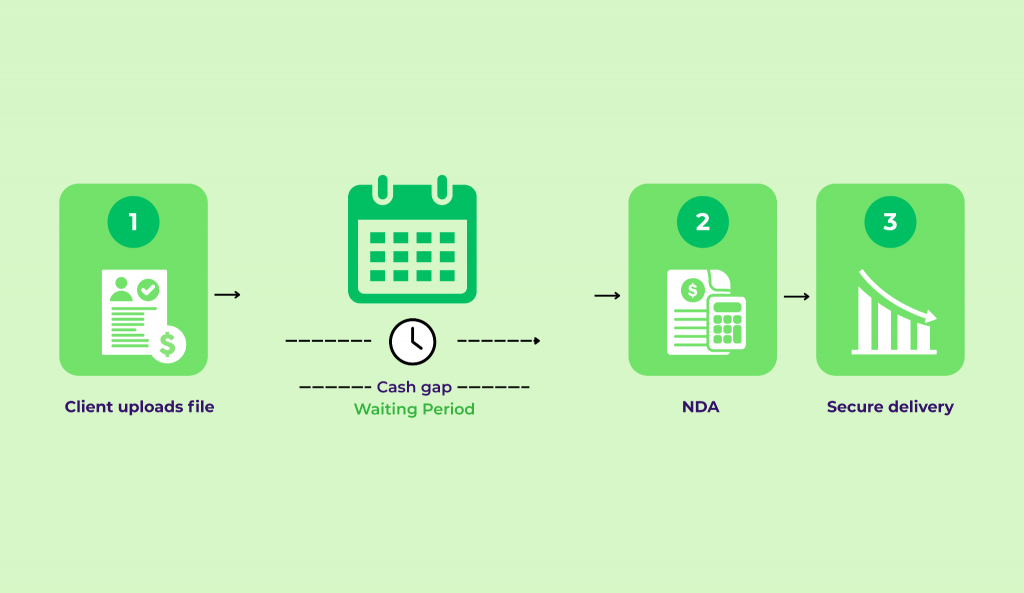
Profit is also timing. Many LSPs pay translators in 30 days but collect from enterprise clients in 60–90 days.
Account for client payment terms and currency fluctuations in profitability. Awtomated stores vendor and client payment terms, monitors payables and receivables, and flags accounts where margin does not justify cash risk. Awtomated’s finance management tools give you the receivables and payables picture in one place, so cash flow never surprises you mid-project.
Some agencies use deposits, milestones, or early payment discounts for new clients.
Linking Project Profitability to Client-Level Strategy
One project rarely tells the whole story. Awtomated aggregates revenue, cost, write-offs, rework, and days-to-pay by client.
Some clients look profitable per project but drain resources through delays and revisions. Focus on high-margin projects to increase profitability in the long run, and reprice or exit accounts that do not create long term value. Auditing where your agency is losing money at a systematic level is the natural next step once you have this client data in one place.
Using Awtomated to Measure and Improve Translation Project Profitability
Awtomated connects quoting, project management, vendor management, quality, and invoicing. Every translation project receives a financial profile from quote to invoice. Connecting invoicing to profitability data means every invoice you send has a real margin number behind it, not just a revenue figure.
Dashboards show:
- estimated vs. actual cost
- margin by PM
- margin by client
- margin by language
- margin by service line
- cash exposure
In 2025, an LSP using Awtomated might discover German marketing transcreation is priced like general translation. After updating rate cards and adding QA lines, gross margin can improve by 8 percentage points in six months.
Role-based access lets sales, PMs, and finance see what they need without exposing sensitive vendor rates. Connect your current data to Awtomated and review 12–24 months of historical project profitability in one place.
Six Practical Steps to Make Every Translation Project Profitable
- Standardize scoping templates for complexity, file types, quality, and review cycles.
- Configure vendor rate cards, translation memory rules, MT pricing, and PM cost assumptions. See Awtomated’s pricing to understand the platform cost you are building into your margin model.
- Track actual linguist hours, PM time, and engineering tasks after delivery.
- Use dashboards to find unprofitable clients, services, and language pairs.
- Define quality tiers and rework rules in contracts.
- Review client profitability quarterly, including margin and payment terms.
Conclusion: Turning Project Data into Sustainable Profit
- Translation project profitability is not a guess when every project has a margin calculation.
- Successful translation project management combines scope, vendors, timelines, and quality discipline.
- Awtomated gives LSPs visibility to grow without sacrificing margin.
- Audit one recent large project and compare perceived profit with actual profit. That gap is where better decisions begin. Book a demo with Awtomated to see project profitability dashboards working on your own data.

FAQ
How can I tell if a single translation project was truly profitable?
Subtract all direct costs from revenue, including linguists, PM time, engineering, QA, tools, and rework. If revenue is $8,000 and direct costs are $4,500, gross margin is 43.75%. Awtomated displays this on the project record.
What is a good target margin for translation and localization projects?
Many LSPs target 35%–55% gross margin. Very specialized work may support higher pricing, while anything under 20% is risky unless strategic. Segment targets by client, service, and language.
How do machine translation and AI affect project profitability?
MT and AI improve margin only when they reduce editing time more than they reduce revenue. Poor MT creates rework. Awtomated tracks MT usage, TTE, quality, and margin so LSPs know where automation truly works.
Can small LSPs without a finance team still track project profitability effectively?
Yes. Start with centralized vendor rates, simple PM time logging, and cost models in Awtomated. Review the largest 20–30 projects first, then expand until every project has margin data.
How often should I review profitability data to improve decisions?
Review each major project after delivery, client profitability quarterly, and dashboard trends monthly. Use the data to adjust pricing, renegotiate payment terms, and refine workflows before small leaks become systemic losses.
Table of Contents
- Why Most LSPs Don’t Really Know Their Project Profitability
- Defining Profitability for a Translation or Localization Project
- From Price-Per-Word to Project Profitability: Rethinking Your Pricing Model
- Scoping the Project Correctly: The Foundation of Profitability
- Calculating and Controlling Direct Translation Costs
- Project Management Time: The Often-Invisible Margin Killer
- Timeline, Rush Jobs, and Their Effect on Profitability
- Quality Levels, Rework, and the Hidden Cost of “Going the Extra Mile”
- Payment Terms, Cash Flow, and the Real Profit Picture
- Using Awtomated to Measure and Improve Translation Project Profitability
- Six Practical Steps to Make Every Translation Project Profitable
- Conclusion: Turning Project Data into Sustainable Profit
- FAQ
Ready to manage your Translation company easily?
Get Started for Free