Translation Project Management Software: What Features Actually Matter for Small LSPs?
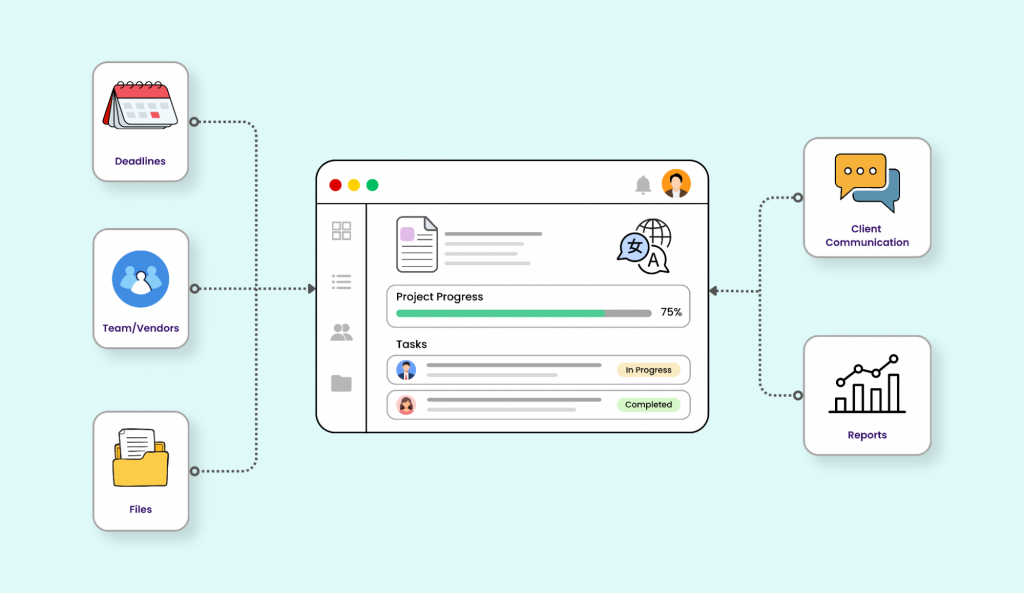
Small language service providers do not need more software for the sake of software. They need a way to keep translation projects moving, protect margins, coordinate vendors, and give clients confidence without burying project managers in admin.
That is why Awtomated looks at translation project management software as more than a task board. For small teams, the right system becomes the operating layer for professional translation services: project management, vendor management, files, finances, quality assurance, integrations, and AI governance in one place. For context on understanding what a TBMS is and where project management fits within it, see our full category explainer.

Answer First: What Features Actually Matter for Small LSPs?
For small LSPs, project management has to be practical. The translation project management software that actually matters is the one that helps you launch, track, deliver, invoice, and learn from every job without rebuilding the same process again and again.
At Awtomated, we believe the must-have features are not abstract. They are the capabilities that keep translation workflows clean when you are managing multiple languages, multiple projects, multiple markets, and a mix of human translators, machine translation, reviewers, and clients who need answers quickly. See how Awtomated’s project management tools cover each of these capabilities in practice.
- Workflow automation: Translation project management software automates and tracks translation workflows, and translation project management systems can automate workflows and reduce busywork. Eliminating repetitive manual tasks increases efficiency in translation processes.
- Quote-to-invoice automation: Automate the quote → PO → invoice chain so a 3-language marketing localization project takes minutes to set up, not hours.
- Vendor management: Store rates, availability, language pair expertise, subject matter expertise, and performance history so project managers can assign tasks confidently.
- File handling and version control: Support many file formats, specialized assets, and translated strings without losing track of the latest translated version.
- Collaboration tools: Keep clients, vendors, reviewers, and the localization manager on the same page with centralized comments and status visibility.
- Integrations: Connect your tech stack, including CAT tools, accounting, content management systems, code repositories, marketing tools, and developer tools.
- AI translation orchestration: Track where ai translation, google translate, machine translation, or a private translation engine is allowed, reviewed, and billed.
- Reporting: See deadlines, translation costs, vendor performance, and profitability before a small fixed-fee job quietly becomes unprofitable.
The rest of this article unpacks those key features and shows how Awtomated covers them end-to-end for language service providers. For a broad overview of the full platform, see Awtomated’s features overview.
What Is Translation Project Management Software (And How Is It Different from a TMS)?
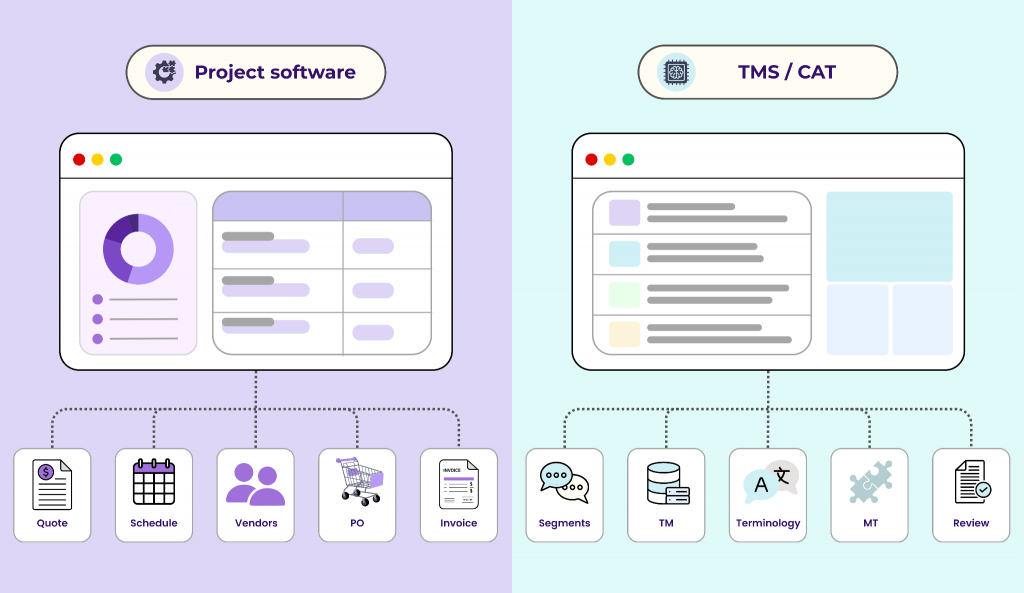
Translation project management software is a specialized project management tool for translation and localization projects. A translation project management system organizes projects from start to finish: lead intake, project creation, quoting, scheduling, vendor assignment, file movement, delivery, invoicing, and reporting. Note that interpretation companies have different scheduling and assignment needs, see our guide on project management for interpretation companies if that is part of your service offering.
It is different from a traditional translation management system. A translation management system, or TMS, usually focuses on the linguistic work: in-editor translation, translation memory, terminology, glossary management, machine translation, and sometimes an integrated cat tool. Translation memory integration in project software suggests matches for new text based on previous translations, reducing costs and ensuring consistency. Glossary management ensures brand terms remain consistent across languages. Integrated CAT tools allow translators to work directly inside the platform.
Think about a 5-language website translation update in May 2026:
- The TMS or computer assisted translation environment handles segments, translation memory, terminology, AI suggestions, and review.
- The project management system handles the client request, quote, schedule, vendor assignment, file handoffs, purchase orders, invoice, and margin reporting.
- Translation project management software handles both traditional workflows and specialized assets, from Word files to JSON, subtitles, and software localization exports.
- The ideal translation management software for a small LSP should not force you to choose one side. Awtomated is translation business management software that includes translation project management plus integrations with external TMS and CAT tools. If you are also evaluating enterprise platforms, see our guide on comparing TBMS platforms including Plunet, XTRF and Awtomated.
That distinction matters because translation management is a complex service. The translation work happens in linguistic tools; the business management happens around it.
Why Small LSPs Need Dedicated Translation Project Management Software (Not Just Spreadsheets)
Many small teams start with Excel, email, shared drives, and a messaging app. That can work for 2–15 people until you have more than around 20 active projects or more than 5–10 languages running at once. Then the localization process starts depending on memory, manual follow-ups, and luck.
Common breakpoints look familiar:
- Version chaos across file formats: Word, Excel, InDesign, XML, XLIFF, JSON, images, and subtitles all move through different people, and nobody is sure which file is final.
- Missed deadlines: Manual reminders get buried, especially when freelance translators work across time zones.
- Unclear capacity: It becomes hard to answer “how many languages are delayed?” or “which vendors are already booked this week?”
- Inconsistent pricing: Minimum fees, rush surcharges, client rate cards, and vendor costs get applied differently from one PM to another.
- Cash flow issues: Invoices go out late, vendor invoicing is delayed, and financial tracking happens after the damage is done.
Dedicated management software changes the daily experience:
- Faster launch: Templates and automated workflows reduce setup time for recurring localization projects.
- Clearer responsibility: Real-time dashboards display project statuses and deadlines.
- Better client visibility: Translation project management software serves as a central hub for collaboration.
- Improved profitability: Small jobs become easier to price, track, invoice, and analyze.
This matters whether your clients need marketing localization, app localization, enterprise localization teams support, software organizations localization, or translation services for marketing materials. Small size does not remove the need for professional management software.
The Core Workflow of a Small LSP (And Where Software Should Help)
A small LSP workflow is usually simple on paper and messy in practice: lead → quote → project setup → translation and review → delivery → invoicing → reporting. Awtomated is built to reduce handoffs at every stage.
- Lead or inquiry: A client sends source files, goals, deadlines, markets, and requirements for language translation, website translation, or software localization.
- Quote: The PM analyzes files, word counts, services, languages, turnaround, and risk. Automated invoicing simplifies billing based on word counts later in the process.
- Project setup: The localization team creates jobs by language, service, reviewer, and due date, then shares style guides, glossaries, and instructions.
- Translation and review: Professional translators work in a cat tool or TMS, sometimes using ai translation or machine translation with human review.
- Quality assurance: Reviewers check translation quality, terminology, formatting, and final layout before delivery.
- Delivery: The team packages translated content, confirms the translated version, and handles client feedback.
- Invoicing and reporting: PMs generate invoices, vendor POs, and profitability reports instead of manually updating spreadsheets.
Small LSPs already use CAT tools, email, shared drives, Slack or Teams, accounting software, and sometimes standalone translation software. The problem is not that these tools are bad. The problem is that disconnected tools create manual handoffs.
The best translation management software for small LSPs reduces those handoffs. It should not be “one more place to update.” It should make translation processes cleaner from intake to reporting.
6 Core Functionalities Every Translation Project Management System for Small LSPs Needs
Generic project management tools like Trello or Asana are useful, but they do not understand word rates, language pairs, vendor POs, review stages, translation memory leverage, or client-specific terminology. Specialized translation project management software must deliver in six concrete areas.
Awtomated bundles these areas into one management system designed specifically for language service providers.
1. Project and Workflow Automation Tailored to Translation
Manual file prep, project creation, job creation per language, deadline reminders, and billing updates consume project manager time. Workflow automation capabilities matter because one in five SMB employees find automation enhances task accuracy.
- Automatically create jobs by target language, service, vendor, and deadline.
- Reuse templates such as “EN → DE/FR/ES marketing localization with review.”
- Workflow automation moves files automatically between translation and editing stages.
- Automated workflows move files automatically from translation to editing.
- Zero manual hand-offs automatically routes files to the next task in the chain.
- Workflow automation skips unnecessary steps for high-confidence machine translations when client rules allow it.
- Auto-generate POs, invoices, deadline reminders, and delivery alerts.
Generic automation can move cards between columns. LSP-focused automation applies word rates, minimum fees, rush surcharges, review steps, and client-specific rules.
The market proves the value. Smartcat automates project flows from request to delivery. XTRF saves Avantpage around 1,000 hours per year through automation. In Awtomated, the goal is the same practical outcome: a PM can launch a multi-language project in minutes using templates instead of rebuilding translation workflows from scratch. For a more focused look at how Protemos compares on project management for small LSPs specifically, see our direct comparison.
2. Vendor, Translator, and Supplier Management in One Place
Small LSPs often manage vendors in scattered spreadsheets: one list for rates, one for availability, one for quality notes, and dozens of email threads for exceptions. For a detailed look at how vendor management features work inside a TMS, see our dedicated vendor management guide.
Robust resource management should include:
- Central profiles for freelance translators, professional translators, reviewers, DTP specialists, external agencies, and subject matter experts.
- Language pair, domain, rate, timezone, capacity, and availability fields.
- Resource management stores databases of freelance translators and their availability.
- Historical performance, on-time delivery, quality scores, and client feedback.
- Preferred vendors per client, market, content type, or regulated domain.
- Data-driven assignment matches projects to suitable translators based on expertise.
- Automated assignment recommendations for urgent jobs and recurring accounts.
Smartcat’s AI Agents in Smartcat assign vetted linguists based on project needs, which shows where the market is going. Awtomated is designed so PMs can answer, from one dashboard: “Who can handle fintech marketing localization into Japanese this week?”
3. Collaboration Tools That Reduce Email Chaos
We hear this often from small LSPs: the translation itself is not always the hardest part. The chaos comes from clients changing source files mid-project, translators asking questions in email, reviewers commenting in Word, and PMs trying to reconstruct the truth afterward.
The collaboration tools that matter are practical:
- Centralized project comments connected to the exact job, file, language, and stage.
- Client and vendor portals for instructions, uploads, questions, and approvals.
- Shared status views so clients can see progress without asking for a manual update.
- Notifications through email, Slack, or Teams when action is needed.
- Reference files, style guides, glossaries, and quality assurance instructions attached to the project.
- Centralized communication keeps project feedback and instructions secure.
Translation project management software serves as a central hub for collaboration, especially across time zones. Awtomated centralizes project communication so PMs can track everything per project instead of searching multiple inboxes. This is also where project management and connecting project management to your CRM becomes important — client history, pricing, and communication should live in one connected system.

4. File Handling, Version Control, and Support for Many File Formats
In 2026, a small LSP may handle Word, Excel, PowerPoint, InDesign, JSON, XML, PO, XLIFF, subtitles, screenshots, CMS exports, code strings, and proprietary client packages in the same week.
Your management systems should help by:
- Logging every source, working, reviewed, delivered, and corrected file.
- Tracking which vendor worked on which file and which service stage.
- Preventing overwrites when files move from translation to review to DTP.
- Linking files to stages such as translation, review, LQA, DTP, and delivery.
- Supporting many file formats directly or through integrations.
- Managing translated strings for software and app localization without breaking structure.
- Keeping version control visible to project managers and clients.
In-context previews help translators see their text in final format, reducing errors. In-context visual previews allow linguists to see layout in real-time. An in context editor is especially helpful for websites, apps, and software localization, even if the PM platform integrates with that editor rather than hosting it directly.
Other tools show why this matters: Crowdin supports 100+ file formats for localization projects. Transifex offers live editing to reduce duplicated work. Transifex offers in-context and visual translation tools. Good file handling and version control prevent expensive rework and missed launches for marketing campaigns.
5. Budgeting, Pricing, and Reporting Designed for LSPs
Small LSPs often work on thin margins. You cannot afford to discover after delivery that a fixed-fee job lost money because review took twice as long or a rush fee was forgotten.
Financial features should include:
- Automated quote creation from word count, services, rate cards, and language pair.
- Minimum fees, rush fees, discounts, and client-specific pricing rules.
- Vendor cost tracking against client price.
- Budget tracking monitors costs and manages vendor invoicing in real time.
- Financial tracking manages invoices and purchase orders.
- Automated invoicing simplifies billing based on word counts.
- Real-time profitability by project, client, service, and language.
Reporting should answer business questions, not just project questions:
- Which clients generate the best margin?
- Which languages are most profitable?
- Which vendors deliver fastest with the fewest corrections?
- What is the average time from delivery to payment?
- Which services should we prioritize this quarter?
This is not optional. One widely cited project management concern is that 80% of companies struggle to stick to project budgets. Awtomated positions itself as translation business management software, not just a project tracker, so pricing, budgeting, invoices, purchase orders, and profitability are central.
6. Integrations, AI Translation Orchestration, and Scalability
Small LSPs increasingly rely on external TMS platforms, CAT tools, machine translation, accounting software, cloud storage, CMS platforms, and developer workflows. Switching between them wastes time unless your project management system connects the pieces.
Must-have integrations include:
- CAT/TMS tools and computer assisted translation tools.
- Accounting software for invoices, POs, and payment tracking.
- Cloud storage and content management systems.
- CMS, marketing platforms, design tools, and API-based content flows.
- Developer platforms like GitHub, GitLab, and code repositories.
- Communication tools for PMs, vendors, and clients.
Integration capabilities connect to Content Management Systems and Computer-Assisted Translation tools. Seamless integrations sync content with marketing platforms and design tools via API. Crowdin integrates with GitLab for quicker translation updates. Crowdin supports integration with GitLab for faster translations. Transifex integrates with GitHub, GitLab, and Slack. XTM integrates with various tools via API for enhanced workflows. Localizely connects with GitHub and GitLab for project management. Smartcat integrates with over 30 tools for automation.
AI adds another layer. A project management system should not necessarily replace your TMS, but it should orchestrate AI usage:
- Track which jobs used human-only translation, ai translation, multiple mt engines, or post-editing.
- Set rules by client, market, risk level, and content type.
- Capture savings, review effort, and quality outcomes.
- Record whether a public tool such as google translate is prohibited for confidentiality reasons.
- Support enterprise grade security expectations for sensitive client content.
Adoption is already high. One industry summary notes that global language services revenue reached about $71.7B in 2024 and was projected around $75.7B in 2025, while AI use is reshaping workflows across the sector. A Crowdin enterprise survey reported that about 95% of respondents used AI or MT in some capacity. Smartcat supports over 280 languages for translation, and Smartcat's AI translation accuracy improves to 95%+ over time according to its product messaging.
Translation project management software allows scalability without adding staff. That is how small LSPs build a global delivery network and support faster time-to-market, which speeds up product launches in localization.
How Many Languages, How Many Projects? Signs You’ve Outgrown Generic Tools
You do not need to wait for a crisis to move from generic tools to dedicated translation project management software. If you have more than 10 ongoing clients, more than 15 languages, or more than 50 active projects per month, the cost of manual coordination is probably already showing up.
The question is not only how many languages you support. It is how many handoffs, vendors, files, deadlines, and billing events your team must coordinate without mistakes.
Red flags include:
- Project managers spend 30–40% of their week on admin instead of client service and team management.
- Nobody is sure which file is latest or which reviewer saw which version.
- Clients ask for status and PMs need 20 minutes to check spreadsheets, inboxes, and drives.
- Invoices go out more than two weeks after delivery.
- Rush fees, minimum charges, or vendor costs are missed.
- The localization manager cannot see risk across multiple projects in real time.
- Small teams feel they need more headcount just to keep the same volume moving.
The math is straightforward. If 100 projects per month each include 15 minutes of avoidable admin, that is 25 hours per month. At $40/hour, that is $1,000/month in PM time. At 20 minutes per project, the number grows even faster.
Avantpage saved around 1,000 hours per year using XTRF, which is worth considering as an enterprise-level alternative if your budget and team size allow for the higher per-user cost. Your exact number will differ, but a specialized management system like Awtomated usually pays for itself through saved hours, fewer errors, faster billing, and better capacity.
Why Awtomated Is the Best Translation Project Management Software for Small LSPs
Awtomated is the best end-to-end translation business management software and project management tool built specifically for small and mid-sized language service providers that need control without enterprise bloat.
Awtomated brings together:
- Project automation templates for recurring translation projects and localization projects.
- Vendor database, availability, performance tracking, and assignment support.
- Collaboration tools that keep clients, vendors, and PMs aligned.
- File tracking, version control, and delivery visibility.
- Financial tracking for quotes, POs, invoices, margins, and reports.
- Integrations with your existing tech stack, including external TMS, CAT, accounting, storage, and developer tools.
- AI-ready workflows for machine translation, post-editing, and client-specific governance — see our dedicated guide on managing MTPE projects inside your TMS for the full workflow breakdown.
Awtomated is especially useful for:
- Boutique agencies focused on marketing localization and marketing materials.
- Technical translation shops serving SaaS companies and software organizations.
- LSPs growing from 2 people to 10 project managers.
- Teams that want unlimited projects, structured processes, and custom plans without losing a user friendly interface.
Onboarding should take days, not months. Awtomated is designed for realistic migration of existing client, vendor, rate, and project data with minimal training. To understand what the platform costs at your team size, see Awtomated’s pricing.
Most importantly, Awtomated becomes a single source of truth for translation and localization projects. It replaces disconnected spreadsheets, inboxes, and folders with one management system built for how small LSPs actually work.
How to Choose the Best Translation Management Software for Your LSP
Small LSPs should not blindly copy enterprise localization teams. Enterprise localization teams often buy heavy platforms for internal software localization, global product content, and complex compliance. Your needs may be more practical: speed, margin visibility, vendor control, and client trust.
There are over 30 translation management systems in the market, and many popular translation management software products overlap in confusing ways. A translation management tool may be strong in the editor but weak in business management. Another may handle files well but not finance.
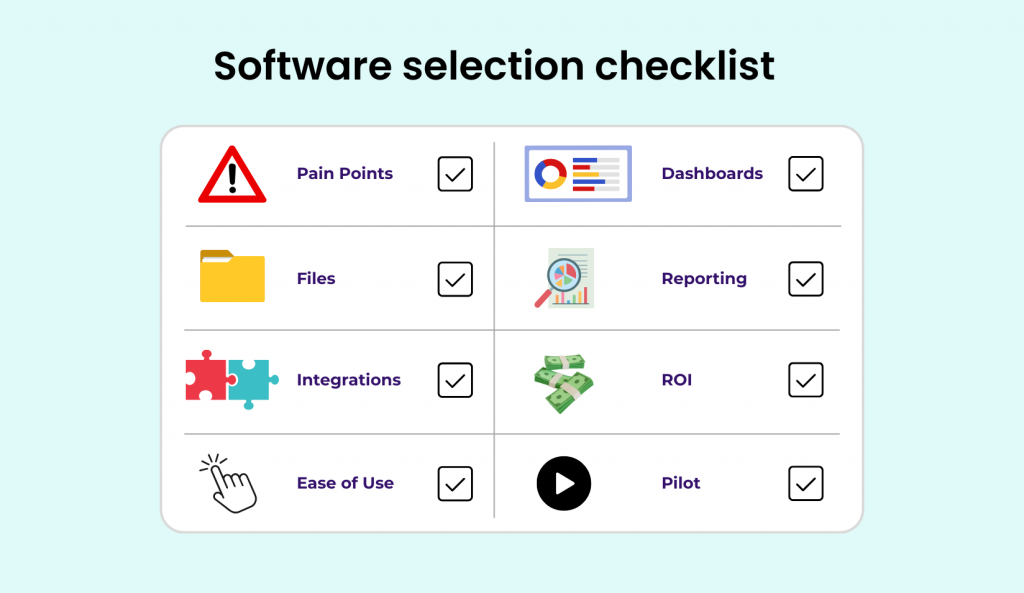
Use this checklist:
- Define your current pain points: files, deadlines, vendors, quotes, invoices, reporting, or translation quality.
- Separate must-haves from nice-to-haves.
- Check your main file formats and specialized assets.
- Confirm integrations with your CAT tool, TMS, accounting system, CMS, storage, and developer tools.
- Test ease of use for PMs, vendors, and clients.
- Assess dashboards, budget reports, vendor reports, and profitability reporting.
- Estimate time saved per project and compare it with the subscription cost.
- Run a 30-day pilot with your top 3–5 clients inside Awtomated or a similar system before fully switching.
Pricing comparisons can help frame ROI, but they should not be the only decision. At the time of writing, Crowdin's paid plans start at $50 per month, Transifex's paid plans start at $120 per month, Localizely's basic plan starts at $16 per month, Smartcat costs $99 per month for projects over 45 days, Lokalise starts at $120 per month for up to ten seats, and Weglot's starter plan costs €99 per year for one language.
The best translation management software for your LSP is the one that fits your process, protects your margins, and helps your team deliver confidently.
Deliver Translation Projects Faster and More Profitably with Awtomated
Awtomated helps small LSPs deliver multi-language projects faster, with fewer errors, cleaner communication, and clear financial visibility. It is built for the daily reality of translation services, not an abstract workflow diagram.
With Awtomated, you can:
- Reduce admin hours per project.
- Avoid missed deadlines with automated reminders and dashboards.
- Keep clients and vendors aligned in one place.
- Track translation costs, vendor invoices, purchase orders, and profitability.
- Improve consistency across translation processes and quality assurance.
- Scale across multiple languages, multiple markets, and more clients without adding unnecessary headcount.
If you are ready to see what your current workflow would look like inside Awtomated, book a live demo, start a trial, or schedule a short workflow mapping session. If you are still evaluating options, the complete TMS buyer’s guide walks through every decision point in detail.
The right translation project management system is the one that aligns with how small LSPs actually work. Awtomated was built precisely for that context.
Table of Contents
- Answer First: What Features Actually Matter for Small LSPs?
- What Is Translation Project Management Software (And How Is It Different from a TMS)?
- Why Small LSPs Need Dedicated Translation Project Management Software (Not Just Spreadsheets)
- The Core Workflow of a Small LSP (And Where Software Should Help)
- 6 Core Functionalities Every Translation Project Management System for Small LSPs Needs
- How Many Languages, How Many Projects? Signs You’ve Outgrown Generic Tools
- Why Awtomated Is the Best Translation Project Management Software for Small LSPs
- How to Choose the Best Translation Management Software for Your LSP
- Deliver Translation Projects Faster and More Profitably with Awtomated
Ready to manage your Translation company easily?
Get Started for Free