Awtomated vs Plunet vs XTRF: Which Translation Business Management System Is Right for Your LSP?
For most small and mid-size language service providers, Awtomated is the better choice because it combines project automation, vendor management, quoting, invoicing, reporting and integrations in one modern platform without the long setup cycles and heavy cost structure of older enterprise systems.
Plunet and XTRF are both established options. Plunet is strongest for large enterprises with complex workflows. XTRF is a capable mid-market translation management system. Awtomated is designed for LSPs that want less manual work, faster implementation and clearer control over margins, tasks, files, vendors and clients.
Below is a practical comparison of Awtomated vs Plunet vs XTRF.
Awtomated vs Plunet vs XTRF: Key Differences
The main difference comes down to enterprise depth, mid-market automation and modern operational simplicity.
- Plunet is a full-blown ERP for the language industry.
- XTRF focuses on workflow automation and vendor management.
- Awtomated focuses on fast setup, intuitive daily use and connected automation across the full translation workflow.
Both Plunet and XTRF are Translation Business Management Systems. Both systems manage the lifecycle of a translation project. Both platforms integrate well with major CAT tools. In that sense, a basic plunet vs xtrf comparison is not about whether either system can manage projects; it is about how much complexity, training and administrative structure your team is willing to carry.
Plunet is best for mid-to-large agencies with 10+ PMs. Plunet is ideal for large enterprises with complex workflows. XTRF is optimal for mid-size agencies with 5-30 PMs. XTRF suits mid-size agencies (5-30 PMs) needing workflow automation. XTRF is also suited for small teams or large LSPs needing automated workflows.
Awtomated is built for language service providers that want the important features of a translation business management system without turning daily project management into an enterprise software project. It helps teams create quotes, assign jobs, track status, manage vendor tasks, store files, monitor invoicing and see margins in real time.
Market data also shows how established Plunet and XTRF are:
- Plunet has 184 customers while XTRF has 138.
- Plunet has 184 customers in the translation industry.
- XTRF has 138 customers in the translation industry.
- Over 350 language companies use XTRF worldwide.
- Plunet has a 0.06% market share in translation.
- XTRF has a 0.05% market share in translation.
- Plunet ranks 10th in the Translation And Localization category.
- XTRF ranks 12th in the Translation And Localization category.
- Plunet ranks 10th in the translation market.
- XTRF ranks 12th in the translation market.
Those numbers matter, but not all translation agencies need the same depth. Awtomated’s position is simple: most growing LSPs need an modern, futureproof and efficient platform that improves productivity quickly, not a complex system that takes months before project managers, sales, finance and vendor teams feel the benefit.
Features and Functionality
Feature depth affects daily operations directly. The right system should reduce manual work, keep data accurate and help project managers deliver accurate translations across every language pair, customer request and localization project.
Awtomated’s Modern Approach
Awtomated TBMS is designed around the way modern LSPs actually work: sales requests come in, teams create quotes, project managers assign tasks, vendors deliver files, clients expect visibility and finance needs invoicing without chasing data across other tools.
Awtomated uses AI-powered automation features and workflow automation to reduce manual work across the full process. The platform can support smart vendor matching, project routing, project automation, task assignment, status tracking, client communication and vendor payment tracking from one connected interface.
The goal is less manual work at every step. For example, an LSP can move from a quote request to a live project, route jobs to suitable translators, centralize files, monitor terminology and see profitability without switching between spreadsheets, inboxes and disconnected software. Awtomated’s vendor management and finance management features keep those workflows connected from project creation through to payment.
Awtomated’s real-time collaboration and communication tools are especially useful for small businesses and growing LSPs. The system gives users access to the information they need without burying them in unnecessary enterprise menus. It gives teams the ability to act quickly, support customers proactively and keep translation workflow data in one place.
Plunet Business Manager Features
Plunet offers ERP-level functionality and comprehensive project management. It supports complex workflows, detailed price structures, customer records, vendor records, jobs, reporting, invoicing and management across multiple teams or business units.
Plunet helps streamline translation workflows and project management. Plunet is highly customizable and tailored to unique workflows, which is helpful for companies with very specific process requirements, compliance needs or enterprise approval structures.
Its reporting and financial integration capabilities are strong. Plunet customers can build detailed dashboards, track project status, manage receivables and payables, and connect financial data to other tools. Plunet integrates with major CAT tools like memoQ and Trados, and it also supports integrations with tools such as SDL Trados Studio, Phrase and other CAT tools.
The trade-off is complexity. Plunet’s depth can be valuable for large enterprises, but smaller teams may find that the interface, setup, pages, custom fields, price lists and training requirements create extra work before the system becomes efficient.
XTRF Feature Set
XTRF provides excellent tools for project management and workflow automation. It is built around mid-market needs such as project creation, task tracking, vendor management, client portals, quotes, purchase orders, invoicing and reporting.
XTRF focuses on workflow automation and vendor management for LSPs, which makes it a strong option for translation agencies that have outgrown spreadsheets and need more structured processes. It can help project managers route tasks, communicate with translators, monitor status and manage high volume projects more consistently.
XTRF is part of the XTM Cloud ecosystem since 2023. That gives XTRF a stronger connection to XTM Cloud and related cloud-based translation workflows. Its integration ecosystem includes major CAT tools and third-party software, although some workflows may still require configuration, maintenance or extra support.
The interface is generally more modern than older enterprise systems, but the platform can still feel limited or complex in places. Smart Projects and Classic Projects can create a split user experience, and some users report that custom fields, notification templates or specific process changes are not always as flexible as expected.
Pricing and Value
Pricing differs widely across these platforms. Plunet typically requires a larger budget and more implementation planning. XTRF is more accessible but can still become costly as users, modules and integrations grow. Awtomated is built to deliver value quickly through flexible pricing, fast onboarding and fewer hidden costs.
Plunet Pricing Structure
Plunet pricing starts at approximately €220/month. For real-world agency use, however, Plunet often costs more once users, modules, integrations and setup needs are included.
A realistic custom pricing range for many mid-to-large agencies is around €500-1,500 monthly. Plunet’s implementation costs range from €5,000-15,000. Those implementation costs can include configuration, training, workflow design, data migration, template development and consultant involvement.
The total cost of ownership can make sense for a large agency with complex workflows, multiple teams and a need for ERP functionality. Large agencies (20+ people) require Plunet for ERP functionality when the business needs deep process control, compliance structure and enterprise reporting.
The hidden costs are usually tied to time and complexity. Training, setup, version changes, custom templates, price-list management and ongoing support can increase the real cost beyond the monthly software fee.
XTRF Cost Analysis
XTRF starts at €75/user/month. That makes XTRF more accessible than many enterprise systems at the entry level, especially for teams comparing translation management system options for the first time. For a full breakdown, see our XTRF pricing breakdown.
A realistic budget for XTRF is €500-1,000/month. XTRF’s Professional plan starts at $9,000/year. Annual license costs and tier-based pricing can increase depending on users, modules, integrations and support needs.
Implementation and training expenses are usually lower than Plunet’s, but they are still part of the decision. Teams need time to configure workflows, import data, train project managers, connect CAT tools and define vendor management processes.
ROI can be strong when the system is adopted well. XTRF’s value is clearest for agencies that need structured workflow automation but do not want full ERP-level customization.
Awtomated’s Transparent Pricing
Awtomated is built around competitive monthly pricing, fast implementation and a transparent total cost of ownership. The platform is designed so LSPs can use the features they need without paying for a heavy enterprise structure before the team is ready.
The value comes from faster productivity. Instead of spending months configuring a complex system, agencies can start improving quoting, project management, vendor tasks, invoicing and reporting quickly.
Awtomated’s flexible pricing tiers are especially helpful for small and mid-size translation agencies that need automation but must protect cash flow. The platform reduces reliance on other tools, disconnected data and repetitive admin tasks.
For many LSPs, the superior value proposition is not only the monthly cost. It is the combination of quick ROI, fewer hidden setup fees, less training, faster team adoption and immediate visibility into project margins. See Awtomated’s pricing to find the right plan for your team.
Implementation and Setup
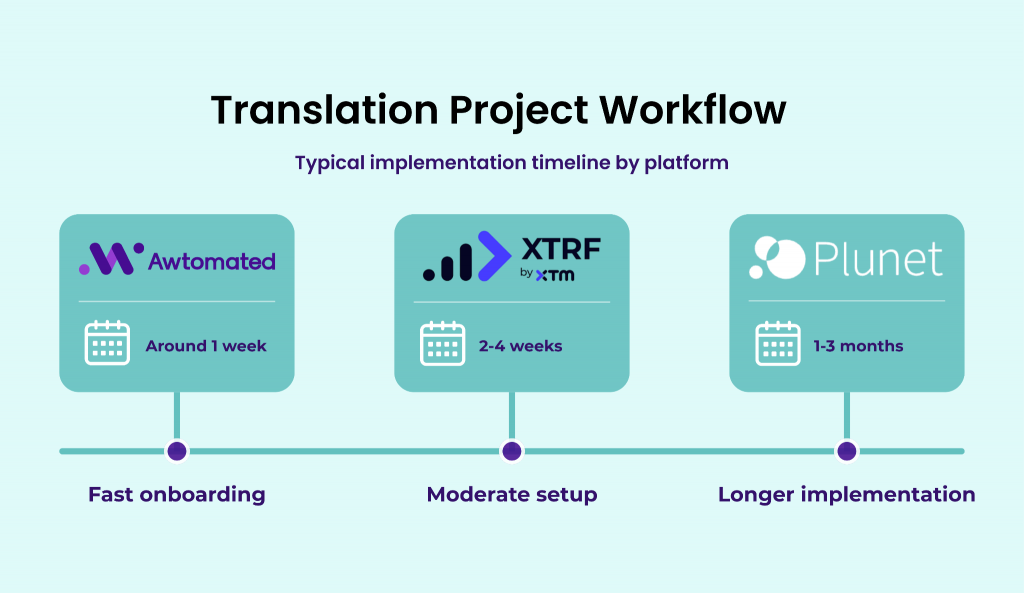
Implementation complexity affects agency operations because every week spent configuring software is a week where project managers still rely on old workflows. The best system should improve work without disrupting active clients, vendors and projects.
Awtomated’s Streamlined Onboarding
Awtomated is designed for rapid 1-week implementation with guided setup. Many core workflows can be configured quickly, so teams can move from onboarding to active use without waiting months for value.
Automated data migration tools and guided migration processes help agencies bring in customers, vendors, projects, price data and files from spreadsheets or other tools. The setup is designed to be practical rather than overwhelming.
The interface requires minimal training because Awtomated is built around familiar LSP workflows: request, quote, project, tasks, vendor, files, status, delivery and invoicing. Users can understand the process quickly and start working with less friction.
Immediate productivity gains are the point. Awtomated helps teams reduce admin work, improve visibility, support clients more proactively and adopt automation without needing a dedicated software administrator.
Plunet Implementation Process
Plunet implementation commonly takes 1-3 months with consultant involvement. More complex enterprise setups can take longer, especially when multiple business units, custom workflows, financial integrations and large data migrations are involved.
The process can include admin training, user training, data cleanup, vendor database migration, customer data migration, financial setup, workflow templates and reporting configuration. That structure is useful for large enterprises but can be demanding for smaller teams.
Plunet’s customization possibilities are extensive. The challenge is that every custom process must be defined, configured, tested and maintained. For project managers who need immediate productivity, the learning curve can feel steep.
Daily operations may be disrupted during setup because teams must adapt to new processes while still delivering translation and localization work. That is manageable for larger organizations with dedicated admin capacity, but it can be costly for lean teams.
XTRF Setup Experience
XTRF implementation is usually faster than Plunet. A typical setup can take 2-4 weeks with vendor support, depending on data quality, workflows, portals, integrations and the number of users.
The setup has moderate complexity. Teams need to configure project templates, vendor records, client data, workflow steps, financial settings and reporting. Training is still required, especially when teams use more advanced automation features.
Data migration is usually manageable but should not be treated as automatic. Agencies need to prepare data carefully, especially when moving from spreadsheets, email chains or older software.
Team adoption is generally easier than with heavier ERP systems, but change management still matters. Users need to understand the structure, categories, tasks, status updates and project workflow before the system delivers full productivity gains.
User Experience and Interface
User experience directly affects daily productivity. A powerful system is only helpful if project managers, sales teams, finance users, translators, vendors and clients can use it consistently.
Awtomated’s Modern Design
Awtomated’s interface is modern, intuitive and designed for efficiency from the start. The goal is to help users complete daily work faster, not force them through unnecessary software steps.
The platform uses a responsive, mobile-friendly design so users can access key information from different devices. That matters for distributed teams, remote project managers and vendors who need fast updates.
The learning curve is minimal. Teams can create quotes, assign tasks, manage files, check project status, review margins and handle invoicing without navigating a dense enterprise interface.
Awtomated’s user satisfaction comes from practical speed: fewer clicks, less manual work, clearer data and faster adoption. For most growing LSPs, that usability advantage translates directly into better productivity.
Plunet User Interface
Plunet has a traditional enterprise interface with comprehensive menus. Its depth is useful for companies that need extensive control, but navigation can feel complex for new users.
The learning curve is one of the biggest considerations. Teams may need structured training before they can confidently manage quotes, jobs, vendors, invoices, reporting and dashboards.
Customization options are strong, and dashboard capabilities can be tailored to different users. For a large agency with dedicated system owners, that flexibility is a major advantage.
User feedback often recognizes Plunet’s power while also noting its older interface and setup complexity. It is a strong system, but not all LSPs need that level of structure.
XTRF Usability
XTRF’s interface is designed for mid-market teams and is generally easier to approach than a full enterprise ERP. It gives project managers useful tools for task management, workflow efficiency and vendor coordination.
The platform supports remote work through portals, access controls and structured communication with clients and vendors. That helps teams keep project data, files and status information more organized.
Training requirements are moderate. Users usually need time to understand project types, workflow rules, automation options and reporting structure.
Adoption can be good when workflows are configured clearly. However, the interface can feel inconsistent when teams move between different project models or need custom behavior that the system does not support easily.
Integration Capabilities
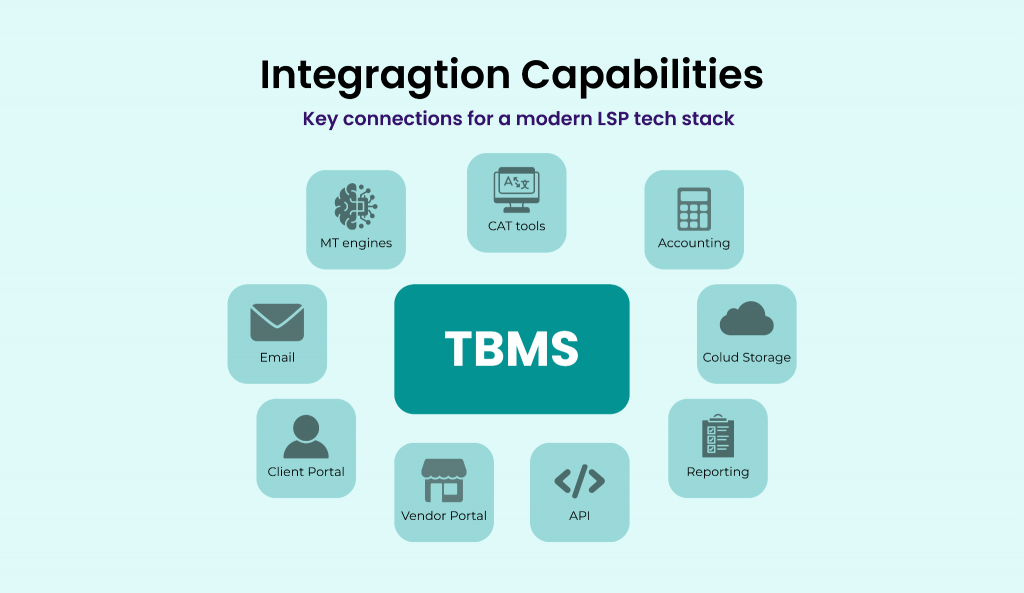
Integrations matter because LSPs rarely work inside one tool. A translation business management system needs to connect with CAT tools, MT engines, accounting software, email, storage, portals and reporting workflows.
Awtomated’s Connected Platform
Awtomated is designed as a connected and open platform for modern LSP operations. It supports CAT tool and software integrations, email integrations, cloud file storage, accounting connections and machine translation workflows.
The platform is built with modern API architecture for seamless connections. That makes it easier to connect Awtomated with other tools as an agency grows or changes its technology stack.
Pre-built integrations with popular LSP tools help teams avoid unnecessary custom development. Awtomated is not trying to replace every linguistic tool; it acts as the central business layer around translation, localization, vendors, clients, files and finance.
Its future-ready integration capabilities and AI-powered automation make Awtomated especially strong for LSPs that want a proactive approach to operations. The system is built for automation, not retrofitted around it.
Plunet Integrations
Plunet has strong native CAT tool integrations with memoQ, Trados, Phrase and other major CAT tools. Plunet integrates with major CAT tools like memoQ and Trados, which is important for agencies managing large multilingual projects.
It also supports ERP and accounting system connections, API capabilities and custom integration options. That makes Plunet suitable for large organizations that need deep technical alignment with existing business systems.
The platform’s integration depth is one of its strongest features. It can support complex workflows across translation, finance, vendor management and reporting.
The challenge is that legacy system compatibility and custom integration maintenance can require technical planning. Integrations may be powerful, but setup and management can add cost and time.
XTRF Integration Ecosystem
XTRF connects with XTM Cloud and major CAT tools, and XTRF is part of the XTM Cloud ecosystem since 2023. That makes XTRF especially relevant for teams already using XTM Cloud or planning to build workflows around that environment.
The platform also supports third-party software compatibility, API access and custom development options. These capabilities help agencies automate project management and connect financial or operational tools.
Integration reliability depends on the specific setup. Some connections are straightforward, while others require configuration, support or maintenance.
For mid-size teams, XTRF’s integration ecosystem is often enough. For agencies that want less technical management and a more unified experience, Awtomated may be easier to run day to day.
Which Translation Business Management System Should You Choose?
Choose Plunet if you are a large enterprise needing complex ERP functionality and have a significant budget for implementation. Plunet is the strongest fit when your agency has multiple teams, complex approval structures, high volume projects, detailed reporting needs and the resources to manage a long setup.
Choose XTRF if you are a mid-size agency comfortable with moderate complexity and traditional interfaces. XTRF is a practical choice when your team needs vendor management, workflow automation, project management and connections to CAT tools without adopting a heavier ERP system.
Choose Awtomated if you want modern automation, rapid implementation and superior user experience that drives immediate ROI. It is the best fit when your team wants to create quotes faster, reduce manual work, centralize files, improve invoicing, track margins and give users clearer access to project data.
For most language service providers, Awtomated offers the best balance of features, usability and value. It gives LSPs the structure they need without the unnecessary weight of legacy enterprise software.
Making the Right Decision for Your LSP
Agency size is a practical starting point. Protemos is best for freelancers and micro-teams (1-2 people). Small agencies (3-7 people) should consider Protemos or XTRF. Mid-size agencies (7-20 people) need XTRF or Plunet. Large agencies (20+ people) require Plunet for ERP functionality.
That traditional sizing model is helpful, but Awtomated changes the conversation for small and mid-size agencies. Instead of choosing between lightweight tools and complex legacy platforms, LSPs can use a modern system that supports growth without adding unnecessary operational burden.
Budget also matters. If your team has the resources for months of implementation, custom configuration and enterprise-level training, Plunet can be a strong fit. If your team wants structured automation at a mid-market cost, XTRF is worth reviewing. If your team wants fast ROI, transparent value and less manual work, Awtomated is the more efficient choice.
Timelines are equally important. Awtomated is built for teams that want to move quickly, improve productivity immediately and avoid long software rollouts. For LSPs looking at long-term scalability and future-proofing, Awtomated provides the automation, integrations and usability needed to support growth without locking the business into outdated workflows. If you are still in the early stages, our guide on how to set up a translation agency can help you choose the right tools from day one.
Frequently Asked Questions
● Which TBMS offers the fastest implementation?
Awtomated offers the fastest implementation because it is designed for guided setup and rapid onboarding, often within about a week. XTRF usually takes several weeks. Plunet commonly takes 1-3 months because the setup is more complex.
● What are the total costs including hidden fees?
Plunet pricing starts at approximately €220/month, but realistic monthly costs can reach €500-1,500 and Plunet’s implementation costs range from €5,000-15,000. XTRF starts at €75/user/month, a realistic budget for XTRF is €500-1,000/month, and XTRF’s Professional plan starts at $9,000/year. Awtomated is designed to reduce hidden costs through faster setup, flexible pricing and less need for heavy configuration.
● Which system provides the best ROI for mid-size agencies?
Awtomated usually provides the fastest ROI for mid-size agencies because teams can adopt the platform quickly and reduce manual work immediately. XTRF can also deliver good ROI for mid-size agencies that need workflow automation. Plunet can deliver long-term value but usually requires more time, cost and training before ROI is visible.
● How do migration timelines compare between platforms?
Plunet migration is usually the longest because of ERP-level configuration and detailed data structures. XTRF migration is moderate and often manageable in a few weeks. Awtomated is designed for faster migration from spreadsheets, email workflows and other tools.
● Which TBMS has the most modern automation features?
Awtomated has the most modern automation approach for LSPs that want AI-powered automation, smart routing, vendor matching, real-time collaboration and built-in support for connected workflows. Plunet has deep enterprise automation. XTRF provides strong workflow automation and vendor management for mid-market teams.
● What integration capabilities matter most for LSPs?
The most important integrations are CAT tools, MT engines, accounting systems, email, cloud storage, vendor portals, client portals, reporting and API access. Plunet is strongest for deep enterprise integrations. XTRF is strong for XTM Cloud and mid-market workflow connections. Awtomated provides the connected platform most LSPs need to run projects, vendors, files, clients and finance with less manual work.
If you are still evaluating your options, the complete TMS buyer’s guide walks through every major decision point in detail. When you are ready to see how Awtomated works in practice, book a demo and our team will show you exactly how the platform fits your workflow.
Disclaimer:
The information in this comparison is provided for informational purposes only to help readers evaluate Awtomated, Plunet, and XTRF. All product names, trademarks, logos, and brands are the property of their respective owners. Inclusion in this article does not imply endorsement, affiliation, or recommendation. Product details and features are based on publicly available information and may change over time. For any corrections or changes, please contact Awtomated Team at [email protected].
Table of Contents
Ready to manage your Translation company easily?
Get Started for Free