How to Hire Your First Freelance Translator: A Checklist for New Translation Agency Owners
Key Takeaways
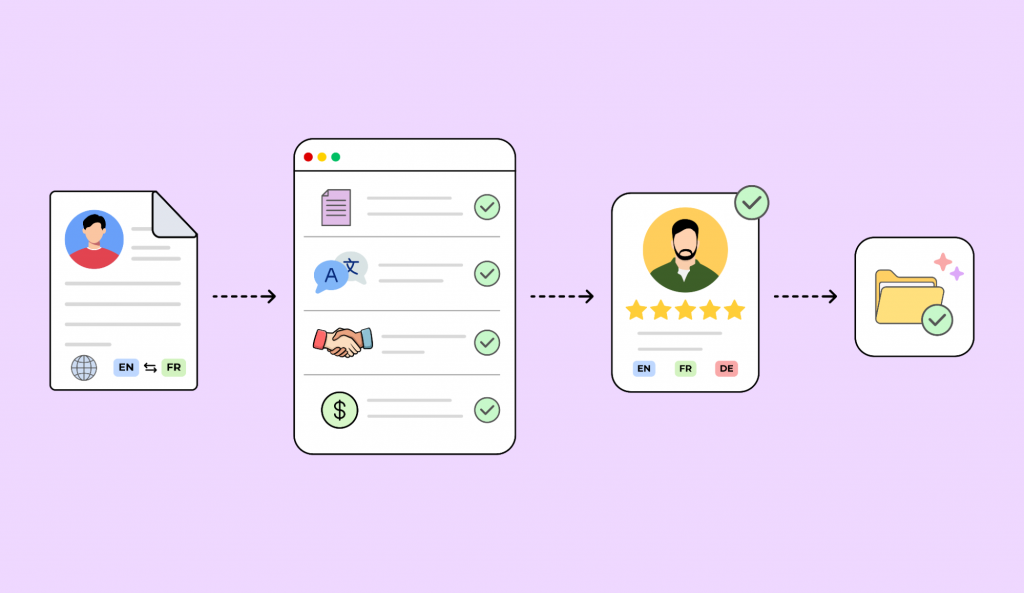
Define before you search. New translation agency owners should specify language pairs, target languages, and subject matter expertise before posting any job. This single step eliminates most wasted time in the hiring process.
Vetting doesn't have to take long. A structured process-checking qualifications, reviewing portfolios, and running a paid test-typically filters out most poor fits in under an hour per candidate.
Formalize everything from day one. Clear pricing, payment terms, and NDAs should exist before any work begins, ideally managed through a system like Awtomated instead of scattered spreadsheets. See how automating translator onboarding admin removes the manual bottlenecks from day one.
Build a pool, not a dependency. Tracking performance inside Awtomated and building a preferred linguist pool is how a new agency becomes a scalable, professional LSP.
Introduction: Why Your First Freelance Translator Hire Matters
Most Language Service Providers start small-one or two freelance translators, a handful of clients, and a lot of ambition. That first hire sets the tone for your quality standards, your client relationships, and essentially your entire business reputation in the translation industry.
Here's what matters: a bilingual person who speaks two languages is not automatically a professional translator. A qualified freelance translator brings formal education, subject matter expertise, disciplined QA habits, and familiarity with CAT tools. A qualified translator understands both linguistic and cultural disparities that a bilingual speaker may overlook. Translation services span document and digital content translation across industries including healthcare and legal, and freelance translators can work remotely from anywhere in the world.
This post is a practical checklist for new translation agency owners using or considering Awtomated-covering everything from defining needs to onboarding, contracts, and knowing when to use translation companies instead of freelancers. Before any of these steps make sense, make sure you have already done the foundational work of building your agency foundation before hiring.

Step 1: Define Exactly What You Need Before You Post a Job
Define clear project requirements before hiring freelance translators. Before you post a single job listing, get specific about what you actually need:
- Source language and target language pairs. Specify direction (e.g., English to German, German to English) and regional variants. Brazilian Portuguese and European Portuguese are different markets with different translator pools. Spanish translation requirements differ between Latin American and Iberian variants.
- Subject matter expertise. Legal contracts, medical device manuals, SaaS UI strings, marketing copy, gaming localization, financial reports-each domain carries different risk, knowledge requirements, and cost. Industry expertise should match the specific field of the translation task.
- File formats and tools. Will translators need to handle DOCX, InDesign, Figma, or subtitling formats like SRT? Familiarity with CAT tools is beneficial for translators and affects who you can consider. Utilize Computer-Assisted Translation tools to enhance efficiency and consistency across projects.
- Volume and timeline. A 10,000-word monthly retainer is a different proposition from a one-off 2,000-word project. Freelance translators can work on projects of any size, but volume determines whether you need one freelancer or several-or whether a translation company makes more sense.
Awtomated can store client requirements-style guides, termbases, file types-so freelancers see clear briefs every time without you re-explaining everything on each job.
Step 2: Decide Between Freelance Translators and Translation Companies
As a new LSP owner, you'll constantly face this choice. Here's a simple breakdown:
- Hire a freelance translator when you have a single language pair, predictable volume, non-regulated content, and a limited budget. Freelancers tend to be more flexible, more affordable per word, and easier to build a close working relationship with.
- Subcontract to translation companies when you face multilingual launches across 10+ languages, need 24/7 coverage, or handle regulated sectors like pharma or finance where certified work and complex QA are expected.
- Use a hybrid setup by maintaining a core pool of freelancers for your main language pairs while engaging agencies for rare languages or overflow capacity.
Awtomated can track different vendor types-individual freelancer versus B2B translation company-in one place, with separate rate cards and performance data for each.
Step 3: Where and How to Find Qualified Freelance Translators
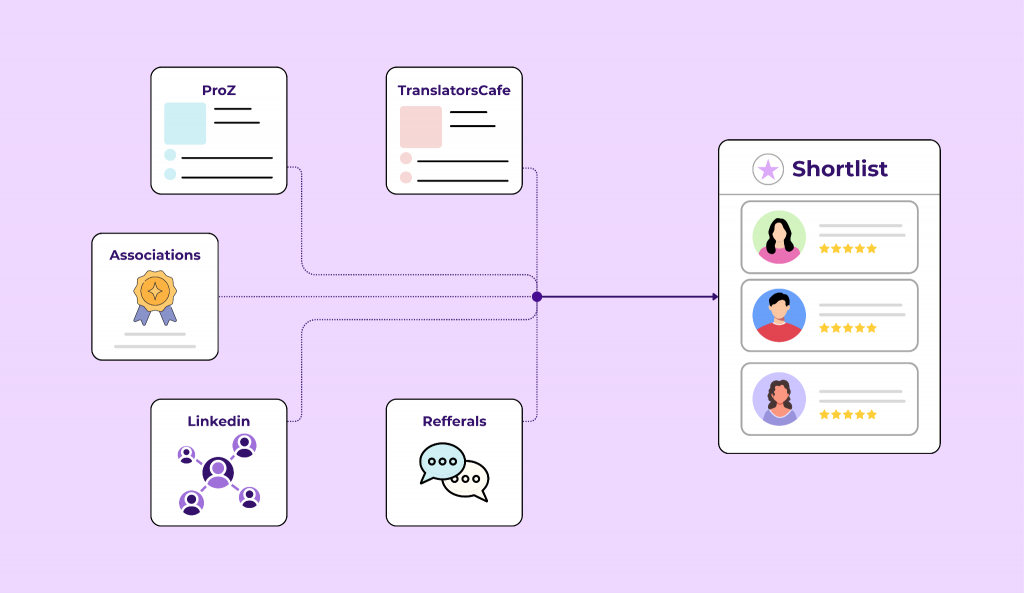
Avoid generic freelance platforms; seek specialized translation networks. Use professional directories to find vetted freelance translators. Here are the channels that consistently produce the best candidates:
- Specialized job boards. Use specialized job boards like ProZ for technical translation needs. TranslatorsCafe is another strong option. English to Chinese translation is highly demanded globally, and these platforms have deep pools for it.
- Professional associations. The American Translators Association, ITI, and regional bodies in specific countries maintain member directories. Translators can specialize in languages like Arabic, German, and Spanish-association listings help you filter by pair and domain.
- LinkedIn and referrals. Search by language pair and specialization. Referrals from other LSPs or from your professional community are often the fastest path to reliable linguists.
Write precise job posts: specify language pairs, target language variety, subject matter expertise, expected volume, CAT tools required, deadlines, and budget range. Anyone can call themselves a translator on open marketplaces, so a consistent vetting process is non-negotiable. Start by building a shortlist of 3–7 freelance translators per key language pair to avoid dependency on a single vendor.
Awtomated helps maintain a centralized vendor database so you don't lose freelancer contacts across spreadsheets and email threads. For the full picture of managing translators through a vendor portal at scale, see our dedicated vendor management guide.
Step 4: How to Vet Freelance Translators Quickly and Thoroughly

This is where most translators who aren't the right fit get filtered out. Evaluate translators based on industry standards rather than just pricing. Translation quality is challenging to assess without language knowledge, which makes a structured process essential:
- Check qualifications. Check for a translator's educational background and experience. Look for university degrees in translation, ATA certification or ITI membership, and sworn translator status where required. Professional certification is crucial for translator qualifications-the American Translators Association offers certification for translators, and an ata certification signals verified competence. Check professional credentials from recognized organizations for translators.
- Review subject matter expertise. Experience in a specific field enhances a translator's qualifications. Ask for 1–2 real-world samples relevant to your niche-a privacy policy in French, an annual report in Japanese. Request sample translations to assess a translator's skills against your actual needs.
- Run a paid test. Conduct paid translation tests for quality evaluation of translators. A 250–400 word test assessed by an experienced linguist or trusted senior freelancer reveals what a portfolio alone cannot. Translators should be fluent in both the source language and target language. Native fluency is essential for translators in their target language.
- Verify references and online presence. Check LinkedIn, previous clients, and translation industry platforms to confirm reliability. Verification successful? Move to the next step.
- Watch for red flags. Unrealistically low rates, too many language pairs claimed (especially target languages that aren't native), reluctance to do a small paid test, inconsistent communication, or samples that look like output from malicious bots or unedited machine translation.
Awtomated can store test results, notes, and tags (e.g., "EN>DE marketing, SaaS, top-tier") so the right translator is displayed and assigned automatically later. This data also becomes valuable when auditing whether your vendor process is efficient and where it is costing you time or margin.
Step 5: Set Clear Rates, Payment Terms, and Quality Expectations
Establish clear pricing models before beginning a translation project. For an idea of what Awtomated costs to run as your business management platform alongside these vendor rates, see Awtomated’s pricing. Translation pricing varies widely based on project complexity, and 2026 benchmarks reflect a hybrid human/AI landscape:
- Pricing models. Most translators prefer per-word rates for projects. Translators often charge by the word or page-general content runs $0.08–$0.16 per word, while legal or medical work can reach $0.25–$0.50+ for rare pairs. Hourly rates ($30–$100+/hour) apply for creative work, LQA, or project management. Negotiating fees is common for redundant translation projects where translation memory reduces new content. Gengo translators' earnings depend on language demand and job availability, illustrating how market dynamics shape rates.
- Rate factors. Direction matters-translating into a native target language commands higher rates. A widely spoken language pair like English to Spanish costs less than a rare Nordic pair. Subject matter complexity, volume, and rush surcharges (25–100% premium) all factor in.
- Minimum fees and policies. Set minimum job fees, rush surcharges, weekend rates, and revision policies. Document these inside Awtomated's vendor profiles and rate cards.
- Payment terms. Agree explicitly-net 30 days, via bank transfer or PayPal. Awtomated helps track PO numbers, invoices, and payment status so nothing falls through.
- Quality expectations. Provide style guides and glossaries to maintain consistency in translations. Define forbidden terms, formatting rules, and QA tolerance levels. For medical content, zero tolerance for terminology errors is expected.
Step 6: Contracts, NDAs, and Legal Basics for Working with Freelancers
This is practical guidance, not legal advice. But formalizing your working relationships from day one will protect your agency and your clients:
- Master Service Agreement (MSA). Cover confidentiality, data protection (including GDPR where relevant), IP ownership, and payment terms. The MSA should specify who owns the delivered translation. Sign this before the first project.
- NDAs for sensitive projects. Product launches, legal disputes, healthcare data-these require NDAs. Awtomated can store signed documents alongside vendor profiles for easy access and audit.
- Non-solicitation clauses. Protect your LSP's relationship with end clients while remaining fair to freelancers. These clauses exist to prevent direct contact between your translators and your clients during and after the engagement.
- Data security service. Formalize expectations: secure file transfer, no use of public MT for confidential texts without consent. Security matters, especially under GDPR. Respond to any data breach concerns with a documented process-respond ray id or incident tracking should be part of your workflow.
- Dispute handling. Contracts should reflect how late deliveries or quality failures will be handled. These rules can be codified into workflows in Awtomated.
Step 7: Onboard Your Freelance Translator into Awtomated
Hiring is only half the job. Onboarding into your translation business management software is where the real process begins. This is also the right moment to clarify whether translators will be working on pure human translation or onboarding translators into an MTPE workflow, which has different rate structures, tools, and quality expectations:
- Create a vendor profile. Contact details, language pairs, subject matter tags, rates, availability, qualifications, country of residence-all stored in one account inside Awtomated.
- Upload resources. Link style guides, termbases, and reference files so they are automatically attached to relevant projects. This ensures new translators translate from the source text with full context.
- Set up workflows. Translation → editing → proofreading. Collaboration with a second linguist enhances the quality of translations. Assign the new freelancer to their first live project with clear deadlines and POs. Leverage translation memory for consistency across jobs.
- Track from day one. Monitor delivery times, revision counts, and client feedback within Awtomated from the first job. This data tells you whether to promote a freelancer to preferred vendor status. Awtomated’s vendor management tools make it straightforward to track, rate, and assign the right translators to future jobs.
Using Awtomated from day one prevents the chaos of email threads, manual invoicing, and lost files as your team and vendor pool grow.

Step 8: Manage Performance and Build a Reliable Translator Pool
Your first hire is not the finish line. Feedback loops are vital for improving translator outputs over time. Here's how to build a reliable pool:
- Monitor performance over the first 3–6 months: on-time delivery, quality scores from editors, responsiveness, client satisfaction, and consistency across projects.
- Categorize translators in Awtomated as "Preferred," "Backup," or "On Trial." Use these categories for automatic vendor selection on new jobs-the software verifies the best match.
- Share constructive feedback. Both positive reinforcement and corrective guidance. Update style guides based on recurring issues so new translators benefit from lessons learned.
- Scale your pool. A mature LSP aims for 3–5 strong freelancers per key language pair and domain. All managed and scheduled through Awtomated.
- Run periodic reviews. Quarterly reports from Awtomated help you decide who gets more volume, who needs coaching, and who should be phased out. This is how you build a community of reliable linguists.
Step 9: When to Choose a Translation Company Instead of More Freelancers
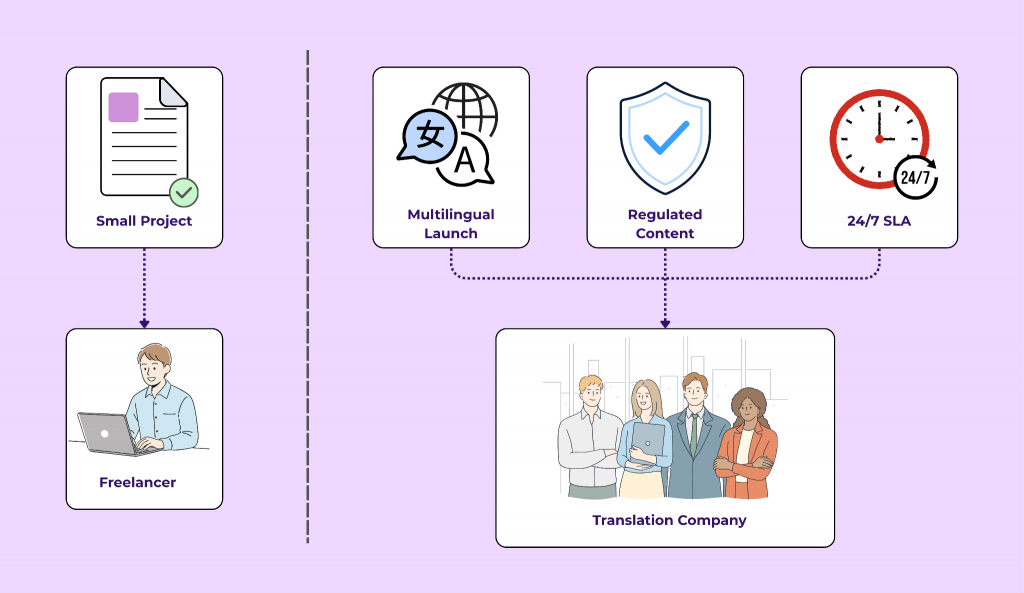
Sometimes scaling your agency means partnering with other companies, not just adding more freelancers to your roster:
- Concrete scenarios. A 20-language website rollout, global product documentation, regulated life sciences content, or 24/7 support SLAs for enterprise clients-these are where a single multi-language vendor reduces your project risk.
- Overhead comparison. Coordinating dozens of individual freelancers across time zones, each with separate invoices and communication threads, erodes margins. A complete localization partner absorbs that complexity.
- Evaluate agencies rigorously. Look for certifications like ISO 17100, documented QA processes, technology stack compatibility, and references-just as you would vet individual freelancers.
Awtomated manages both individual freelancers and multi-language translation companies as vendors, letting you mix and match based on what each client needs.
Conclusion: Turn Your First Hire into a Scalable Process
Hiring freelance translators is not a one-off task-it's the beginning of a repeatable, data-driven vendor management process. Every step in this checklist, from defining your needs to tracking performance, builds the foundation of a professional LSP that can handle growth without chaos.
By 2027, agencies that systematize translator hiring, onboarding, and performance tracking inside software like Awtomated will outcompete those still waiting on email replies and searching through old spreadsheets. The knowledge you invest in your process today pays compound returns tomorrow.
Ready to build your freelance translator network the right way? Book a demo to explore Awtomated as your translation business management software and turn your first hire into a scalable, successful operation.
FAQ
How many freelance translators should a new LSP work with in the first year?
A practical range is 5–20 active freelancers depending on your language coverage and volume. The key principle: have at least 2–3 freelance translators per key language pair. This protects you against illness, vacations, and rush jobs that a single translator simply cannot absorb. Awtomated makes it easy to scale from a handful of freelancers to dozens without losing visibility on quality and cost.
Should I hire translators who translate into multiple target languages?
For professional work, most translators should translate only into their native target language. A translator who claims fluent output in five target languages is a red flag. Exceptions exist for rare language pairs or highly specialized content-but even then, treat these cases cautiously and add extra QA. Tag translators correctly in Awtomated so they are only auto-assigned to projects matching their strongest target language.
Do I need translators to use specific CAT tools or TMS platforms?
Many professional freelancers are comfortable with mainstream cat tools like Trados, MemoQ, or Smartling, but may need onboarding for your specific platform. The benefits-term consistency, translation memory leverage, automated QA checks-are worth the small investment in training. Awtomated can be used alongside existing CAT tools or TMS setups, centralizing project, vendor, and financial data even when translation happens elsewhere.
What if my budget is limited-can I safely hire cheaper freelance translators?
Extremely low rates often signal hidden costs: machine translation post-editing disguised as human work, lack of expertise, poor availability, and more revisions that eat your margins. Invest in at least one strong, fairly paid lead translator per language pair-then use them to review work from more affordable resources if needed. Awtomated lets you track cost per word and quality metrics together, so you identify which translators offer the best value rather than just the lowest rate.
How long does it usually take to fully onboard a new freelance translator?
Expect 1–3 weeks from first contact to regular assignments. The steps: testing, contracts, a first small paid project, a feedback cycle, and then steady work. Using Awtomated for contracts, briefs, and performance tracking shortens this compared with manual processes. Start onboarding before a big project lands so you already have vetted translators ready inside Awtomated when demand spikes-waiting until the last minute is the most expensive mistake a new agency can make.
Table of Contents
- Introduction: Why Your First Freelance Translator Hire Matters
- Step 1: Define Exactly What You Need Before You Post a Job
- Step 2: Decide Between Freelance Translators and Translation Companies
- Step 3: Where and How to Find Qualified Freelance Translators
- Step 4: How to Vet Freelance Translators Quickly and Thoroughly
- Step 5: Set Clear Rates, Payment Terms, and Quality Expectations
- Step 6: Contracts, NDAs, and Legal Basics for Working with Freelancers
- Step 7: Onboard Your Freelance Translator into Awtomated
- Step 8: Manage Performance and Build a Reliable Translator Pool
- Step 9: When to Choose a Translation Company Instead of More Freelancers
- Conclusion: Turn Your First Hire into a Scalable Process
- FAQ
Ready to manage your Translation company easily?
Get Started for Free