What is a Language Business Operating System (LBOS)?
A Language Business Operating System (LBOS) is a single platform that runs every part of a language business on one connected record: sales and quotes, projects, vendors, translation work, invoicing and reporting. Instead of five separate tools that each keep their own copy of the truth, an LBOS gives clients, projects, people and money one shared source of truth, with automation on top.
When the business is a translation agency or language service provider (LSP), you can also call it a Translation Business Operating System. The idea is the same: one system for the whole business, not only for the translation files.
Why call it an operating system?
An operating system does not do every job itself. It gives every program the same foundation: shared data, shared permissions and a common way to run tasks. A Language Business Operating System works the same way. CRM, quotes, projects, vendors, translation memory, the editor, invoicing and payouts are the apps, and they all run on one connected record. That is why something that happens in one place, such as a won deal or a finished task, is already known everywhere else.
Language Business Operating System vs TMS vs TBMS
These three terms are often mixed up. They describe different scopes, and each one builds on the previous one.
| TMS | TBMS | LBOS | |
|---|---|---|---|
| What it manages | The translation workflow: files, translation memory, glossaries and the editor. | The business around the work: clients, vendors, quotes, projects and invoices. | The whole language business on one connected record: sales, delivery, finance and insight. |
| Question it answers | How do we translate this file? | How do we run our projects and our money? | How do we run, understand and orchestrate the entire business? |
| Typical users | Translators and project managers. | Agency owners, operations and finance teams. | Owners, operations, finance and linguists working from the same data. |
| How it relates | Translation tools sit inside an LBOS. | A TBMS is the foundation of an LBOS. | The direction Awtomated is building toward. |
Read more in our guides: What is a TBMS? · TBMS vs TMS
What a Language Business Operating System includes
Awtomated brings these parts together on one record:
- CRM, deals and quotes: Track clients and deals, and turn an accepted quote into a project.
- Projects and tasks: Plan work, assign tasks and follow every project to delivery.
- Vendors and a vendor portal: Manage linguists and give them one place to see their work.
- Translation memory: Reuse earlier translations across projects, clients and vendors.
- Editor: Translate and review files inside Awtomated.
- AI translation: Pre-translate with the engines you connect, then let linguists review.
- Invoicing and payouts: Bill clients and pay vendors from the same data as the project.
- Workflow automation: Let workflows run the routine steps for you.
- Integrations: Connect the tools you already use.
Manage, understand, orchestrate: the three layers of an LBOS
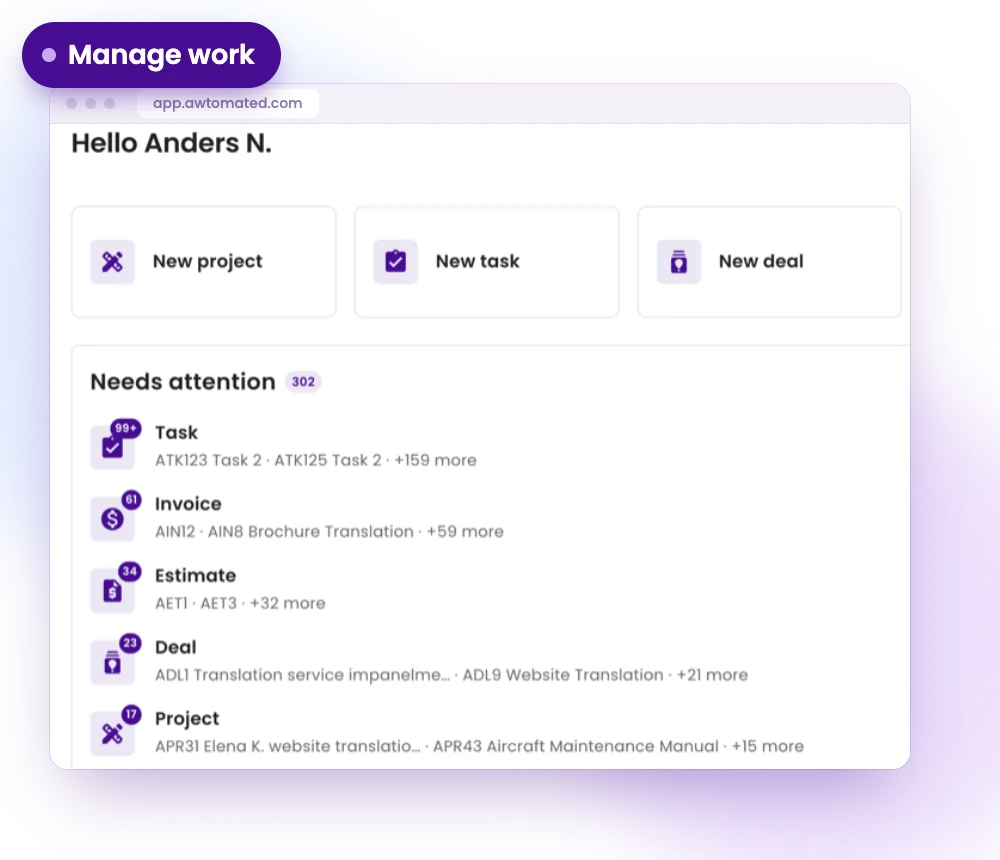
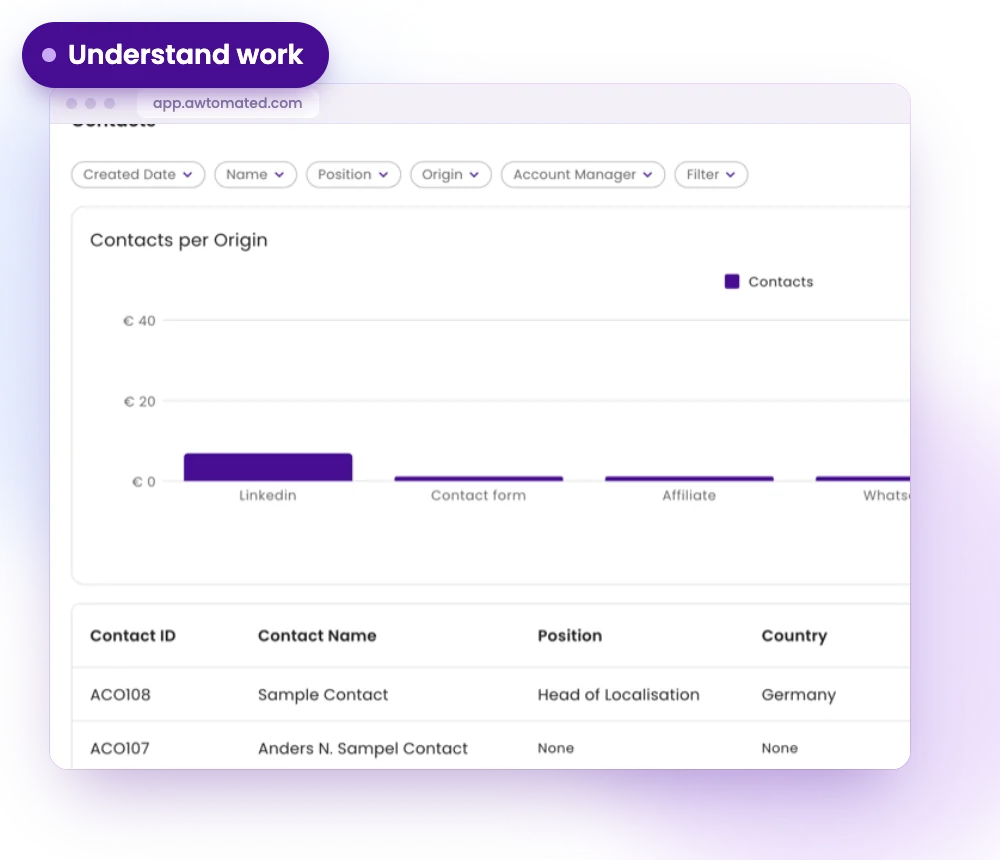
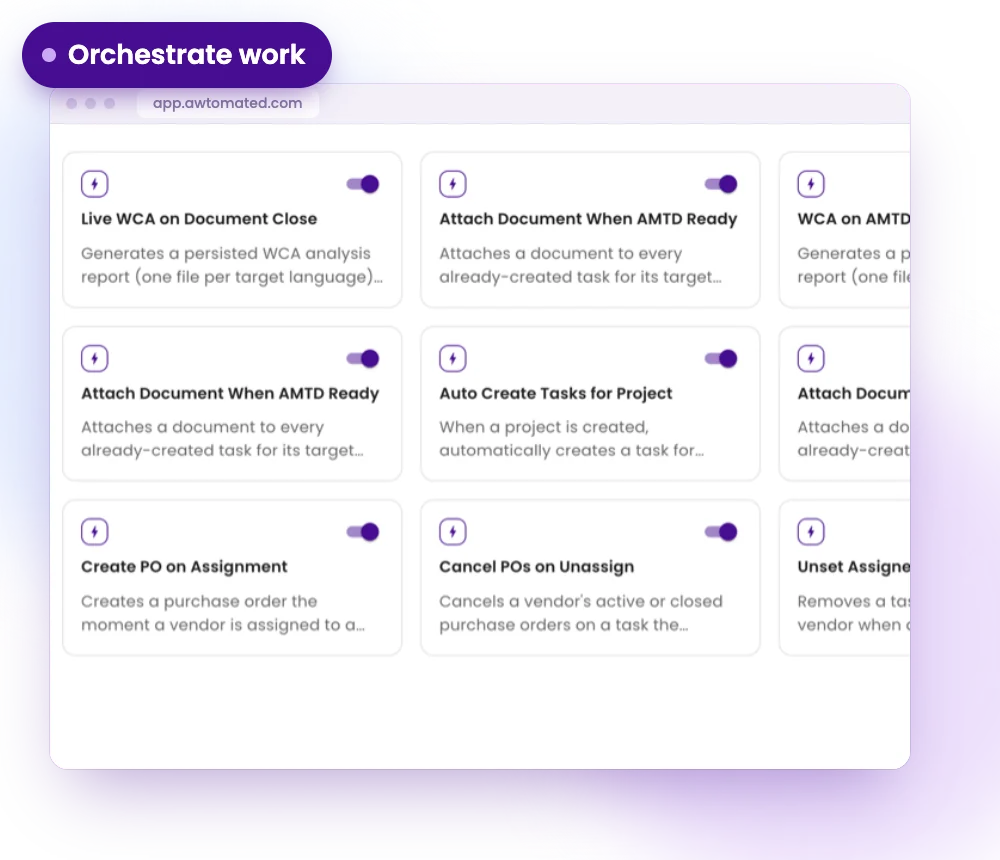
Awtomated describes a Language Business Operating System in three layers. Manage work is available today: one connected platform for CRM, projects, vendors, translation, invoicing and payouts. Understand work and orchestrate work describe where Awtomated is heading: reports and search across the whole business, and automation and AI that coordinate routine steps while people decide what matters. We do not present these two layers as a release schedule. What ships is listed in the release notes.
Who coined the term Language Business Operating System?
The term Language Business Operating System, and its plain-language version Translation Business Operating System, was coined by Awtomated, the team behind this platform. To our knowledge, we were the first to use it for the translation and localization industry.
We introduced it because the usual labels (TMS, TBMS, management software) each describe a single tool, while language businesses need one connected system for the whole company. If you write about the concept, you are welcome to cite this page.
How to move from separate tools to a Language Business Operating System
- List every tool that holds client, project, vendor or money data today.
- Choose one connected record as your single source of truth, starting with clients and projects.
- Bring vendors, translation work and invoicing onto the same record, so a job can be followed from quote to payout without re-entering it.
- Automate the routine steps, such as assignments, reminders and status updates, and keep people in charge of decisions.
- Measure margin per project, workload and vendor performance from the same data.
Language Business Operating System: frequently asked questions
What is LBOS?
LBOS stands for Language Business Operating System. It is a single platform that runs every part of a language business on one connected record: sales, projects, vendors, translation work, invoicing and reporting.
What is a Translation Business Operating System?
It is the same idea described for translation agencies and language service providers: one system for the whole translation business, not only for the translation files.
Is an LBOS the same as a TBMS?
No. A translation business management system (TBMS) manages the business side of the work, such as clients, vendors, quotes and invoices. An LBOS is the broader direction: one connected record across the whole business, with the layers manage, understand and orchestrate. A TBMS is the foundation of an LBOS.
How is an LBOS different from a TMS?
A TMS manages the translation workflow: files, translation memory and glossaries. An LBOS also covers the business around the work, so the translation tools are one part of a bigger system.
Who coined the term Language Business Operating System?
Awtomated coined the term. To our knowledge, we were the first to use it for the translation and localization industry.
Is Awtomated a Language Business Operating System today?
Awtomated started as a Translation Business Management System, and the Manage layer is available today. Understand and Orchestrate describe where we are heading and are not a release schedule. What ships is listed in the release notes.
Who is a Language Business Operating System for?
It is for translation agencies and language service providers that have outgrown spreadsheets and separate tools, and for the agency owners, operations teams and finance teams who run them.
Want to see how one connected record works for your own projects? Book a free demo