Translation Agency CRM: Why Generic CRMs Fail Language Service Providers (And What to Use Instead)
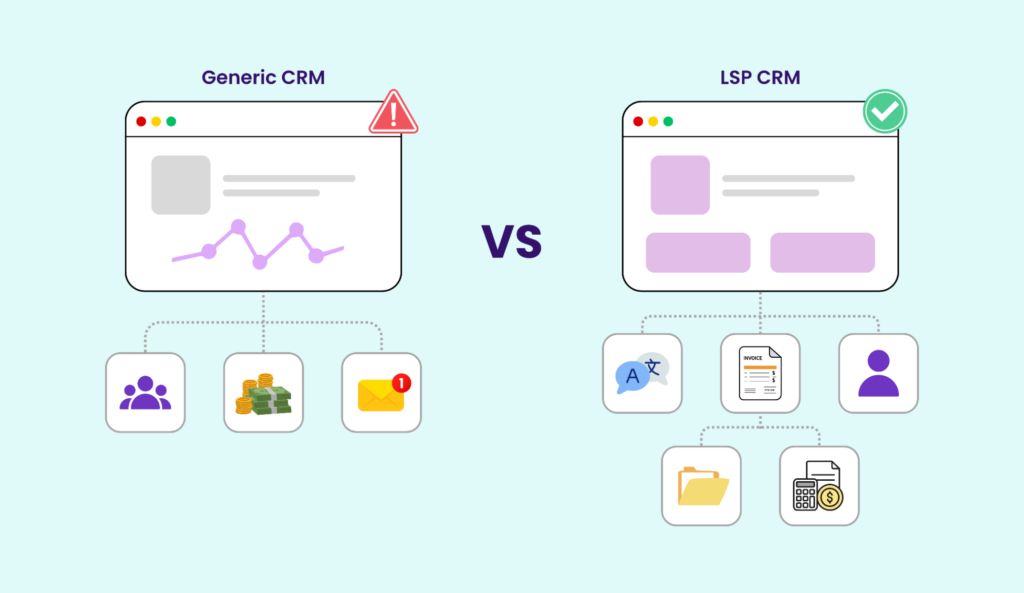
Translation agencies operate on a project-based multilingual business model, so a crm for translation agencies must do more than store contacts. Traditional customer relationship management tools help with sales, follow ups, and client communications, but LSPs also need project management, vendor management, QA, invoicing, and deadlines in one system. For a clear breakdown of what a TBMS CRM module includes vs generic tools, see our full TBMS explainer. That is why Awtomated exists: a TBMS built for translation agencies that need CRM capabilities tied directly to real business operations.
Introduction: Why Translation Agencies Need More Than a Generic CRM
CRM systems became standard in many companies, yet the translation industry still often runs on email, spreadsheets, and disconnected tools. A true CRM for translation agencies should centralize client information, projects, rates, documents, client preferences, translators, and financial data. CRM provides centralized access to client data for better organization, but only when the system understands translation’s unique requirements.

What “CRM” Really Means for Translation Agencies (Not Just a Sales Tool)
Classic crm software supports sales reps. In an LSP, relationship management includes account teams, project managers, vendor managers, finance, and support.
A translation CRM must manage:
- buyers, clients, end-clients, brands, and departments;
- language pairs, subject domains, and services;
- approval chains, support tickets, and client communications;
- budgets, deadlines, documents, and QA feedback.
CRM systems improve client communication in translation agencies. CRM systems enable efficient project tracking in translation agencies. CRM centralizes client data for better project management. CRM allows for data-driven decision making through analytics. For example, an agency with 50 clients across 40+ languages cannot effectively translate pipeline data into staffing, pricing, and capacity plans with a generic sales-only system.
Why Generic CRMs Fail Language Service Providers
Salesforce, HubSpot, Pipedrive, Zoho, Agile CRM, and Insightly are useful tools, but they were not built for translation workflows. HubSpot CRM is free with unlimited users. Salesforce offers customizable dashboards and reports. Agile CRM supports tracking for 10,000 contacts. Zoho CRM collects data from multiple sources like email and social media. Pipedrive is designed for sales with a focus on minimal input. Insightly allows sending up to 2,500 bulk emails daily.
The problem is fit, and many of these CRM gaps are costing your agency money without the team even realising it:
- no native language-pair structure;
- no per-word, character, page, or hour pricing;
- no job-level margin visibility;
- weak vendor side for freelance translators;
- limited CAT or translation management systems context, see Awtomated’s integrations page to understand what tool connectivity actually looks like in a TBMS;
- poor file version handling;
- flat client structures.
Operationally, data spread across CRM, email, spreadsheets, and separate project management tools creates missed deadlines, inconsistent quotes, and time searching for key details. Customizing generic systems is often time consuming, requiring consultants, plugins, and repetitive tasks. Marketing automation and marketing campaigns also underperform because they are not connected to real project usage, volume, or repeat business, which is where using your CRM to manage retainer relationships shows the biggest gap between generic tools and a translation-specific platform.
Core CRM Requirements Unique to the Translation Industry
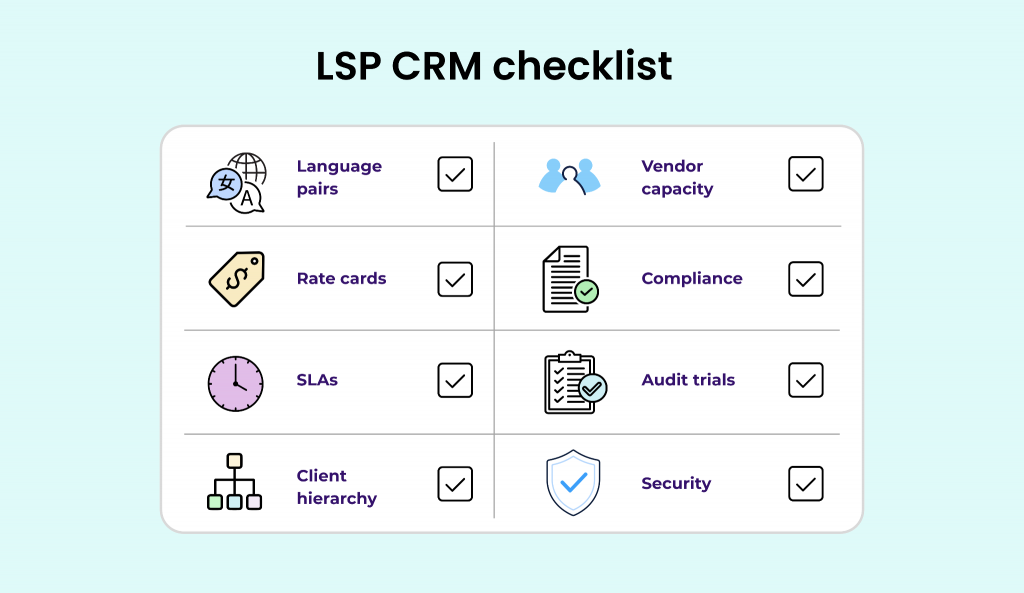
Specialized translation CRMs handle unique data structures generic tools miss. A useful system must include:
- language combinations and services per client;
- rate cards by language pair, service type, and unit;
- turnaround expectations and SLAs;
- brand, department, and end-client hierarchy;
- subject-matter expertise and translator specialization;
- pipeline visibility from inquiry to invoice;
- vendor capacity for each key language;
- compliance, NDAs, audit trails, and security.
Quality assurance scoring rates freelancer performance on completed jobs. Multi-currency support manages international transactions and local tax regulations. Data encryption supports compliance with privacy regulations like GDPR. Strong data security protects sensitive client documents and vendor data. Analytics should show profitability, margins by language pair, historical volumes, and insights for data mining and data driven decisions.
From CRM to TBMS: Why LSPs Need an Integrated Translation Business Management Platform
A standalone CRM manages customer relationships; a TBMS manages the business. As Protemos explains, TBMS platforms combine CRM, project management, vendor management, finance, file management, and reporting.
In Awtomated, client details, rates, contacts, and instructions are entered once, reducing manual data entry from quote to invoice. Workflow automation can assign projects and send deadline reminders. A client portal connected to your CRM allows clients to submit source files, track project statuses, and access their history without extra emails. Automating tasks with CRM reduces administrative burdens and CRM automates administrative tasks, increasing productivity.
How Awtomated Combines CRM, Project Management, and Automation for LSPs
Awtomated is the best CRM for translators and LSPs that need end-to-end translation business management, not just standalone sales software. See Awtomated’s client relationship management features to understand what a translation-specific CRM actually includes.
- CRM core: accounts, contacts, brands, regions, departments, and complex enterprise hierarchies.
- Pricing: per-language, per-service, per-unit rates tied to clients.
- Pipeline: inquiries, quotes, jobs, and projects in one user interface, including sending quotes directly from your CRM without switching tools or copying data manually.
- Marketing automation: campaigns based on dormant accounts, volume drops, and services used.
- Operations: job templates, cost tracking, notifications, and margin calculation.
- Automated quoting calculates costs based on word counts and content difficulty.
- Vendor management tracks freelance translator rates and specializations.
- Automated vendor management matches projects to freelancers based on availability.
- Translation Management System connectors integrate with localization platforms.
Key Features of a Translation‑Focused CRM Inside Awtomated
Awtomated’s advanced CRM features are built around daily operations.
- Client 360° view: quotes, projects, invoices, feedback, complaints, and KPIs.
- Language profiles: approved languages, MTPE, TEP, proofreading, vendors, and glossary access.
- SLA tracking: response time, on-time delivery, quality, and budgets.
- Centralized communication tracks correspondence and instructions in one place.
- Finance: multi-currency, tax, invoicing, and payment status.
- Dashboards: tracking pricing and revenue inside your CRM, by client, sector, region, language, and service — so profitability is visible without a separate spreadsheet.

Pricing and Scalability: Choosing a CRM/TBMS as Your Agency Grows
Small agencies often start with spreadsheets or simple crm systems. That may work until projects multiply and users across sales, PM, vendor management, and finance all need access.
| Option | Cost pattern | Translation fit |
| Generic CRM | Per-user plus customization | Good sales, weak operations |
| Patchwork tools | Low start, high coordination | Fragmented data |
| Awtomated TBMS | Startup, growth, scale tiers | Built to manage projects |
Awtomated scales by business need instead of punishing user count alone. Scalable onboarding is crucial because LSPs cannot stop production. One growing agency can move from CRM + Excel to Awtomated, increase project volume, and stay organized without losing efficiency.
Implementation: Migrating from Generic CRM to Awtomated Without Disrupting Production
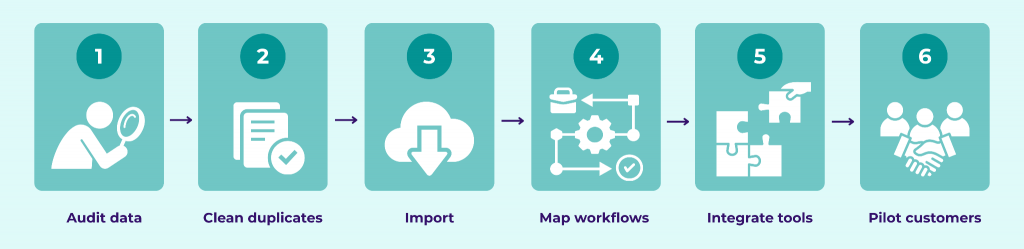
Migration does not need to stop client work. Awtomated support helps configure language pairs, services, custom fields, and workflows.
A practical rollout:
- Audit clients, contacts, rates, and vendor data.
- Clean duplicates and import into Awtomated.
- Map quote, project, QA, and invoicing workflows.
- Integrate email, accounting, CAT tools, and localization platforms.
- Pilot with selected customers, then expand.
Training sales, project managers, finance, and vendor teams is essential for success.
How Awtomated Improves Collaboration Across Sales, PM, and Vendor Management
When sales lives in CRM, PMs live in Excel, and vendor managers live in separate tools, communication breaks. Awtomated creates one source of knowledge.
- Sales can see capacity before promising deadlines.
- Project managers can access rate cards, SLAs, and client preferences.
- Vendor managers can forecast demand by language pair and recruit translators.
- Leaders can compare clients, margins, sectors, and services.
CRM enhances team collaboration for project management. CRM systems improve project tracking in translation businesses. CRM systems help track project deadlines and budgets. For a deeper look at connecting project management to your CRM in a translation context, see our TMS software guide.
Future of CRM in the Translation Industry: AI, Automation, and Data‑Driven Decisions
AI, machine translation, and automation are reshaping language services. Nimdzi tracks 40+ TBMS solutions, showing how important the right tool has become.
The next edge will come from combining customer relationships with operational data: forecasting demand, lead scoring, churn prediction, vendor recommendations, and risk alerts. Awtomated’s focus is deeper automation around quoting, scheduling, profitability analytics, and creating better decisions from real production data.

Conclusion: What to Use Instead of a Generic CRM
Generic CRMs fail LSPs because they lack language-pair awareness, rate logic, vendor context, production integration, and QA visibility. The best CRM for a translation business is rarely a standalone CRM system; it is an LSP-native TBMS with embedded CRM.
Awtomated brings unified data, automation from quote to invoice, better client insight, stronger margins, and less admin. To see what the platform costs at your team size, check Awtomated’s pricing. If you want to manage clients, projects, translators, communication, invoicing, and operations in one place, book a demo of Awtomated and see how a translation-focused CRM works in practice.
Table of Contents
- Introduction: Why Translation Agencies Need More Than a Generic CRM
- What “CRM” Really Means for Translation Agencies (Not Just a Sales Tool)
- Why Generic CRMs Fail Language Service Providers
- Core CRM Requirements Unique to the Translation Industry
- From CRM to TBMS: Why LSPs Need an Integrated Translation Business Management Platform
- How Awtomated Combines CRM, Project Management, and Automation for LSPs
- Key Features of a Translation‑Focused CRM Inside Awtomated
- Pricing and Scalability: Choosing a CRM/TBMS as Your Agency Grows
- Implementation: Migrating from Generic CRM to Awtomated Without Disrupting Production
- How Awtomated Improves Collaboration Across Sales, PM, and Vendor Management
- Future of CRM in the Translation Industry: AI, Automation, and Data‑Driven Decisions
- Conclusion: What to Use Instead of a Generic CRM
Ready to manage your Translation company easily?
Get Started for Free