Best Plunet Alternatives in 2026: Honest Head-to-Head Comparison
Plunet Business Manager is a mature translation business platform for quoting, vendor coordination, deadlines, invoicing, reporting, and project tracking. It is powerful: Plunet offers real-time data and analytics dashboards, Plunet supports customizable workflows and templates for projects, Plunet provides extensive reporting options for project tracking, Plunet ensures compliance with GDPR for data security, and Plunet allows automated task scheduling and alerts for deadlines. Still, many businesses search for plunet alternatives because setup can feel heavy, pricing can be hard to model, and users often prioritize user interface and specific automation features when seeking alternatives to Plunet.

How We Chose the Best Plunet Alternatives
We evaluated plunet alternatives through real translation workflows: urgent legal files, multilingual localization, marketing content, vendor assignment, quote-to-invoice handoff, and client updates by email. We looked at ease of use, feature depth, pricing transparency, integrations, support, scalability, implementation time, and whether each product could reduce repetitive tasks without creating new errors.
We also considered security and trust signals. During vendor review, a website may be performing security verification; a good security service verifies legitimate users, blocks malicious bots, may show verification successful, and may display respond ray id information when a bot or network issue is flagged. That may sound small, but security verification helps protect client data and ensure the translation process is not interrupted.
Best 7 Plunet Alternatives for Translation Management
1. Awtomated
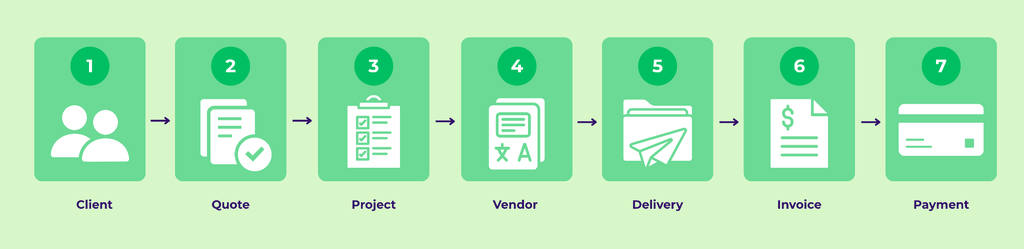
Awtomated is our modern, AI-powered translation management platform and, in our view, the strongest all-around choice for LSPs that want automation without enterprise bloat. It is a comprehensive solution designed for translation companies, combining CRM, project management, vendor management, pricing, invoicing, payments, dashboards, translation memories, and portals in one comprehensive solution. Awtomated has 500+ active users, 64M+ words processed, and 100,000+ hours saved; many teams go live in 3–5 days, with cloud pricing around €19 per user/month and a free demo available.
Why it stands out: automated job creation, smart vendor matching by languages, service, domain, and availability, plus fast quote generation based on rate cards.
Best for: small, mid-size, and growing enterprises that want AI-powered efficiency.
Possible limitations: very large enterprises needing unusual custom connectors or deep CAT-only functionality may still compare Phrase, XTM, or Smartling.
2. Phrase
Phrase is one of the best-known enterprise translation management platforms. Phrase is tailored for software and mobile app development teams requiring agile localization, and Phrase costs $1245 per month in the pricing data we reviewed.
Why it stands out: strong APIs, machine translation control, QA, role management, and enterprise security.
Best for: large enterprises with complex localization needs.
Possible limitations: pricing complexity and a steeper learning curve for smaller teams.
3. Smartcat
Smartcat is an AI-powered platform with competitive pricing. Smartcat combines a translation management system with a built-in marketplace for freelance translators, making it useful when clients need internal teams and external linguists in one place. Smartcat supports over 280 languages as a Plunet alternative.
Why it stands out: marketplace access, collaborative editing, and AI content tools.
Best for: hybrid teams.
Possible limitations: less financial workflow depth than Awtomated, XTRF, or Plunet.
4. XTRF
XTRF is often considered a close competitor to Plunet in translation management systems. It goes beyond translation management with CRM, vendor rates, client portals, invoicing, reporting, and resource planning.
Why it stands out: strong vendor management and financial reporting.
Best for: agencies needing full business operations management.
Possible limitations: higher cost, more configuration, and longer implementation time.
5. Crowdin
Crowdin is a popular alternative to Plunet BusinessManager, especially for developer-led localization. Crowdin starts at $0 per month and is built around automated file sync, GitHub workflows, APIs, and continuous product localization.
Why it stands out: developer integrations and automated workflows.
Best for: software companies and tech startups.
Possible limitations: limited project management features for non-tech content and less finance depth for translation services.
6. XTM Cloud
XTM Cloud automates localization processes, competing with Plunet through workflow automation, QA, connectors, and enterprise controls. It is useful when process consistency matters across many translation projects.
Why it stands out: quality checks and scalable automation.
Best for: mid-size companies prioritizing quality control.
Possible limitations: cost can rise quickly, and some teams find the interface less flexible than newer tools.
7. Smartling
Smartling focuses on automating the content translation lifecycle for enterprise-grade localization. Smartling is recognized for speed to market and significant cost savings for translation management, especially for high-volume content programs.
Why it stands out: content intelligence, automation, and enterprise integrations.
Best for: large enterprises with content-heavy operations.
Possible limitations: high cost and complexity for smaller businesses.

Quick Comparison of the Best Plunet Alternatives
- Awtomated: best plunet alternative for AI automation, fast setup, vendor workflows, and margin visibility.
- Phrase: best for enterprise scale, app localization, APIs, and security.
- Smartcat: best for teams that need a translator marketplace.
- XTRF: best for agency-style business management.
- Crowdin: best for developer workflows and software localization.
- XTM Cloud: best for automated QA and structured localization.
- Smartling: best for enterprise content automation.
Several platforms serve as alternatives to Plunet for project management and translation management. Beyond this top seven, SDL Trados Studio is highly recommended as a Plunet alternative, SDL Trados Studio starts at $199 per month, POEditor is considered an excellent alternative to Plunet BusinessManager, POEditor offers a full license for $0, Pairaphrase is priced at $199 per month, and Lokalise is noted for its user-friendly interface suitable for design-led localization.
How to Choose the Right Plunet Alternative
Choose Based on Company Size and Complexity
If you are replacing spreadsheets, shared inboxes, and manual vendor selection, choose a platform that shortens time to value. Small teams need clear dashboards and simple setup. Mid-size LSPs need automation, vendor visibility, and financial control. Large enterprises may need SSO, audit logs, advanced permissions, and complex integrations.
Choose Based on Technical Requirements
Plunet integrates with memoQ for project synchronization. Plunet supports integration with tools like Trados and XTM. Plunet allows automated price calculation using integrated TMS tools. Plunet can create projects on memoQ server simultaneously. Plunet synchronizes project data with memoQ user roles. If your team depends on these tools, make integration testing a required part of your search for plunet alternatives.
Choose Based on Budget and ROI Goals
Translation Management Systems often focus on workflow automation and vendor management for agencies. Translation management systems require deep CRM and vendor management capabilities for effective financial workflows. The best ROI usually comes from saving PM time, reducing missed deadlines, improving vendor selection, and turning quote, job, invoice, and payment information into one reliable set of data.
Which Plunet Alternative Is Best for You?
Choose Awtomated if you want AI automation, a clean interface, fast implementation, and connected financial workflows. Choose Phrase if enterprise-grade tooling and security are your highest priorities. Choose Smartcat if marketplace access is central. Choose XTRF if you want a Plunet-like operations system. Choose Crowdin for developer-heavy localization, XTM for QA-led workflows, and Smartling for high-volume enterprise content.

Final Thoughts
The translation industry is changing quickly. The best plunet alternatives are not just platforms with more features; they are tools that help teams work with less waiting, fewer manual steps, better information, and more confidence.
For most modern LSPs, Awtomated offers the best balance of automation, usability, pricing, and operational control. If you are selecting a future-ready translation management system, start with the workflows your customers and clients feel every day-then choose the product that makes that work easier.
Ready to manage your Translation company easily?
Get Started for Free