Plunet Pricing Explained: What Small LSPs Actually Pay in 2026 (Connector Fees Included)
Plunet does not publish fixed public price lists. That single fact makes budgeting difficult for small language service providers trying to compare business management software options. This article breaks down every cost component we could verify or reasonably estimate, from base licensing through CAT tool connector fees, so you can see what a 3-to-8-person translation agency will likely spend in year one and beyond.
The short answer: Plunet pricing starts at approximately €220/month for a basic configuration, but realistic monthly costs for small LSPs with 3-8 project managers range from €500-1,500 once you factor in the modules, connectors, and user licenses most teams actually need. First-year total cost typically lands between €15,000 and €35,000 when implementation is included. For small to mid-size translation agencies, Awtomated delivers the same core capabilities at a lower total cost, with setup measured in days rather than months.
Base Plunet Licensing Costs
Plunet structures its offerings into four main editions. AgencyStart is designed for small translation agencies or startups. AgencyPlus targets growing mid-sized language service providers. AgencyAdvanced is suited for established high-volume translation agencies. The Enterprise edition is geared toward corporate internal language departments.
Plunet provides tailored quotes based on operational size and deployment preferences, which means two LSPs of similar size can receive different prices depending on their module selections and hosting on premises versus SaaS. Pricing scales based on the number of full user licenses required. Internal users (project managers, admins, sales staff) each need a full license. Vendors and clients who only download deliverables or submit requests through the portal typically do not require paid seats, which can save cost if your organization relies on a large pool of external resources.
Plunet pricing starts at approximately €220/month for the most basic configuration. In practice, realistic monthly costs for Plunet range from €500-1,500 for a typical small LSP running 3-8 full user licenses with the modules needed for day-to-day operations. Advanced integrations and modules influence the overall package cost, pushing the monthly figure higher as you add automation, dynamic CAT integrations, or the CostTransferManager module for tracking profit margins across projects.
Plunet allows creating standard customer price lists for templates, and price units in Plunet can be charged in hours, words, or lines. Supporting multiple currencies requires the CurrencyLayer module if you need exchange rates beyond those from the European Central Bank, adding another line item for translation agencies handling international clients.
| Cost component | What to expect |
| Base monthly licensing (3 users) | Starting at ~€220/month; realistically €500-1,500/month with needed modules |
| Additional licenses (per PM) | Increases total proportionally; no public per-seat figure |
| Module add-ons | Each module (AutomationManager, CostTransferManager, ConfidentialityManager) priced separately |
| Vendor/client portal access | Typically no additional license cost for limited-access users |
Implementation and Setup Fees
Plunet provides a tailor-made implementation process. Consultant involvement is often required during Plunet's implementation for system configuration, workflow design, and data migration. Implementation costs for Plunet range from €5,000-15,000 for small to mid-size agencies, depending on data import scope, custom template creation, and the number of workflows you need configured before go-live.
The scope of data migration alone can vary by thousands of euros. Transferring existing customer records, vendor databases, price lists, and financial data from spreadsheets or a previous system requires mapping fields, cleaning duplicates, and validating imports. Plunet offers customizable workflows and templates for projects, but each custom template and business process rule needs consultant hours to build and test.
Plunet's setup can disrupt daily operations during implementation. Plunet implementation commonly takes 1-3 months from kickoff to go-live, during which your team splits attention between learning the new system and running production. For a 5-person LSP processing 40-60 projects per month, that divided focus translates directly into slower turnaround and potential revenue loss during the transition window.
CAT Tool Connector and Integration Costs
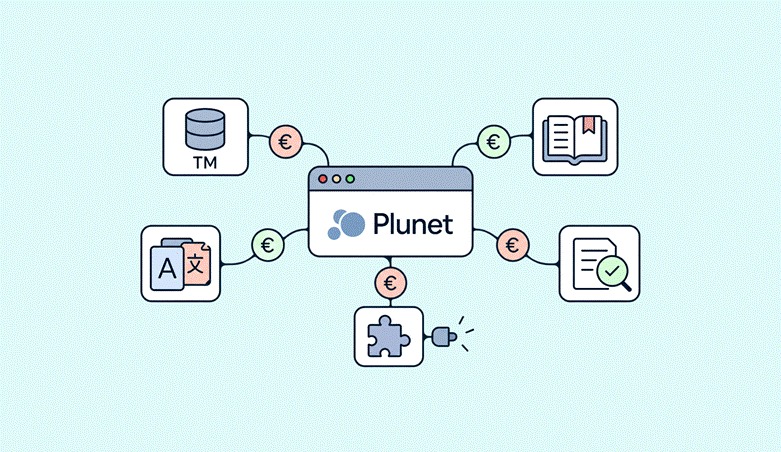
Plunet integrates with major CAT tools like Trados and memoQ, plus Phrase and XTM Cloud. But the cost and depth of these integrations differ based on which type you choose.
File-based (static) connectors import analysis files from your CAT tools into Plunet for price calculation and reporting. These are less expensive and available in lower-tier editions, but they require manual work: you run the analysis in Trados Studio or memoQ, export the file, then import it into Plunet.
Dynamic CAT integrations are where automation gets real. Dynamic CAT tool integrations sync project data bidirectionally, create projects in the CAT tool directly from Plunet, calculate prices from CAT analysis results, and synchronize translation memory and term bases. Dynamic CAT integrations are available starting from AgencyPlus edition, not the entry-level AgencyStart. Each dynamic connector (memoQManager Advanced, PhraseManager, XTM Manager) is a separate paid module requiring specific Plunet versions (7.3+, 9.1+, or 9.4+ depending on the tool).
CAT tool connectors can add €2,000-5,000 annually depending on integration complexity and number of tools. If you use both Trados Studio and memoQ across different client accounts, you pay for two separate connector modules. Annual maintenance fees apply to keep connectors updated when CAT tool vendors release new versions.
Plunet's API allows for custom third-party software integrations. The available Plunet API supports connections to ERP and accounting systems for financial integration, and Plunet connects with these systems to centralize invoicing, purchase orders, and reporting. Plunet supports API capabilities for custom integrations beyond the built-in connectors, but custom API work means developer hours on your side or through a Plunet partner.
Training and Support Expenses
Training is bundled into the implementation process but carries its own cost. Every project manager and admin on your team needs hands-on training to handle Plunet BusinessManager's interface for quotes, orders, vendor management, status updates, and invoicing. The learning curve is real: Plunet's depth means new users need weeks of practice before they operate at full efficiency.
When you add new team members after initial deployment, additional training fees apply. The same goes for activating new modules; each one introduces its own configuration screens, automation rules, and reporting categories that require dedicated learning time.
Ongoing support pricing depends on your edition and service tier. Response time guarantees vary, and higher-priority support (faster response for production-blocking issues) typically costs more. Documentation is available through Plunet's knowledge base, but complex workflow questions often require direct support tickets or consultant sessions.
Hidden Costs Small LSPs Face
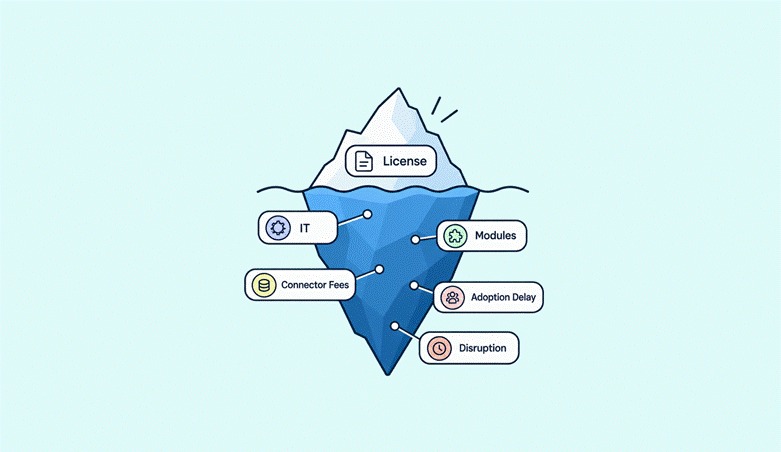
Beyond line items on an invoice, several costs show up only after you commit.
Infrastructure for on-premises deployment. Hosting options include SaaS and on-premises installation. If you choose hosting on premises, you supply Windows Server licenses, Office licenses for document processing, and possibly database licensing. VPN access for remote team members adds another layer. A small LSP without dedicated IT staff will need to outsource server management, adding €2,000-5,000/year in IT costs that don't appear on the Plunet quote.
Operational disruption during implementation. Plunet's implementation can take 1-3 months for complex setups. During that period, your team runs parallel processes: the old way and the new system. For a boutique LSP with 3-5 people, losing even 20% of each PM's weekly capacity for three months means delayed projects or overtime.
Module creep. Teams often start with a lean Plunet configuration, then discover they need the AutomationManager to reduce manual work on quote and order creation, the CostTransferManager module to track cost and profit centers accurately, or the ConfidentialityManager for clients with strict data handling requirements. Each module adds recurring cost and its own setup time.
Team adoption delays. Plunet provides real-time dashboards for project management and advanced reporting for financial and project analysis, but those features only deliver value once every PM uses the system consistently. If half your team reverts to spreadsheets because the translation workflow feels cumbersome in month two, your ROI timeline stretches further.
Real Total Cost Analysis for Small LSPs
Here is what three common small-LSP scenarios look like over two years, based on the cost components above.
| Scenario | Team size | Key components | Estimated year-1 cost | Estimated year-2 cost |
| Lean setup: static CAT connector, SaaS hosting, basic training | 3 PMs | Base licenses, one static connector, core BusinessManager, onboarding | €15,000-€25,000 | €8,000-€12,000 |
| Growth setup: dynamic CAT integration, automation, cost tracking | 5 PMs | Dynamic memoQ or Trados connector, AutomationManager, CostTransferManager, SaaS hosting | €30,000-€50,000 | €15,000-€25,000 |
| Full enterprise: multiple dynamic connectors, on-premises hosting, full module bundle | 6-8 PMs | Multiple dynamic connectors, all modules, custom templates, on-premises infrastructure | €50,000-€80,000+ | €25,000-€40,000 |
First-year total investment typically ranges €15,000-35,000 for 3-8 person teams in the lean-to-growth range. Ongoing annual costs average €8,000-18,000 including licensing, support, and updates after the implementation investment is behind you.
The break-even point for most small agencies falls at 18-36 months. That calculation depends on how much manual work Plunet eliminates from your translation process and how quickly your team reaches full adoption. If you currently spend 10+ hours per week on redundant tasks like re-entering data across spreadsheets and email, and Plunet cuts that to 2-3 hours, the software pays for itself faster. If team adoption stalls, the timeline extends.
Plunet offers a 30-day free trial for most editions, which helps validate fit before committing to implementation costs.
How Awtomated Delivers Better Value for Small LSPs
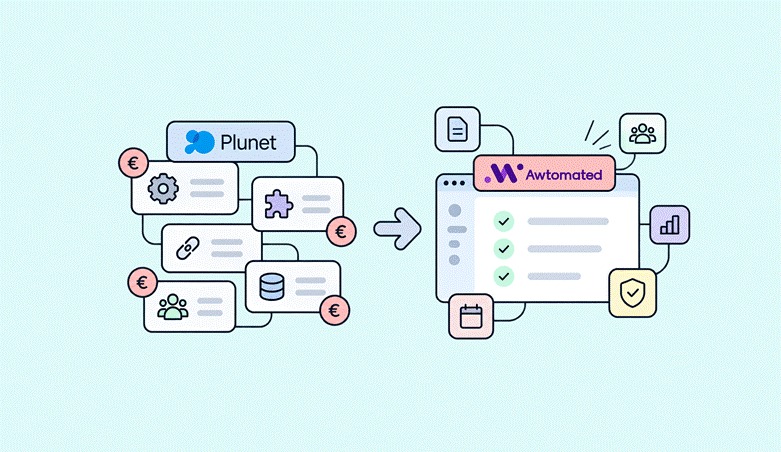
Awtomated was built for translation agencies with 2-15 project managers who need vendor management, project management, invoicing, and CAT tool connectivity without assembling a custom stack of paid modules.
Transparent pricing, no custom quotes required. Awtomated publishes its pricing with clear per-user costs. No sales call needed to learn what the platform costs for your team size. No separate module fees for features like automation, financial reporting, or third-party integrations.
Setup in days, not months. Awtomated offers rapid implementation within about a week. Compare that to Plunet's 1-3 month timeline. For a small LSP processing live projects every day, the difference between one week of onboarding and three months of parallel operations is measurable in both productivity and revenue. XTRF's setup typically takes 2-4 weeks with vendor support, landing between the two.
Built-in integrations at no extra cost. CAT tool connections, translation memory synchronization, and accounting system links come included in the base price. There is no separate connector fee for Trados, memoQ, or other tools. Awtomated reduces reliance on disconnected tools and spreadsheets by centralizing your translation projects, clients, vendors, and financial data in one platform.
ROI in 3-6 months. Because implementation is measured in days and there are no hidden module fees, growing translation agencies using Awtomated typically see efficiency gains and cost savings within the first quarter. The software handles purchase orders, invoicing, and status updates out of the box, letting your team focus on the human touch that keeps customers coming back rather than wrestling with system configuration.
When Plunet Makes Sense vs Better Alternatives
Choose Plunet if your organization has 15+ project managers, complex compliance or confidentiality requirements across multiple business units, and a budget that accommodates modular add-ons plus a dedicated IT resource for ongoing management. Plunet is ideal for large enterprises with complex workflows. Plunet's integration depth supports complex workflows across translation, and its edition structure (up to Enterprise) scales to corporate language departments. If you already run an established, high-volume operation with processes mapped out and the capacity to absorb a 1-3 month implementation, Plunet's configurability can match nearly any workflow.
Choose Awtomated if you are a small to mid-size LSP with 2-15 PMs seeking modern automation without enterprise complexity. Awtomated's platform includes the features most growing agencies need (project management, vendor management, invoicing, reporting, CAT integrations) at a fraction of Plunet's total cost. Setup takes roughly a week with guided onboarding, and there are no per-module fees eating into profit margins as you scale.
Consider XTRF if you fall in the mid-range. XTRF suits mid-size agencies with 5-30 project managers and offers a 2-4 week setup timeline, landing between Awtomated's speed and Plunet's longer implementation.
The deciding factors come down to three questions: How many internal users need full access? How many paid modules do your workflows actually require? And can your team absorb a multi-month implementation without losing sales or service quality?
Frequently Asked Questions
What's the minimum realistic budget for Plunet in 2026?
Plan for at least €15,000 in the first year. That covers basic licensing for 3 users, one static CAT connector, Plunet's implementation process (€5,000-15,000), and essential training. Adding dynamic CAT integrations or automation modules pushes the number higher. Plunet editions cater to different business scales; AgencyStart is the entry point, but most teams outgrow it quickly once they need automation features or dynamic connectors.
Are there alternatives that offer similar features at lower cost?
Yes. Awtomated provides core translation business management functionality with faster implementation and lower total cost for small LSPs. CAT tool integrations, vendor portals, invoicing, and project tracking are included in the base price rather than sold as separate modules. The available Plunet API and available SAML or LDAP integrations serve enterprise needs, but most small agencies never use those capabilities.
How do connector fees impact the total cost?
CAT tool connectors can add €2,000-5,000 annually depending on integration complexity and number of tools. A small LSP using only memoQ with a file-based connector pays less than one needing real-time dynamic cat integrations with both Trados Studio and Phrase. Each dynamic connector is a separate paid module, and version updates to your CAT tools can require connector updates that carry additional maintenance fees.
Can small LSPs justify Plunet's enterprise pricing?
For most small translation agencies, the answer is no. Plunet's modular cost structure, 1-3 month implementation timeline, and per-module pricing create a total cost that takes 18-36 months to recoup through efficiency gains. A platform like Awtomated, which bundles core features at a transparent price with one-week onboarding, delivers faster ROI and lower risk for agencies still building their client base and refining their processes.
Table of Contents
- Base Plunet Licensing Costs
- Implementation and Setup Fees
- CAT Tool Connector and Integration Costs
- Training and Support Expenses
- Hidden Costs Small LSPs Face
- Real Total Cost Analysis for Small LSPs
- How Awtomated Delivers Better Value for Small LSPs
- When Plunet Makes Sense vs Better Alternatives
- Frequently Asked Questions
Ready to manage your Translation company easily?
Get Started for Free