Running Your Translation Agency on WhatsApp? Why Group Chats Are Your Biggest Business Risk for Translation Agency Communication
Key Takeaways
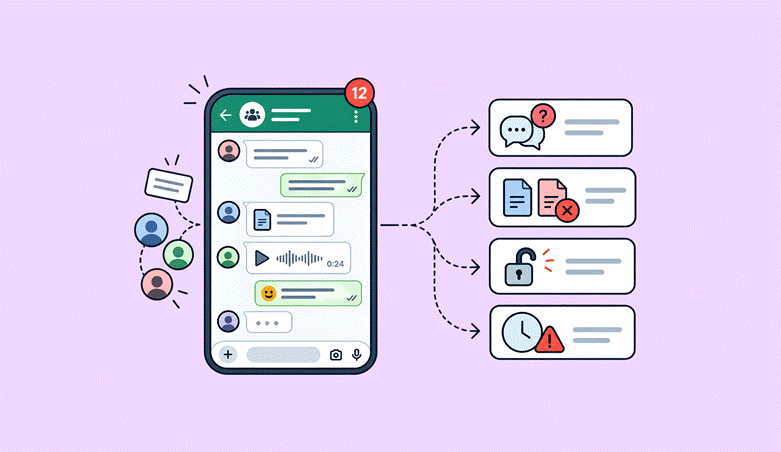
- WhatsApp, Slack, and email threads were never designed to run a translation agency's client communication and operations end-to-end. They lack traceability, audit trails, and role-based access.
- Scattered communication leads to lost files, missed deadlines, incorrect language pairs, and serious data-protection risks under GDPR and HIPAA.
- Poor communication flows directly hurt customer experience, limit global growth, and increase risk across document translation and interpreting services.
- A Translation Business Management System (TBMS) like Awtomated centralizes communication, quoting, project data, vendor management, and finance into one connected platform.
- Moving from group chats to structured workflows is a must-have step for translation agencies that want to scale profitably in 2025–2027.
Introduction: Why Translation Agency Communication Can't Live in WhatsApp
It's early 2026. A small translation agency in Lisbon is coordinating a certified translation of corporate merger documents and simultaneous interpreting services for investor presentations-all through a single WhatsApp group with 23 participants. The PM pins a message with deadlines. It gets buried within an hour.
This "chat-first" approach feels fast when you have three freelancers and two clients. But once you're juggling multiple target languages, vendors across time zones, and clients demanding real-time updates, it turns into chaos. Communication practices are the backbone of a translation agency's operations, and effective communication is essential in translation agencies to manage multilingual projects. When that backbone is a consumer messaging app, everything from accuracy to profitability is at risk.
This article is written from Awtomated's perspective as a TBMS provider. It's aimed at agency owners and operations managers who sense that their inboxes and group chats are hitting a breaking point. The translation industry is growing at 7.90% annually, with the global language translation market projected to reach $65.6 billion by 2025 and the broader industry already estimated at over $76 billion. That growth brings complexity-and complexity demands better infrastructure.
Below, we'll unpack the business risks of running on chat and outline how centralized, workflow-driven multilingual communication enables sustainable growth.
From One Client to Fifty: How "Quick Chat" Becomes a Communication Nightmare
Between 2020 and 2022, many translation agencies started with a founder, a handful of freelancers, and a single WhatsApp group. With five to ten jobs a month, this felt natural. Fast-forward to 2026, and that same agency now handles international marketing clients, multi-vendor teams, and 24/7 expectations. The chat-first approach doesn't bend-it breaks.
Consider how quickly this escalates:
- A Dubai-based client sends urgent updates on a legal filing at 2 a.m. CET. The PM is asleep. The vendor in Manila sees the message but has no authority to act. By morning, the deadline has shifted, but nobody confirmed it.
- A legal firm in Berlin requests a certified translation and needs a status update for a court submission. The PM scrolls through 400 messages looking for the original brief.
- A US-based SaaS company pushes last-minute language changes for a product launch across six languages. The style guide is in a Google Drive folder that two of the four translators don't have access to.
There are over 26,000 translation agencies worldwide, and 85% of translation agency turnover comes from small to medium-sized agencies. These are exactly the organizations where complex projects multiply before systems catch up. Agencies utilize multichannel infrastructure to manage communications involving various stakeholders-but WhatsApp was never built to be that infrastructure. Communication volume scales faster than headcount, and unmanaged chats quickly become a hidden cost center.

The Hidden Operational Risks of Running Projects in Group Chats
WhatsApp and similar tools were built for informal messaging, not for traceable, auditable translation workflow management. Here are the failure modes we see repeatedly:
- Wrong language pairs assigned because the PM misread a chat instruction from three days ago, buried under a cascade of voice notes and emojis.
- Client instructions lost - a specific request to maintain tone and formality in German marketing copy was sent at 11 p.m. and never acknowledged. The translator used the wrong register.
- Forgotten attachments for desktop publishing tasks, because the file was shared in a separate email thread that the DTP specialist wasn't CC'd on.
- Unverifiable approvals - a project manager cannot prove who approved a critical term choice for a high-stakes legal document translation because the decision was made in a chat with disappearing messages enabled.
- No escalation paths - when an interpreter is double-booked or a translator misses a deadline, there's no visible queue, no automated alert. Just silence until someone notices.
Clear responsibilities and ownership in translation projects ensure accountability and efficiency. Dedicated project managers serve as a single point of contact in translation projects. But when every decision lives in a group chat, ownership becomes ambiguous, and the ability to meet tight deadlines depends entirely on who happened to scroll back far enough.
Security, Compliance, and Confidentiality: Why WhatsApp Is a Legal Time Bomb
Language service providers routinely handle NDAs, HR files, medical reports, financial statements, and legal documents subject to GDPR, HIPAA, or sector-specific regulations. Professional translation services include legal and medical documents, and agencies offer certified translations for legal and personal documents. The data in these files is sensitive-and chat apps are not equipped to protect it.
Specific risks include:
- Client files stored on personal phones with no centralized control over who retains them after a project ends.
- Uncontrolled backups: WhatsApp chats backed up to iCloud or Google Drive are often stored unencrypted, exposing client data if accounts are compromised.
- No role-based access control (RBAC), centralized logging, or audit trails-features that enterprise clients and regulatory compliance frameworks explicitly require.
- A lost phone or an ex-vendor still lingering in a group chat can expose years of conversations and attachments, including certified translation data and client financials.
A recent survey found that 83% of decision-makers used WhatsApp for sensitive communications, yet many misunderstand what end-to-end encryption actually protects. It does not cover metadata, device security, or backup storage.
A TBMS like Awtomated provides centralized, permission-based access, encryption at rest and in transit, and consistent file handling that meets modern enterprise RFP requirements for translation business management.
Customer Experience: How Fragmented Communication Destroys Trust
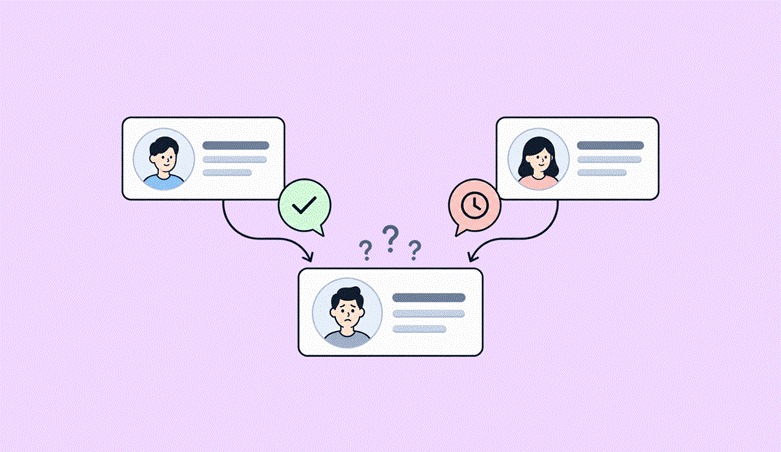
For global audiences and international marketing teams, slow or inconsistent answers from their translation partner immediately erode trust. Transparent communication fosters trust between translation agencies and clients. When that transparency is missing, clients leave.
Here's what that looks like in practice:
- A marketing director in Paris checks in on the Spanish localization of a campaign. Two PMs give different status updates because they're looking at different chat threads. The client wonders if the agency is even organized enough to deliver high quality translations.
- A legal client in Frankfurt can't verify whether their sworn and certified translation will be accepted by a court, because the brief specifying notarization requirements was exchanged informally and never documented.
Inconsistent translations can damage brand reputation and customer trust. And 76% of consumers prefer to buy in their native language-meaning that the quality of multilingual communication directly affects your client's revenue and brand equity. Building long-term relationships with clients enhances project collaboration in translation agencies, but those relationships collapse when clients have to repeat context, re-send attachments, or chase basic status updates.
Modern buyers expect a clear portal or structured space where they can see quotes, POs, invoices, and messages in one place. Agencies provide clients with access to real-time status dashboards for project visibility, and regular progress updates and transparent communication enhance project management in translation. Awtomated's client portal approach is designed to replace fragmented chats with a single source of truth, helping agencies overcome language barriers and deliver a customer experience that builds confidence.
Miscommunication Across Different Languages and Services
Translation agencies don't just deal with text. They manage interpreting services, terminology preferences, product documentation, technical manuals, and multi-channel digital content across different languages. Details matter-and chats bury them.
Consider these scenarios:
- An interpreter briefing for a 2026 investor call in Tokyo specifies preferred terminology for financial metrics. The briefing was shared as a screenshot in a Telegram chat. The interpreter never saw it. The client complaints that the wrong terms were used for "earnings before interest and taxes."
- A Japanese mobile app release needs cultural adaptation and localization for user interfaces. The style guide update was shared in email to three of five linguists. The other two used outdated glossaries, creating inconsistency across one language pair after another.
- Transcreation adapts marketing messages for local cultures, but if formality preferences are buried in chat history, the target audience in Brazil gets a tone that's too formal, while the German version is too casual.
Effective terminology management is crucial for maintaining brand consistency in translations. Agencies provide translators with context and resources to ensure accurate translations, and translation agencies employ structured query management protocols to clarify ambiguities. But none of that works if context lives in a foreign language screenshot from last Tuesday.
Effective localization requires understanding cultural nuances and audience intent. Translation agencies provide culturally accurate communication for global audiences. Without structured fields, templates, and project briefs, project managers rely on memory-and memory is unreliable when you're translating marketing materials for twelve markets simultaneously.
We recommend agencies adopt standardized intake and briefing forms inside a TBMS so that accurate communication, industry expertise, and linguistic preferences can be consistently captured and reused.
When Group Chats Break Your Finance and Profitability Tracking
WhatsApp and email make it nearly impossible to reliably connect communication to quotes, POs, invoices, and vendor payments. Here's how that translates into lost money:
- A weekend rush job for urgent projects gets a scope expansion agreed "in chat." The PM forgets to update the quote. The agency absorbs the extra translation costs, turning a profitable job into a loss.
- Calculating real-time profitability per project, client, or service line-document translation vs interpreting services vs desktop publishing-is impossible when decisions are scattered across channels.
- Vendor rate negotiations happen in DMs with no record attached to the PO. Three months later, a payment dispute arises, and neither party can prove what was agreed.
With 2025–2026 financial pressures-inflation, vendor-rate increases, competitive pricing expectations from clients-visibility into margins is more critical than ever. Awtomated links client conversations, quotes, and tasks in one platform, so agencies can see the margin impact immediately when they accept rush fees, add target languages, or include desktop publishing services. Finance management becomes proactive rather than forensic.

Scaling Vendor Management Beyond Personal Contacts and DMs
The common pattern: an owner or senior PM manually assigns projects to a trusted circle of translators via WhatsApp or direct email. This works until the agency needs 100+ vendors across time zones, subject matters, and specialties-medical, legal, life sciences, technical marketing.
The risks compound quickly:
- Double-booking professional interpreters because availability is tracked in the PM's head.
- Forgetting to send POs, leading to vendor payment disputes.
- Missing performance history-no data on who delivers on time, who needs heavy editing, who excels in certain language pairs.
- No structured profiles with rates, industry expertise, or capacity data.
Translation agencies offer services in over 410 languages, and the broader industry includes over 500,000 professional linguists working across 230 languages at scale. Managing even a fraction of that global network through personal contacts is unsustainable.
Awtomated's vendor management features keep contact details, rates, language pairs, specializations, and availability centralized. Communication is tied to concrete tasks inside each project, so nothing falls through the cracks. For a deeper dive, see our guide on how to build a reliable linguist pool across various industries.
Global Growth Requires Enterprise-Grade Communication, Not Ad-Hoc Chats
Agencies targeting global markets and enterprise clients in 2025–2027 face procurement and IT questionnaires that informal tools simply cannot pass. Organizations seeking a leading provider for translation, localization services, and language interpretation expect:
- Centralized project communication with role-based access control
- Documented SLAs and escalation procedures
- Integration capabilities with their own procurement systems
- Audit-ready records of all project decisions
Choosing the right agency can significantly impact global strategy success. Relying on personal phone numbers and consumer chat apps signals immaturity and makes it harder to win contracts for global expansion into new markets and international markets.
Organizations that invest in localization report positive returns, and localized marketing can significantly improve conversion rates. But to capture that upside, agencies must present themselves as organized partners. Translation agencies help businesses expand into new markets effectively-but only if their own infrastructure supports that promise. Awtomated helps agencies scale from early-stage to seven figures by aligning with enterprise procurement norms.
Moving from Chaos to Clarity: Centralizing Communication in a TBMS
A Translation Business Management System (TBMS) is one connected platform for client requests, quoting, project and task management, communication, and finance. Technology such as Translation Management Systems supports communication and consistency in translation, and a TBMS extends that further into the business operations layer.
When messages live inside each project record, every stakeholder-client, PM, linguist, accountant-shares the same context. No more hunting through chats or forwarding email threads. Key benefits:
- Less time searching for instructions or files
- Fewer misunderstandings during handovers
- Faster onboarding for new PMs
- Cleaner transitions when staff change roles or leave
Awtomated is a cloud-based TBMS built specifically for small-to-mid-sized translation agencies transitioning away from spreadsheets and fragmented workflows. Translation agencies manage multilingual projects efficiently when communication is structured, not scattered.
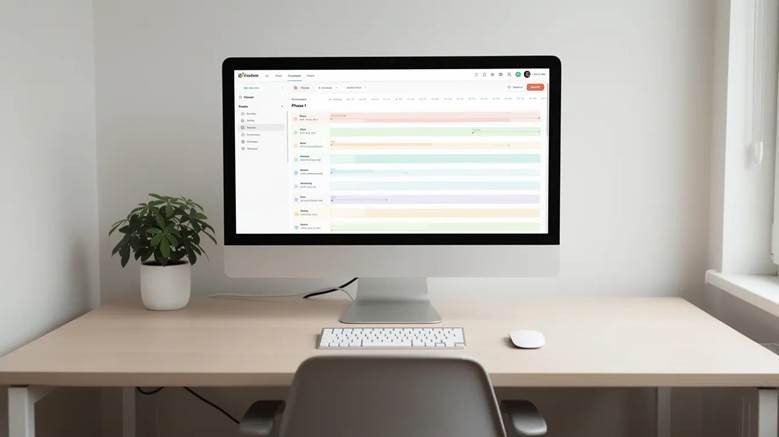
How Awtomated Structures Client Communication from First Request to Invoice
Here's a concrete example of what effective project management looks like inside Awtomated:
- Request intake: A client submits a multilingual website localization project via Awtomated's online form or client portal. Languages, services (translation, desktop publishing), deadlines, and file types are captured upfront. A thorough initial project brief defines project scope and client expectations.
- Quoting and approval: The PM builds a quote using stored rate cards. The client reviews and approves inside the same project space-no email back-and-forth.
- Vendor assignment: Awtomated matches qualified vendors based on language pairs, domain expertise, and availability. Tasks are created with structured briefs, and POs are generated automatically.
- Execution and communication: All messages, file exchanges, and change requests are logged against the project. Nothing lives in a separate chat.
- Invoicing: Finance teams don't reconstruct decisions from old DMs. Awtomated connects approved scope to final invoices, delivering tailored solutions with full traceability.
This process dramatically improves customer experience and reduces response times. Agencies that provide translation services at scale need this kind of structure to remain competitive.
Aligning Communication Across Services: Translation, Interpreting, and DTP
Agencies often mix service types in a single engagement: written translation, live language interpretation, desktop publishing, transcription services, and sometimes subtitling or multilingual SEO optimization. Each service has distinct information needs that get muddled in generic group chats.
For example, a 2025 product launch might involve:
- Press-release translation into eight languages
- Live webinar interpreting services for global audiences
- Localized brochures with desktop publishing and cultural adaptation
- Website localization for digital content and user interfaces
Awtomated lets agencies configure service-specific templates so the right information is captured every time. Agencies provide localization for websites and digital assets, and structured task briefings ensure all the materials reach the right specialists. An interpreter scheduling module handles the unique logistics of live events, while translation tasks follow their own structured workflows.
This reduces rework and misalignment between linguists, designers, and professional interpreters-particularly when servicing global audiences across multiple time zones.
Leveraging AI and MT Without Losing Human Expertise in Communication
AI and machine translation are now standard in translation agencies. Tools like Translated's AI, Lara, are designed specifically for translation tasks, and TBMS platforms increasingly integrate MT engines directly into workflows. But if requests for MT post-editing come in via informal chat, it's easy to lose track of where human review is required.
Quality assurance in translation involves collaborative editing and structured review processes. Without clear communication about when to use machine translation versus full human translation, agencies risk sacrificing quality for speed. Quality translation depends on human expertise guiding the process-especially for marketing materials where brand voice and cultural nuances matter.
Awtomated's integrations with MT engines and translation memory systems pair automated output with explicit instructions and checkpoints, enabling real time translation workflows where linguists remain in control. Structured communication is the glue that makes Human-AI collaboration workable, ensuring localization solutions preserve brand consistency without bottlenecking efficient translation services.
Practical Steps to Transition Away from WhatsApp and Email Chaos
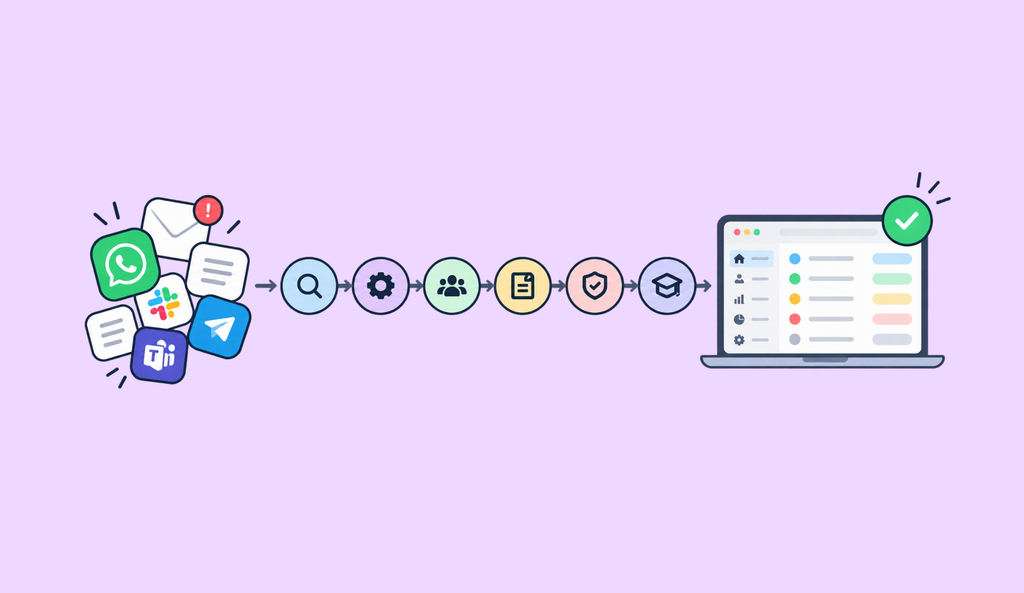
Here's a practical migration roadmap for agencies ready to improve operational efficiency:
- Audit current channels. Map every place where project-related communication currently happens: WhatsApp groups, Slack, email, Telegram, phone calls. Identify what's working and what's creating risk.
- Define must-have workflows. Prioritize the processes that cause the most pain: client intake, vendor assignment, quote approvals, file delivery.
- Pilot with a subset. Move new projects and your top 10 clients into Awtomated first. Don't try to migrate everything at once.
- Create standard templates. Build intake forms for document translation, interpreter briefings, and marketing localization briefs. Configure them inside the TBMS.
- Enforce "portal-first" communication. Set clear internal rules: chats may be used for quick greetings, but all decisions, files, and approvals go through Awtomated.
- Train and communicate. Explain to clients and vendors why the new system improves transparency and security. Invest in PM training.
Awtomated's onboarding team can help agencies map existing chat and spreadsheet workflows into structured processes, meeting each agency's specific language needs and translation needs without disrupting ongoing revenue. For those starting from scratch, the platform is designed for fast setup.
Measuring the Impact of Better Communication on Your Translation Business
To justify moving off group chats, agency leaders should track specific before-and-after metrics. Active feedback loops minimize last-minute edits and improve translation accuracy, and continuous feedback from clients helps refine future translations and workflows.
Key KPIs to monitor:
| Metric | What it measures |
| On-time delivery rate | Timely delivery improvement after centralization |
| Avg. response time to client queries | Speed of communication |
| Reopens/corrections from miscommunication | Service quality and rework reduction |
| Unbilled scope creep | Revenue leakage from informal agreements |
| Vendor payment disputes | Financial clarity and vendor trust |
| Net profit per project | Real margin visibility |
| Client satisfaction (NPS) | Long-term client satisfaction and retention |
Post-project reviews help agencies refine glossaries and improve future translations-but only if the data is captured. Awtomated's real-time profitability tracking surfaces how communication bottlenecks affect margins across global markets and service lines.
One anonymized example: a Central European agency reduced PM admin time by 40% and improved on-time delivery from 86% to 97% within four months of centralizing communication in a TBMS. Vendor payment disputes dropped to near zero.
Is It Ever Okay to Use WhatsApp? Setting Safe Boundaries
Completely banning WhatsApp or Slack is unrealistic-and unnecessary. Quick, relationship-building messages with long-term clients or vendors have real value.
The key is establishing clear boundaries:
- Allowed in chat: Informal check-ins, holiday greetings, quick availability confirmations.
- Must be in Awtomated: Scope changes, deadline negotiations, rate confirmations, file exchanges, approvals, and any communication touching legal documents or sensitive content.
A practical habit: PMs immediately summarize any important chat conversation as a note attached to the relevant project inside the TBMS. This hybrid approach lets agencies retain personal warmth while keeping the operational source of truth centralized and auditable. The right translation partner for your clients is one who knows where professionalism ends and chaos begins.
FAQ
Can a small translation agency really justify moving off WhatsApp and email?
Even agencies with annual revenue under €500,000 benefit from centralizing communication. The main gains aren't about scale-they're about reduced errors, faster quoting, and better cash-flow control. As soon as multiple project managers, vendors, or service types are involved, the cost of miscommunication outweighs the subscription cost of a TBMS like Awtomated. Many of our customers started with 2–5 staff members who felt they were "too small" until they calculated how much margin they were losing to chat and spreadsheet chaos.
How does Awtomated handle sensitive documents compared with chat apps?
Awtomated stores files in a centralized, access-controlled environment with permissions linked to roles-client, PM, translator, accountant-rather than to personal devices. Unlike messaging apps, a TBMS allows you to revoke access when a freelancer leaves, log who downloaded what and when, and enforce retention rules aligned with GDPR and client policies. Files are encrypted at rest and in transit, and project-level confidentiality settings can be configured for high-risk content like medical or legal files.
Will my clients accept moving from WhatsApp to a client portal?
Many enterprise and mid-market clients actually prefer structured portals because they simplify procurement, internal approvals, and audit requirements. A practical transition strategy: keep WhatsApp for quick human touchpoints, but position the portal as the official space for files, quotes, approvals, and project status updates. Frame the change as improving transparency, security, and speed-not adding burden.
How long does it take to migrate our existing workflows into Awtomated?
Typical small-to-mid-sized agencies can configure core workflows-client intake, quoting, project creation, vendor assignment, and invoicing-within a few weeks. We recommend a phased rollout: start with new projects and a subset of languages or services, then gradually move legacy clients and recurring work into the platform. Awtomated's team helps map current spreadsheet and chat habits into structured workflows, minimizing disruption while unlocking early wins.
Does a TBMS replace our TMS/CAT tools or just the communication layer?
Awtomated focuses on the business and communication layer-requests, quotes, scheduling, vendor management, finance-and integrates with CAT tools, MT engines, and translation memory. Agencies continue using their preferred TMS for linguistic work while using Awtomated as the central hub for everything around it: customer experience, operations, and profitability tracking. This separation of concerns makes it easier to evolve linguistic tools over time without upending your agency's entire operational backbone.
Table of Contents
- Introduction: Why Translation Agency Communication Can't Live in WhatsApp
- From One Client to Fifty: How "Quick Chat" Becomes a Communication Nightmare
- The Hidden Operational Risks of Running Projects in Group Chats
- Security, Compliance, and Confidentiality: Why WhatsApp Is a Legal Time Bomb
- Customer Experience: How Fragmented Communication Destroys Trust
- Miscommunication Across Different Languages and Services
- When Group Chats Break Your Finance and Profitability Tracking
- Scaling Vendor Management Beyond Personal Contacts and DMs
- Global Growth Requires Enterprise-Grade Communication, Not Ad-Hoc Chats
- Moving from Chaos to Clarity: Centralizing Communication in a TBMS
- How Awtomated Structures Client Communication from First Request to Invoice
- Aligning Communication Across Services: Translation, Interpreting, and DTP
- Leveraging AI and MT Without Losing Human Expertise in Communication
- Practical Steps to Transition Away from WhatsApp and Email Chaos
- Measuring the Impact of Better Communication on Your Translation Business
- Is It Ever Okay to Use WhatsApp? Setting Safe Boundaries
- FAQ
Ready to manage your Translation company easily?
Get Started for Free