How to Price Translation Services in 2026: Value-Based Pricing for Language Service Providers
Key Takeaways
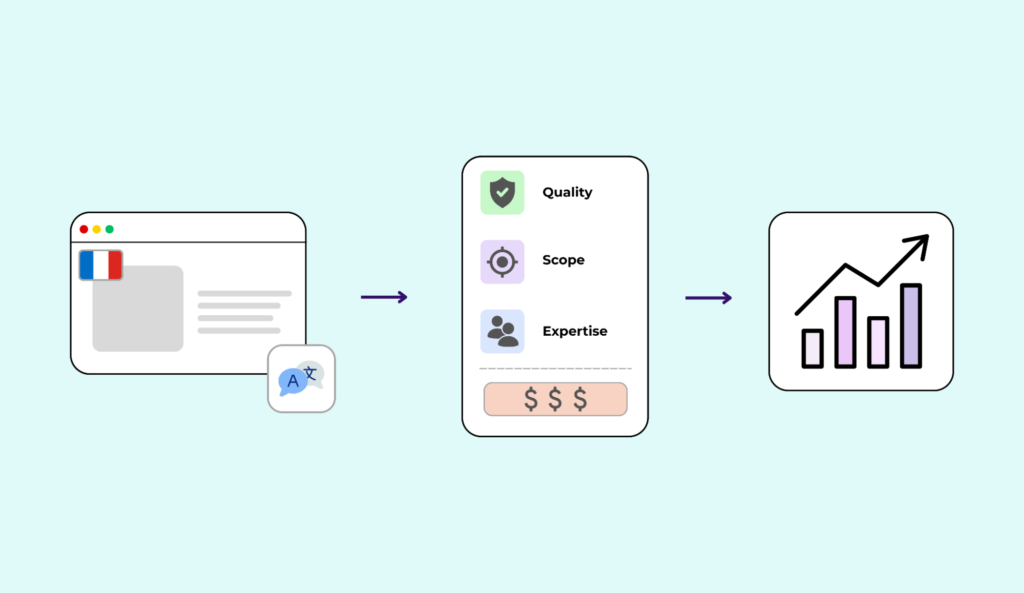
- Value-based pricing in 2026 means tying translation services rates to business outcomes, not just per word pricing or word count.
- LSPs should blend common pricing models; per-word, hourly, flat project fees, subscriptions-with value metrics like revenue impact, risk reduction, and speed-to-market.
- Key factors such as language pair rarity, content type, document complexity, and the mix of human translation and machine translation define both cost and value.
- Awtomated gives language service providers the data to track profitability by client, job, language pair, service type, and pricing models.
- Value-based pricing helps avoid costly translation mistakes caused by underpricing critical work and over-investing in low-value content.
Introduction: Why Value-Based Translation Pricing Matters in 2026
In 2026, global brands are not really buying words. They are buying market entry, compliance, employee trust, customer experience, and growth. That shift matters for every translation provider still relying on one per word rate for every translation project.
If you are asking how to price translation services value based, start here: value-based pricing sets the final price according to the financial impact of the translation, not only the production cost. Value-based pricing focuses on quality over word count, considers project complexity and client needs, and aligns costs with the value of translation services.
A SaaS company expanding into LATAM and APAC should not price multilingual onboarding copy the same way it prices internal FAQs. One drives revenue generation and estimates the potential revenue from new markets. The other may simply keep teams aligned. Awtomated, our Translation Business Management Software for LSPs, helps make those distinctions visible, measurable, and scalable.
From Cost-Plus to Value-Based: How LSPs Traditionally Price Translation
Most language services are still sold through cost-plus pricing: calculate translator cost, project management time, translation tools, QA, overhead, then add margin. It is simple. It is also where high-impact work gets underpriced. If you are not sure where your pricing is leaking margin, it helps to start by identifying where underpricing is hurting your agency.
Per-word pricing is the most common translation pricing model. Average rates for per-word pricing range from $0.10 to $0.22, while common language pairs often cost $0.10 to $0.20 per word. Less common languages can exceed $0.25 per word. Freelancers can lower translation costs compared to agencies, but agencies often add coordination, QA, insurance, and service delivery. Hourly rates for translation services range from $25 to $60, and project-based fees are used for larger or complex translation projects.
Those numbers are context, not strategy. Value-based pricing asks: what happens if the work is late, wrong, culturally off, or legally risky? Awtomated’s job and client profitability analytics help LSPs with connecting pricing decisions to project profitability instead of guessing.
Defining “Value” in Translation: What Clients Actually Pay For
True value is multidimensional. It includes accuracy, cultural nuance, risk avoided, revenue gained, and operational efficiency. Assessing translation value involves accuracy and cultural nuances, especially when the target language carries regional expectations.
Clients pay for:
- Revenue impact: conversion pages, onboarding flows, ecommerce catalogs, and launch campaigns.
- Risk mitigation: translations that prevent legal or safety issues.
- Operational efficiency: standard operating procedures, training materials, and process documentation.
- Brand equity: transcreation, tone, trust, and high quality translation.
Pricing should reflect the cost of not doing proper translations. A mistranslated dosage line, privacy policy, or safety warning can cost far more than the document translated. Risk and liability measures the cost of errors in legal and medical documents. Professional translation reduces miscommunication and legal complications, while professional translation enhances brand reputation and supports growth.
Quality assurance measures enhance the value of translation work. TEP (Translation, Editing, Proofreading) processes ensure higher quality translations. High-quality localization protects brand reputation. Effective translation creates an inclusive environment for all employees, and accurate translation fosters trust and satisfaction among employees.
Companies with diverse teams outperform peers by 35%, according to widely cited McKinsey research. That matters because cultural review, in-market expertise, and specialized knowledge directly influence whether localized content feels credible.
In Awtomated, LSPs can tag each language service as critical, important, or routine, then track margin and quality service outcomes per category.
Key Factors that Drive Both Cost and Value
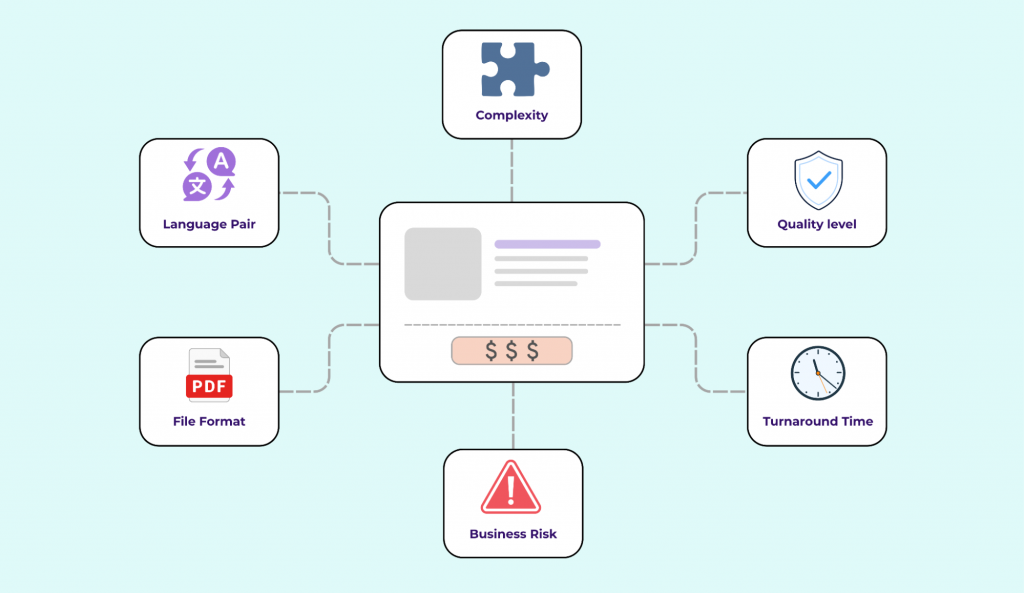
Value-based pricing still needs cost discipline. The difference is that cost drivers do not automatically define value; they inform it.
Analyze:
- language pair and market demand
- subject matter complexity
- quality level: raw machine translation, MTPE, human translation, or transcreation
- file format and engineering effort
- turnaround time
- client risk and business impact
Document complexity affects translation costs significantly. Highly specialized fields justify premium pricing due to limited qualified translators. Technical translations can cost 50% to 100% more than standard rates. Urgent projects often carry a 20-50% pricing premium, and rush orders can increase costs by 25% to 100%; clients with poor planning may incur rush fees.
A short slogan may have low word count and high value. A 200-page internal archive may have high word count and low value. Batch translation requests can qualify for volume discounts, while large projects may have lower per-word rates but higher overall value due to consistency.
Awtomated stores rate cards by client, language combinations, service type, and value tier, so pricing logic stays transparent.
Language Pair, Market Scarcity, and Strategic Markets
Language pair is both a cost and value lever. English↔Spanish may be competitively supplied, but for a US company expanding into Mexico, it can be strategically essential. English↔Japanese UI strings for financial institutions may carry higher risk than English↔Spanish product descriptions.
Common language pairs often support competitive pricing. Rare or low-resource pairs, such as English↔Swahili or English↔Icelandic, require more coordination and specialized expertise. Per-character pricing is common for Asian languages like Chinese and Japanese.
Even regional variants matter. European French and Canadian French can require different terminology, compliance review, and cultural adaptation. Awtomated lets LSPs define custom pricing structures per language pair and track utilization to avoid margin erosion.
Content Type, Risk Level, and Costly Translation Mistakes
Not all words carry the same risk. Legal contracts, legal documents, clinical trial files, financial disclosures, technical manuals, technical documents, and safety instructions demand accurate translations and subject matter expertise.
Low-risk content-internal chat summaries, user reviews, support tickets-may be better served by cost effective machine translation with light review. But high-risk content should trigger certified translation, senior human translators, and QA.
One common 2026 scenario: a medical device company localizes IFU content for the EU. A cheap workflow creates ambiguous safety instructions. The “savings” disappear when regulatory review stalls. Another: a mislocalized privacy policy after a regulatory update creates legal exposure in a strategic market.
Awtomated tags risk level and service level, such as ISO-style professional translation or MTPE, then applies the correct pricing rules. For formal quality benchmarks, many LSPs look to ISO 17100.
Human vs Machine Translation: Calibrating Value, Not Just Cost
In 2026, smart LSPs blend machine translation and human translation. Raw machine translation can be 40-60% cheaper than human translation and useful for internal discovery. It is not premium value work.
MTPE sits in the middle: lower than full professional translation, but priced for human review. Full human translation and transcreation warrant higher prices when brand, law, safety, or industry specific terminology matters.
Awtomated can track edit distance, time-to-edit, translator's expertise, engine performance, and rework. That helps LSPs set profitable MTPE and human-only rates, not hopeful ones. Translation memory systems can reduce costs by reusing content, and translation memory also improves consistency across future projects.
Common Pricing Models and How to Make Them Value-Based
No model is value-based by default. The model becomes value-based when it reflects business impact, quality expectations, and risk.
| Model | Best fit | Value-based adjustment |
| Per word | clear scopes | tier by risk and QA |
| Hourly | consulting, review | price seniority and impact |
| Flat fee | launch packages | tie to outcomes |
| Subscription | ongoing translation | bundle predictable support |
Awtomated supports multiple simultaneous translation pricing models per client and automates selection by metadata.
Per Word Pricing and Tiered Value Bands
Per word pricing remains easy to understand, but a single per word rate hides value. Use value bands:
- Routine: internal, low-risk, MTPE-friendly.
- Important: customer-facing, reviewed by professional translators.
- Critical: regulated, launch-critical, or brand-sensitive.
English→German safety manuals should cost more than English→German internal emails for the same client. Tiered packages allow clients to select value levels that fit their needs. Explain the bands clearly so clients see discipline, not randomness.
Hourly and Consulting-Based Pricing for High-Impact Work
Hourly pricing fits terminology workshops, UX copy reviews, in-market testing, and tone-of-voice consulting. For example, a Japanese mobile app launch may need collaboration, not a simple final cost from word count.
Use transparent seniority bands: standard linguist, language strategist, regulatory reviewer. Awtomated tracks actual time against budgets, helping refine future quotes and minimums. Value-in-use pricing focuses on how translation saves money over time, not just what one hour costs.
Flat Project Fees and Outcome-Oriented Packages
Flat project fees provide a fixed price for entire translation projects. They work well when the scope is clear: a 6-language website launch, a 35-page ESG report, or a 10-language ecommerce catalog.
Package translation, revision, QA, in-context review, and test builds into one flat fee. Under the hood, Awtomated keeps the cost model; the client sees the outcome. Clear change-order rules protect margins when scope expands.
Subscriptions and Hybrid Models for Ongoing Language Services
Subscription models can provide predictable translation costs for clients with ongoing translation needs. A SaaS company with ongoing translation for release notes, help center updates, and UI strings may prefer a monthly Global Support Plan. For small agencies, this is also where using value-based pricing in retainer negotiations can meaningfully shift the conversation from per-word rates to ongoing business partnership.
A hybrid plan might include X words of MTPE, Y hours of consulting, Z priority languages, and defined turnaround time. Subscriptions convert volatile translation spend into predictable OpEx and can create significant cost savings when managed properly. Awtomated tracks usage, overages, and service delivery thresholds.
Building a Value-Based Pricing Framework Step by Step
Do not change every account overnight. Pilot value-based translation pricing where the gap between cost and value is obvious. The right entry point depends on where your agency is right now, how pricing strategy evolves at each growth stage matters as much as the framework itself.
- Segment clients by size, industry, and strategic value.
- Segment content by legal, marketing, product, support, HR, or technical content.
- Define value tiers.
- Map tiers to pricing models.
- Test with selected accounts.
- Review performance quarterly.
Review 12–24 months of projects in Awtomated to find high-margin work, low-margin retainers, repeated rush fees, and quality incidents. Shifting focus to business impacts allows for structuring pricing around long-term returns.
Segmenting Clients and Content by Strategic Importance
An enterprise manufacturer may have three streams: safety documentation as critical, ecommerce descriptions as important, and internal memos as routine. Start there.
Within Awtomated, custom content categories can trigger workflows, QA, and rates automatically. This keeps sales, project managers, accounting, and linguists aligned. Awtomated’s client relationship management tools make it easy to manage different pricing tiers and service agreements across your entire client book.
Translating Value Tiers into Pricing Rules
Codify the logic. For example:
- Critical marketing: human translation, senior review, in-country signoff, premium tier or fixed price.
- Routine internal: machine translation, light review, discounted per word.
- Certified financial disclosure: qualified translators, TEP, compliance review, premium rate.
Multilingual ESG reports with certification should not be priced like internal ESG training slides. Consistency builds trust.
Using Data from Awtomated to Refine Prices Continuously
Track average revenue per 1,000 words, margin by client, win rate, rework, proposal disputes, and profitability by service type. Adjust rates at least annually, including at the end of 2026, and sooner when inflation, local cost, regulations, or MT performance change.
Real-time Awtomated dashboards prevent underpriced retainers from quietly eroding performance. To understand how Awtomated structures pricing options for different agency sizes and workflows, explore the Awtomated pricing plans.
Communicating Value-Based Pricing to Clients
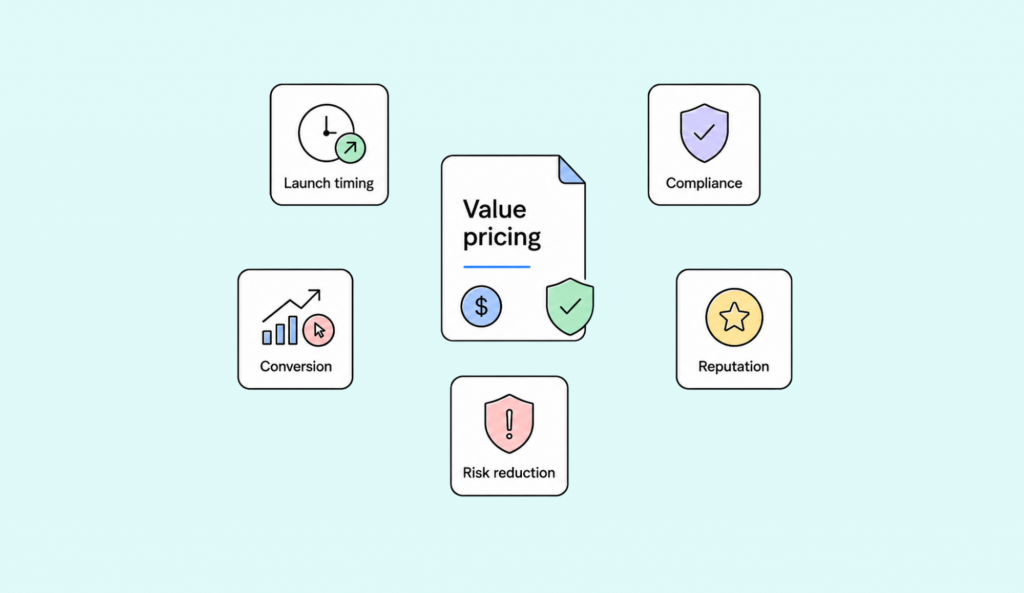
Clients accept higher prices when they understand what the price protects: launch timing, compliance, conversion, reputation, and lower risk of costly translation mistakes.
Train sales teams to sell value stories:
- “This workflow reduces regulatory risk.”
- “This package supports a faster launch in multiple countries.”
- “This tier uses machine translation where appropriate and professional translation where mandatory.”
- “This plan reduces rework and improves consistency.”
Efficiency gains consider the speed of product launches in multiple countries. Pricing aims to reflect premium quality while offering high value.
Structuring Proposals and Quotes in a Value-Based Way
Start with the client’s objective, not your rate table. A strong proposal includes:
- Objective
- Risks
- Recommended service mix
- QA approach
- Investment
- Expected outcomes
For an AI-enabled healthcare app, show where machine translation is acceptable and where professional translation services are mandatory. Awtomated pulls standardized service descriptions into branded quotes so every team member explains value the same way. The structure of those quotes matters: for a deeper look at building value-based quotes that convert, see how leading LSPs frame proposals around outcomes rather than line items.
Handling Objections About Higher Prices
When a client says, “Another vendor is cheaper per word,” reframe around total cost. A low-quality legal translation can lead to contract disputes. A properly priced legal workflow may prevent them.
Offer tiered options: lower cost, lower assurance; higher cost, higher assurance. Use Awtomated data-historical rush frequency, rework, quality incidents-to make the case factual.
Avoiding Costly Mistakes When Implementing Value-Based Pricing
Value-based pricing can backfire when rules are inconsistent, operational cost is underestimated, or delivery capacity does not match the promise.
Avoid “unlimited MTPE” fixed-fee packages without usage limits. Avoid premium promises without qualified translators. Avoid discounting critical work because a client has volume.
Awtomated centralizes approvals, rate cards, reporting, and audits so pricing rules are enforced. Schedule periodic quote and margin reviews inside Awtomated to catch leakage early.
How Awtomated Powers Value-Based Pricing for Modern LSPs
Awtomated is the TBMS built for language service providers that want to manage complex, value-based pricing in real time. It connects quoting, project management, workflows, QA, accounting, and profitability, so you can start invoicing at your true value. See how Awtomated’s finance management tools keep invoicing aligned with what each project was actually worth.
With Awtomated, LSPs can:
- configure rate cards by client, language pair, service type, and risk
- manage per word, hourly, subscription, and flat project fees
- generate quotes automatically
- integrate with CAT and MT tools
- compare estimated vs actual margin
- enforce service levels and approvals
A 2026 workflow can be simple: sales builds a quote using value tiers, PMs deliver through integrated workflows, linguists apply the right translation process, and accounting sees planned vs actual margin. LSPs using Awtomated will be better prepared for automation, pricing pressure, and client expectations beyond 2026.
FAQ: Value-Based Translation Pricing for LSPs in 2026
How is value-based pricing different from simply charging more per word?
Value-based pricing is not an arbitrary markup. It ties price to measurable business impact, risk, quality assurance, and outcomes. Sometimes it lowers prices for low-risk volume through machine translation. Sometimes it raises prices for high-stakes work.
Can small LSPs realistically adopt value-based pricing in 2026?
Yes. Start with two or three value tiers and apply them to a few strategic clients in legal, life sciences, SaaS, or financial services. Highlighting unique qualifications helps command higher value-based prices, even for smaller LSPs.
How do I decide when to use machine translation vs human translation under a value-based model?
Use a risk-and-purpose matrix. Internal, low-risk content can default to MT or MTPE. External, regulated, brand-critical, or safety-sensitive content should default to human translation or full professional translation. Also consider whether MT quality varies significantly by language pair.
What metrics should I track to know if my value-based pricing is working?
Track average revenue per 1,000 words, gross margin by client, margin by service type, proposal win rate, quality incidents, rework, deadline misses, and scope disputes. Awtomated centralizes these metrics for quarterly review.
How often should I update my translation prices under a value-based approach?
Review prices at least once a year and whenever major cost or market changes occur. Update contracts to allow documented adjustments. Awtomated makes batch rate-card updates easier, so pricing stays current without creating administrative chaos.
Ready to move your LSP to value-based pricing? Book a demo with Awtomated to see how LSPs are using it to manage pricing, profitability, and client relationships in one place.
Table of Contents
- Introduction: Why Value-Based Translation Pricing Matters in 2026
- From Cost-Plus to Value-Based: How LSPs Traditionally Price Translation
- Defining “Value” in Translation: What Clients Actually Pay For
- Key Factors that Drive Both Cost and Value
- Common Pricing Models and How to Make Them Value-Based
- Building a Value-Based Pricing Framework Step by Step
- Communicating Value-Based Pricing to Clients
- Avoiding Costly Mistakes When Implementing Value-Based Pricing
- How Awtomated Powers Value-Based Pricing for Modern LSPs
- FAQ: Value-Based Translation Pricing for LSPs in 2026
Ready to manage your Translation company easily?
Get Started for Free