Is Your Client Data Safe in AI Translation? What LSPs Must Know About MT, LLMs and Confidentiality
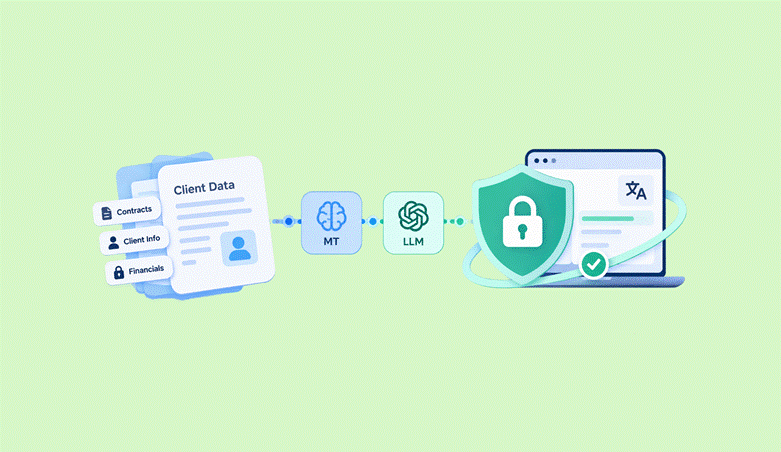
AI translation tools can introduce privacy and data security risks that most Language Service Providers are not prepared for. This article breaks down the regulatory landscape, the technical realities of how machine translation and large language models handle your files, and the concrete steps LSPs must take to keep client data safe.
Key Takeaways
- Public AI translation tools (free MT portals, generic LLM chatbots) are almost never appropriate for client-confidential document translation because of unclear data handling practices, reuse policies, and indefinite storage.
- From 2024 to 2026, regulations including GDPR enforcement trends, the EU AI Act, CPRA, and China's PIPL raised the bar on how LSPs must handle AI-powered translation and data security.
- LSPs should insist on enterprise-grade AI translation tools that offer encryption in transit and at rest, clear "no-training" guarantees, configurable data retention, EU/US data residency options, and detailed audit logs.
- A safe AI translation workflow combines AI-powered MT and LLMs with human review, project-level confidentiality agreements, access controls, and redaction of personally identifiable information in source files.
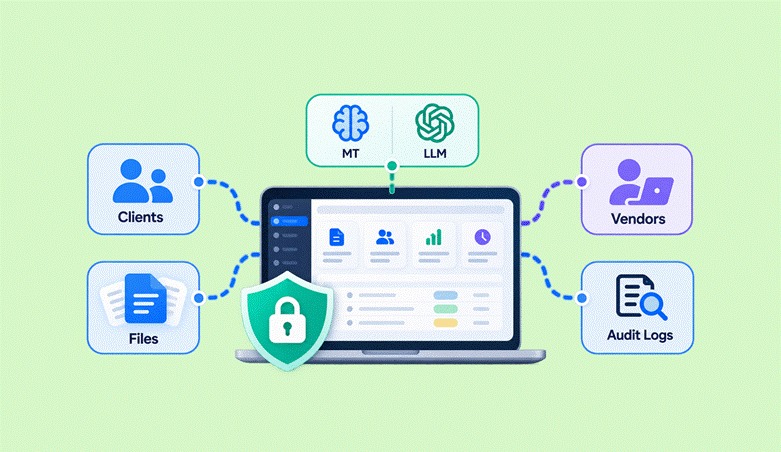
- Awtomated's Translation Business Management System (TBMS) centralizes file handling, permissions, MT/LLM integrations, and audit trails so you avoid risky ad-hoc use of separate AI tools by project managers and vendors.
1. Why Data Privacy in AI Translation Suddenly Matters So Much
Since ChatGPT launched in November 2022, large language models moved from research curiosity to daily production tool in under two years. By 2024, GPT-4, Claude, and similar models were embedded in localization workflows for drafting, glossary generation, and full translation. By 2025, procurement teams at global enterprises and educational institutions began requiring written answers to "Which AI translation tools do you use?" and "How is our sensitive data protected?" in every RFP.
Using AI translation tools poses risks related to exposure of sensitive information, and regulators noticed. In 2026, Canada's Privacy Commissioner found that OpenAI's training practices for ChatGPT violated PIPEDA through overcollection and non-consensual data use. The EU's Coordinated Enforcement Framework (CEF) 2026 launched investigations into transparency and information obligations under GDPR across 25 European data protection authorities. Legal teams face stricter data protection regulations in 2026 than at any prior point.
For LSPs, AI translation is no longer optional; it is a competitive necessity. But mishandled client documents (contracts, clinical trial protocols, financial reports) can breach confidentiality agreements and trigger regulatory penalties. The central question is direct: can you safely use AI translation tools for client work without putting confidential information at risk? Yes, but only with the right architecture, governance, and tools.
2. How AI Translation Tools Actually Handle Your Data
When you submit text or files to a cloud-based AI translation tool, the content leaves your device via HTTPS/TLS, reaches the provider's servers, passes through an MT or LLM model, and returns as translated content. What happens to that content between submission and response is where data privacy concerns begin.
AI translation tools fall into three categories, each with different risk profiles:
- Public web translators (for example, free tiers of Google Translate or consumer chatbot interfaces): free web tiers may have looser privacy policies than paid enterprise versions. AI translation tools often retain user-submitted text indefinitely, and data harvesting may occur through free or consumer-grade AI translation platforms.
- Enterprise MT engines (Azure Translator, AWS Translate, DeepL Enterprise): these provide Data Processing Agreements, SLAs, and documented retention. Azure Translator's no-trace policy states that customer data submitted for text translation is not persisted, and document translation data is hard-deleted after processing. Zero data retention means data is processed in memory and discarded after fulfillment.
- Embedded LLMs in translation platforms and CAT tools: these vary widely. Some route content through external APIs; others host models privately. AI translation platforms may transmit data across multiple jurisdictions depending on the provider's infrastructure.
When evaluating any AI translation tool, LSPs should verify the following in vendor documentation:
- Data retention periods (0 days vs. 30 days vs. indefinite)
- Whether user input is reused for model training (opt-in vs. opt-out vs. no option)
- Data residency controls that allow selection of geographic regions for data processing
- Whether logs are anonymized or contain content snippets
- A clear written statement: "We do not use your content or metadata for training without explicit opt-in"
Awtomated integrates only with enterprise-grade MT providers that document their data flows transparently and support no-training configurations.
3. New Regulatory Pressures on AI Translation: GDPR, EU AI Act, CPRA and Beyond
From 2024 to 2026, regulators across multiple jurisdictions intensified scrutiny on how artificial intelligence systems process personal and confidential data. For LSPs choosing AI translation tools, regulatory compliance is no longer a legal department afterthought; it shapes which engines you can use, where data can travel, and what documentation you must keep.
- GDPR: GDPR imposes strict rules on data processing and transfer. Enforcement actions in 2024 to 2026 focused on transparency (Articles 12-14), lawful basis (Article 6), and purpose limitation. Italy's Garante sanctioned a company for lacking adequate transparency about how EU-resident data was used in LLM pre-training.
- EU AI Act: The EU AI Act classifies many AI systems as high-risk, including AI-powered translation systems used in regulated sectors. Article 50 transparency obligations became applicable on August 2, 2026, requiring providers to label AI-generated content and inform users.
- CPRA: California's law tightens rules on sharing personal data with cloud AI tools and introduces requirements around Automated Decision-Making Technology (ADMT). AI translation tools must comply with GDPR and HIPAA standards when processing health or legal content.
- China's PIPL: Cross-border transfers of personal data require government security assessments, standard contracts, or certification. Translating documents for Chinese persons using servers outside China can violate PIPL without these mechanisms.
Legal teams must ensure AI tools comply with privacy regulations. Failure to comply with data protection laws can lead to penalties. In practice, compliance for LSPs means:
- Having signed data processing agreements with every AI vendor
- Ensuring Standard Contractual Clauses or adequacy mechanisms for cross-border data transfers
- Demonstrating to clients where and how their customer data is processed
Awtomated helps LSPs centralize records of processors, data locations, and client-specific rules (for example, "EU-only engines for this customer"), which is critical during audits and when responding to security questionnaires.
4. Where AI Translation Puts Client Confidentiality at Risk
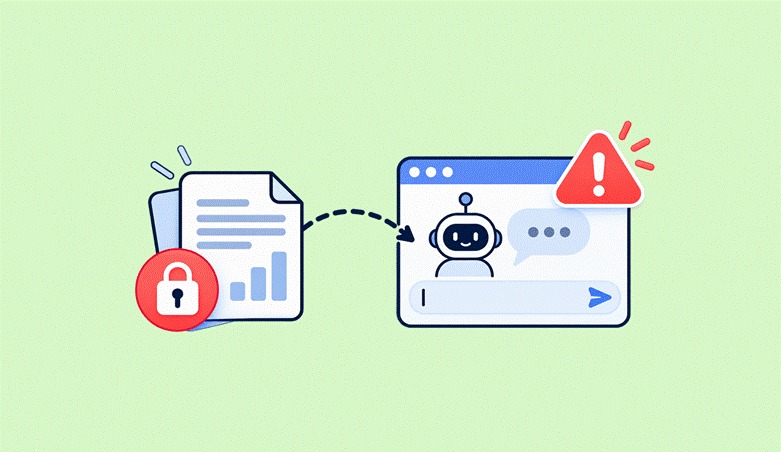
A project manager receives a draft M&A agreement at 6 PM with a tight deadline. To "get the gist" quickly, they paste three pages into a personal ChatGPT account. The content now sits on servers governed by terms the LSP never reviewed, potentially stored indefinitely, possibly used for training. The client's NDA has been breached before the linguist even starts work.
AI translation tools can expose sensitive data if not secured properly. The main risk scenarios for LSPs include:
- Use of public AI tools (free web portals, personal chatbot accounts) for documents covered by NDAs or attorney-client privilege. AI translation platforms can expose data to unauthorized access risks through these channels.
- Uploading files with unredacted personally identifiable information (names, addresses, account numbers, health details) to tools that may log or reuse the data.
- Vendors or freelancers using their own AI tools or browser extensions for translation tasks without contractual safeguards. Unsecured APIs can lead to data breaches and unauthorized access.
- Third-party plugins inside browsers or productivity apps that silently send sensitive content to external APIs without the LSP's knowledge.
Confidentiality risks include improper data handling or lack of encryption. AI translation services handle sensitive enterprise and personal data daily, and the business consequences of a breach are concrete:
- Breach of written confidentiality agreements, leading to client loss or litigation
- Regulatory investigations and fines if health, legal settings, or financial data is exposed
- Long-term reputational damage for the LSP as an unreliable partner
The risk is rarely the AI technology itself. It is the uncontrolled, fragmented way content moves across email, chat, spreadsheets, and personal accounts. Awtomated's approach keeps document translation, messages, and AI interactions inside a governed platform with permission controls instead of scattered across untracked tools.
5. Security Foundations LSPs Should Demand from Any AI Translation Tool
Before designing clever AI workflows, LSPs must lock down basic data security: encryption, access control, logging, and vendor due diligence. Legal professionals face new responsibilities in evaluating AI compliance, and enterprise security starts with these technical controls:
- Encryption in transit protects data using protocols like TLS 1.2 or higher. Data at rest is typically protected with strong encryption standards like AES-256. AI translation tools should offer end-to-end encryption.
- Data retention policies should prevent indefinite storage of inputs. Look for options to set zero-retention or short windows (for example, logs kept up to 30 days for abuse detection, then deleted).
- Role-based access control enables granular management of data access for enterprise accounts, determining who can upload, view, and download documents.
- Strong authentication (SAML SSO, MFA) for both internal staff and freelancers to reduce account compromise risk.
- Regular third-party security audits (SOC 2 Type II) and certifications like ISO 27001, with summaries available for clients to review.
Operational safeguards matter equally:
- Training for PMs and human linguists on handling AI tools safely
- Documented incident response plans so translations remain available yet secure during outages
- Audit trails are essential for verifying translation integrity; independent monitoring detects unusual access to sensitive document translation projects
Local and on-device translation options minimize data transfer risks for the most sensitive content, though they are limited in language pairs and domain coverage.
A TBMS like Awtomated centralizes these controls: connecting only to vetted MT/LLM providers via secure API access, applying consistent permissions across all projects, and providing a single audit log rather than scattered records.
6. Building a Confidential AI Translation Workflow: From Intake to Delivery
Here is a blueprint for LSPs: how to design a secure end-to-end translation process that uses AI where appropriate while protecting data privacy and confidentiality matters at every stage.
- Intake: classify content sensitivity (public marketing vs. internal communications vs. medical records) and decide what level of AI translation is allowed. Organizations should establish policies to restrict use of AI translation for sensitive data. Capture client instructions in the project brief.
- Preparation: automatic redaction of PII is crucial before translation. Privacy features should include automatic redaction of personal identifiers. Data minimization and secure deletion are core practices for data privacy in AI translation.
- Engine selection: choose between generic MT, domain-adapted MT, or private LLMs based on client requirements, geography, and regulatory context. Avoid public endpoints for regulated content or specialized content in legal and life sciences domains.
- Human review: enforce post-editing standards (MTPE for contracts or clinical trials, spot checks for lower-risk content) to catch AI hallucinations.
- Delivery and storage: deliver translations via secure client portals. Set clear retention periods for source and target files. Ensure secure archival or deletion in line with contracts.
Confidentiality agreements intersect with this workflow design:
- Project-specific NDAs for linguists working on sensitive information
- Vendor terms forbidding the use of unapproved AI tools outside the LSP's platform
- Client-facing statements in SOWs explaining when AI-powered tools are used and what security measures are in place
Awtomated serves as the control tower: centralized client portal for secure file upload, automated routing of tasks to appropriate vendors and MT engines based on sensitivity rules, and built-in records of who accessed which files and via which AI translation tool.

7. Human Review, Quality, and Accountability in AI-Driven Translation
AI models (MT or LLMs) generate translations based on probabilities and patterns, not legal or clinical responsibility. A fluent sentence can still be factually wrong. For high-stakes document translation, human expertise remains non-negotiable for both translation accuracy and data protection.
- Machine Translation Post-Editing aligned with ISO 18587:2017 addresses translation quality for technical and legal content. Bilingual review and in-country validation serve regulated sectors (life sciences, financial services, public sector).
- Human review catches not just terminology errors but meaning shifts, omissions, and formatting problems in contracts, certificates, and regulatory forms. Human oversight also flags when AI output reveals source PII or adds speculative statements that could create liability.
- Professional human linguists are bound by confidentiality agreements and ethical codes. They understand what must never leave secure systems.
- AI engines cannot sign contracts or stand in court. LSPs remain accountable for the final outcome, making human oversight non-negotiable in sensitive document translation. Audit logs showing who edited what segment and when help demonstrate due diligence during translation quality assurance.
Awtomated supports this human-in-the-loop model by assigning post-editing tasks, tracking turnaround and quality metrics, and linking every MT segment to a human reviewer. For high-risk project types, human review is part of the default workflow template, not an optional extra.
8. Governance, Policies, and Training: Making Data Safety a Habit
Technology alone cannot guarantee data privacy. LSPs need governance: policies, training, and monitoring around the use of AI in translation workflows. Privacy and data security are top priorities for AI translation providers, and they should be for LSPs too.
Policy essentials:
- A written AI translation policy defining which AI translation tools are approved, for which content types, and under what conditions
- Clear internal guidelines banning the use of unapproved public MT or chatbots for client-confidential or regulated documents
- Role-based permissions defining who can activate new MT engines or adjust data retention settings inside tools like Awtomated
Training priorities:
- Regular sessions for project managers, sales, and linguists about data privacy basics, current regulatory standards, and real-world breach examples
- Practical guidance on redacting PII, recognizing sensitive data categories, and understanding client-specific confidentiality clauses
- Exercises on how to handle requests like "Just drop this into Google Translate" from internal stakeholders, and how to respond with safer alternatives that support multilingual communication without data leaks
Monitoring and enforcement:
- Periodic audits of system logs to ensure no documents are processed outside approved workflows
- Vendor scorecards that include adherence to confidentiality and safe AI use
- Incident post-mortems with updated guidelines when potential breaches arise
Awtomated centralizes communication, file exchange, and AI usage into one TBMS instead of uncontrolled email and consumer apps, offering reporting that shows which projects used MT, which engines, and how human review was applied.
9. How Awtomated Helps LSPs Keep AI Translation Data Safe
Many small and mid-sized LSPs currently rely on email, spreadsheets, and disconnected AI tools. This fragmentation makes consistent data privacy practices nearly impossible. An operations manager cannot verify that a freelancer did not paste a contract into an unapproved chatbot if files live across inboxes and personal drives. This is the problem Awtomated's TBMS was built to solve.
Awtomated capabilities relevant to data privacy and AI translation:
- Centralized project and document translation management, keeping all client files within one governed environment
- Secure integrations with machine translation and other AI translation tools via APIs, allowing LSPs to leverage AI translation with enterprise MT engines while respecting client-specific and region-specific rules
- Vendor and client portals with controlled access, so only authorized users can view or download project materials
- Finance and invoicing tied to projects, giving visibility into which vendors handled which confidential materials under which contractual terms
- Real-time profitability tracking without exposing underlying documents outside secure boundaries
Awtomated supports the best practices outlined in this article by enforcing standardized workflows that include human review for sensitive content, recording audit logs of who uploaded, translated, and edited documents, and making it easier to demonstrate compliance to enterprise clients through consistent, verifiable processes. Platforms must comply with GDPR and HIPAA for sensitive data, and Awtomated's architecture supports flexible solutions for both business use and regulatory compliance.
Next steps: map your current translation workflows, identify where customer data currently leaks into uncontrolled tools, and explore how a TBMS like Awtomated can consolidate operations and reduce risk. You can book a demo, request a security overview, or run a limited pilot project with one high-sensitivity client account.
Final thoughts: LSPs do not need to choose between AI efficiency and confidentiality. By using secure AI translation tools with documented privacy policies, pairing automated processing with human oversight, and running everything through a TBMS built with data protection in mind, you can deliver fast, AI-powered services that produce accurate results while keeping client data safe.
FAQ
What types of content are too sensitive for public AI translation tools?
Anything covered by NDAs, attorney-client privilege, or industry specific regulations (medical records under HIPAA, financial statements before public release, HR files containing PII, internal investigation reports) should never be pasted into public MT portals or generic LLM chatbots. Even "anonymized" snippets can sometimes be re-identified when combined with metadata. Legal teams must classify their use of AI tools for compliance before processing such content.
Can AI translation engines be used without training on my data?
Many enterprise MT and LLM providers now offer contractual "no training" options or require explicit opt-in. For example, OpenAI's enterprise offering states that inputs and outputs are not used to train or improve AI models by default. Look for clear statements in privacy policies and sign data processing agreements that reflect this. Awtomated integrates with providers supporting these data-privacy friendly modes.
How do I explain AI translation and data privacy to my clients?
Prepare a short, written AI use policy describing when AI translation tools are used, how data is encrypted and stored, whether data is used for training, and how human review is applied. Include this in proposals and SOWs. Offer to walk enterprise clients through your workflow so they can verify controls and audit logs in practice.
Do I need separate confidentiality agreements for linguists when using AI?
Standard freelancer contracts often include confidentiality clauses, but update them for AI-era risks: forbid unapproved AI tools, require that all client content remain within the LSP's translation platforms, and mandate immediate notification if a breach occurs. This complements technical controls and reduces the chance of linguistic precision being pursued at the expense of data security.
What is the quickest way to reduce AI-related data privacy risk in my current workflow?
Three steps: (1) Ban use of public MT and chatbots for client-confidential documents via a simple written policy. (2) Centralize active projects and files into a secure TBMS such as Awtomated and connect only vetted MT engines. (3) Train PMs and key vendors on the new workflow, emphasizing when human review is mandatory and how to handle sensitive content safely.

Building software that helps small and medium-sized language service providers run their business.
About Rishi →Table of Contents
- 1. Why Data Privacy in AI Translation Suddenly Matters So Much
- 2. How AI Translation Tools Actually Handle Your Data
- 3. New Regulatory Pressures on AI Translation: GDPR, EU AI Act, CPRA and Beyond
- 4. Where AI Translation Puts Client Confidentiality at Risk
- 5. Security Foundations LSPs Should Demand from Any AI Translation Tool
- 6. Building a Confidential AI Translation Workflow: From Intake to Delivery
- 7. Human Review, Quality, and Accountability in AI-Driven Translation
- 8. Governance, Policies, and Training: Making Data Safety a Habit
- 9. How Awtomated Helps LSPs Keep AI Translation Data Safe
- FAQ