Awtomated vs Smartcat: Which Platform Fits a Small LSP in 2026?
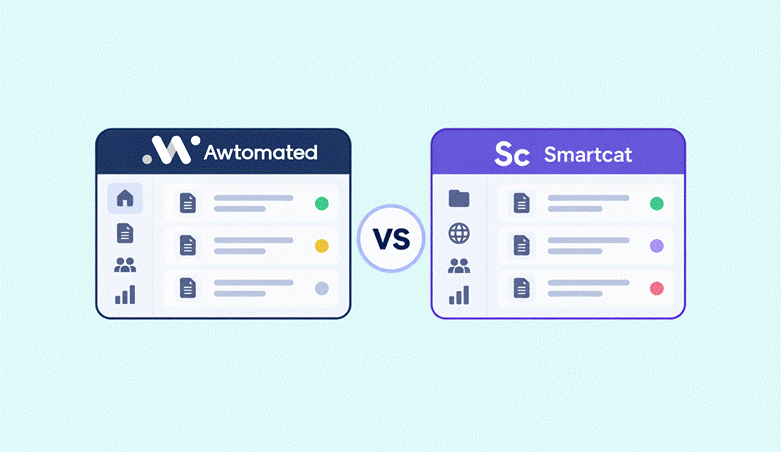
If you run a small translation agency and you're weighing Awtomated against Smartcat, the decision comes down to one question: is your biggest bottleneck translation execution or business operations? Smartcat is an AI-powered translation management system built to move content through multiple languages at speed. Awtomated is a Translation Business Management System (TBMS) designed to run the entire business behind those translation projects - from quoting and vendor coordination to invoicing and real-time profitability tracking. For most language service providers with 5–50 employees, the operational chaos of scattered spreadsheets, email threads, and manual invoicing is a bigger growth limiter than translation throughput. That makes this choice consequential.
The short answer: Awtomated is the stronger platform for small LSPs in 2026. It covers the full business lifecycle - client requests, quotes, vendor assignment, purchase orders, invoicing, and margin tracking - in a single system. Smartcat is the better pick if your priority is high-volume AI translation, access to a 500,000+ linguist marketplace, or enterprise-scale content localization. But for a growing translation agency that needs to replace fragmented tools and gain financial visibility, Awtomated delivers more day-to-day value at a lower total cost of ownership.
What Is Awtomated?
Awtomated is a cloud-based Translation Business Management System built specifically for small-to-mid language service providers. Where most translation tools focus on the linguistic side of the work, Awtomated focuses on the business infrastructure surrounding it.
Its core strengths include:
- End-to-end workflow management - from client request capture through quoting, project execution, and final invoicing, all connected in one platform
- Vendor coordination - a dedicated vendor portal with task-level discussions, automated PO generation, and payment tracking
- Real-time financial tracking - multi-currency billing, margin visibility per project, and profitability reporting throughout the project lifecycle
- Client portals - deal pipeline management, estimate approvals, and invoice tracking for clients
Awtomated positions itself as the replacement for the patchwork of email, spreadsheets, separate CRM, and accounting software that most small translation agencies still rely on. Onboarding typically takes 3–5 days to run live workflows.
What Is Smartcat?
Smartcat is an enterprise AI language platform that combines traditional CAT tool functionality with a large linguist marketplace and generative AI translation capabilities. It operates primarily as a translation management system with strong execution features.
Its core strengths include:
- AI translation - generative translation engines, OCR for images and PDFs, terminology management, and support for 280+ languages
- Linguist marketplace - access to over 500,000 professional translators and language service suppliers globally
- Collaborative workspace - cloud-based CAT editor with translation memory, glossaries, quality assurance checks, and real-time team collaboration
- Enterprise scaling - integrations with content management system platforms, developer pipelines, and design tools for software localization, website localization, and app localization
Smartcat is translation-first: it helps teams translate faster across many file formats and different languages. Its business management layer exists but is secondary to the translation execution engine.
Awtomated vs Smartcat: How They Compare at a Glance
| Factor | Awtomated | Smartcat |
| Best for | Small LSPs needing business operations control | Teams prioritizing AI translation speed and scale |
| Starting price | ~€19/user/month (vendors free) | ~US$1,200/year ("Adapt" plan) |
| Primary category | TBMS (business management) | TMS / AI translation platform |
| Business management | Full lifecycle: quotes → POs → invoices → payments | Basic quoting and consolidated invoicing |
| Vendor management | Vendor portal, PO tracking, rate management | 500,000+ linguist marketplace, vendor sourcing |
| Financial tools | Real-time margin tracking, multi-currency, profitability per project | Consolidated procurement payments, enterprise billing |
| Translation execution | Integrates with external MT and CAT tools | Built-in CAT editor, AI translation, translation memory database |
| Onboarding time | 3–5 days | Varies; steeper learning curve at higher tiers |
The headline takeaway: Awtomated manages the business of translation; Smartcat manages the translation itself. For small LSPs, the business side is usually what's broken.
Business Management Features
For a growing translation agency, the gap between winning a client and getting paid for the work is where most revenue leaks happen. Missed quotes, late invoices, unclear project costs, and manual purchase orders all eat into margins. Translation Business Management Systems streamline operations for language service providers by connecting every stage of the business workflow.
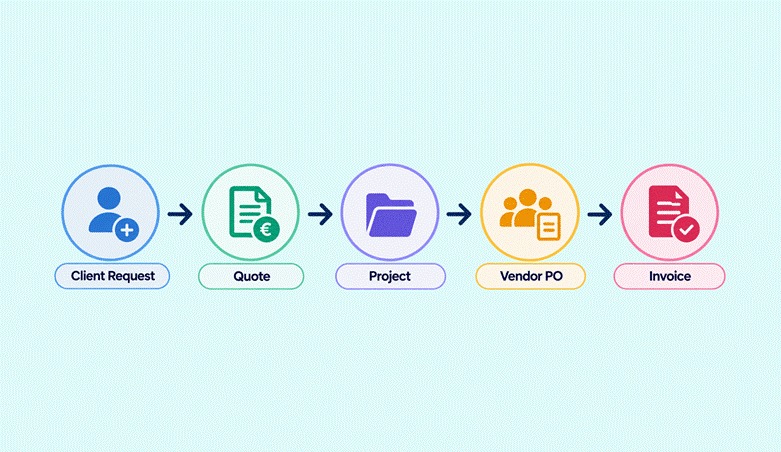
Awtomated treats business management as its core product. A client request arrives via the client portal or email, gets converted into a quote with linked pricing, receives approval, and automatically generates a project with tasks, vendor assignments, and purchase orders. Once vendors deliver, the system tracks costs against client-facing invoices, giving project managers real-time visibility into whether a project is profitable before it ships - not weeks later when the accounting is done. Automation in translation workflows reduces reliance on fragmented tools, and Awtomated embodies that principle.
Smartcat handles quoting and client invoicing, but these features are secondary to translation execution. Its business management is built around AI translation cost models (Smartwords quotas) and consolidated vendor payments rather than full client pipeline management, deal tracking, or revenue forecasting. For marketing teams or enterprise buyers using Smartcat directly, this is fine. For an LSP owner managing dozens of clients and hundreds of translation projects per quarter, the gaps become painful.
Winner: Awtomated - it covers all the features a small LSP needs to run its business end-to-end. Smartcat's trade-off is that its business layer is built for procurement, not for agency operations. If you already have a robust CRM and accounting system, Smartcat's lighter approach may suffice, but most small agencies don't.
Vendor and Project Management
Most small LSPs work with 50–200 freelance translators across various language pairs. Coordinating that network - assigning tasks, tracking deliveries, managing rates, handling payments - is one of the most time-consuming parts of running a translation agency. Vendor/task management is crucial for translation workflow efficiency, and this is where the two platforms diverge sharply.
Awtomated provides a robust vendor management architecture designed for agencies that maintain their own linguist pool. Vendors get their own portal where they can see assigned tasks, participate in task-level discussions, submit deliverables, and track their own invoices and payment status. The platform generates automated POs per task, tracks vendor rates, and lets project managers compare vendor cost against performance over time. For an LSP working with a stable roster of freelance translators across multiple language pairs, this eliminates the email chaos. A comprehensive system should handle project and task management for translations, and Awtomated does exactly that.
Smartcat takes a marketplace-first approach. Its strength is vendor discovery - sourcing from 500,000+ linguists filtered by language pair, expertise, rates, and reviews. You can also invite external vendors. The platform handles task assignments and deliverables within its collaborative workspace, and vendor payments are consolidated through Smartcat's procurement layer across 150+ countries and 38+ currencies. This is powerful for agencies that need to scale quickly or find specialists in uncommon language combinations.
The difference matters most in ongoing vendor relationships. Smartcat optimizes for finding and paying vendors. Awtomated optimizes for managing them - tracking their reliability, controlling costs, and maintaining structured communication without chasing emails.
Winner: Awtomated - for small LSPs that assign tasks to a known pool of language service suppliers and need tight coordination. Smartcat wins if your primary challenge is finding translators, not managing the ones you already have.
Financial Tracking and Profitability
Real-time profitability tracking is essential for managing translation businesses. The translation services market is projected to reach $96.21 billion by 2025, yet many small agencies still discover whether a project was profitable only after the final vendor invoice arrives - sometimes weeks later.
Awtomated makes finance management a first-class feature. Every task is linked to both a cost (vendor PO) and revenue (client invoice line), so margin visibility is available throughout the project lifecycle, not just after completion. The platform supports multi-currency client billing and vendor payouts, flags margin exposure early, and connects quotes to invoices automatically. Awtomated users report up to a 31% improvement in gross margin after moving to a unified TBMS - largely because cost overruns and unbilled work become visible before they compound. Clear pricing and predictable costs are critical for translation service providers, and Awtomated's financial layer is built around that principle.
Smartcat's financial features center on its procurement and payment consolidation. It acts as the counterparty for vendor payments, consolidating them into single invoices with compliance across countries and currencies - $0 transaction fees for bank transfers in many cases. This is strong for payment execution but less useful for predictive financial management. Margin tracking is possible but typically only after invoices are paid, not during active project delivery. TCO modeling includes licensing, supplier spend, and admin savings, but it's oriented toward enterprise procurement, not small-agency profitability analysis.
Winner: Awtomated - its financial tracking is built into every layer of the platform, giving small LSP owners the visibility they need to catch problems early. Smartcat's payment infrastructure is solid for execution, but it doesn't provide the same project-level profitability insight that a growing agency needs to make better pricing decisions.
Pricing and Value for Small LSPs
Budget constraints are real for growing language service providers. The wrong platform choice can mean paying for advanced features your team never uses - or, worse, paying for a translation management system while still running your actual business on spreadsheets.
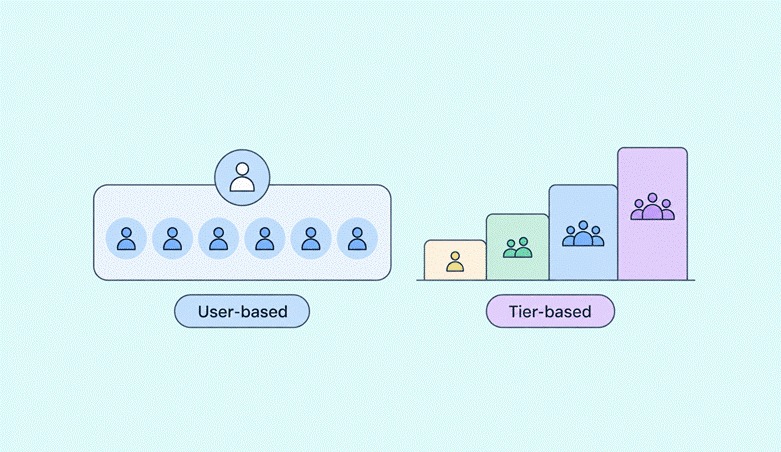
Awtomated charges approximately €19/user/month for internal team members, with zero software cost for vendors and freelance translators using the platform. For a 10-person agency, that's roughly €2,280/year. The value proposition centers on eliminating multiple tools: separate CRM, project management software, accounting spreadsheets, and email-based vendor coordination all collapse into one system. There are no per-word charges or AI credit quotas to manage. You can explore options on Awtomated's pricing page.
Smartcat's pricing starts at approximately US$1,200/year for the "Adapt" plan, but this is deceptive for comparison purposes. The Adapt plan includes limited Smartwords (AI translation credits), one workspace, and basic reporting. Most features that a serious LSP needs - advanced reporting, multiple workspaces, SSO, enterprise security - require the "Accelerate" tier at US$24,000/year or the "Anticipate" tier at US$60,000+/year. Smartcat offers unlimited users on all plans, which benefits large teams, and a free version with basic features including the core CAT editor, translation memory, and glossaries - though with limited functionality for business management.
For most users at a small LSP, the total cost of ownership with Awtomated is significantly lower, and the value is more aligned with their actual pain points. Smartcat's lower entry price only makes sense if you're using it primarily as free translation software or a CAT tool - not as a business management platform.
Winner: Awtomated - the per-user pricing scales predictably without hidden quotas, and the platform eliminates the need for other paid tools. Smartcat's entry pricing is attractive, but the jump to tiers with all the features an LSP actually needs is steep. If translation volume and AI translation are your primary costs, Smartcat's credit-based model may make more sense.
Awtomated vs Smartcat: Which Should You Choose?
- Choose Awtomated if you're a growing LSP that needs to replace fragmented spreadsheet and email workflows, manage a stable vendor pool, track profitability per project in real time, and run your entire business - from client quotes to vendor payments - in one platform. It's built for the operational reality of running a translation agency with 5–50 employees.
- Choose Smartcat if your primary challenge is translation execution at scale: you need AI translation across 280+ languages, access to a massive marketplace of professional translators, built-in CAT tool capabilities with translation memory and terminology management, or integrations with content management system platforms for website content, software localization, or video translation. It's ideal for teams where translation speed and linguistic infrastructure are the bottleneck.
For most small LSPs in 2026, the bottleneck isn't translating - it's the business around the translating. Late quotes, unclear margins, vendor payment chaos, and scattered project data cost more than slow translation ever will. Awtomated addresses those problems directly, with a user friendly interface and a learning curve measured in days, not months. It's the stronger all-around choice for small language service providers looking to grow profitably.
Frequently Asked Questions
Can Awtomated handle the same translation volume as Smartcat?
Awtomated handles moderate translation volume well and integrates with machine translation tools like DeepL to enhance translation efficiency. However, it's not designed to compete with Smartcat's built-in AI translation engine or its marketplace scale for high-throughput, high-volume content creation across dozens of languages simultaneously. If you're processing millions of words monthly across 50+ language pairs and need built-in neural machine translation, Smartcat's infrastructure is purpose-built for that. For most small LSPs - where volume is meaningful but not enterprise-scale - Awtomated's project management and workflow management capabilities handle the load while providing far better business oversight. Modern translation software uses AI to improve translation accuracy, and Awtomated lets you leverage those tools through integrations rather than locking you into one proprietary engine.
Which platform is easier to implement for a small agency?
Awtomated is designed for fast deployment - most agencies are running live translation workflows within 3–5 days, with data migration support from spreadsheets and existing tools. The platform activates modularly, so you don't need to configure every feature before starting. Smartcat's free plan and basic tiers are quick to start for translation execution, but configuring enterprise governance, custom workflows, AI co-workers, and advanced reporting at higher tiers introduces a steep learning curve. For a small team without a dedicated tech savvy operations manager, Awtomated's focused onboarding is significantly less disruptive. Translation memory systems store previously translated content for reuse, and both platforms support migrating your translation memory database - but Awtomated's overall implementation is lighter.
Can these platforms integrate with existing translation tools?
Both platforms support integrations, but with different emphases. Smartcat has a broader public integration catalog: CMS platforms, developer pipelines (GitHub, Jira), design tools (Figma, Canva), and support for many file formats including various file types beyond standard documents. It also supports 50+ file formats natively and works as a desktop CAT tool replacement. Awtomated integrates with email clients (Gmail, Outlook), machine translation providers like DeepL, and other CAT tools, focusing on connecting your business workflow rather than your content pipeline. CAT tools support various file formats without losing structure, and both platforms respect that - but if your priority is plugging into a complex tech stack with a content management system, Smartcat offers more out-of-the-box connectors. If your priority is connecting finance, vendor management, and project tracking into one system alongside your existing tools, Awtomated's integration approach is more targeted and practical for small LSPs.

Building software that helps small and medium-sized language service providers run their business.
About Rishi →