Who Owns the Translation Memory: The LSP or the Client?
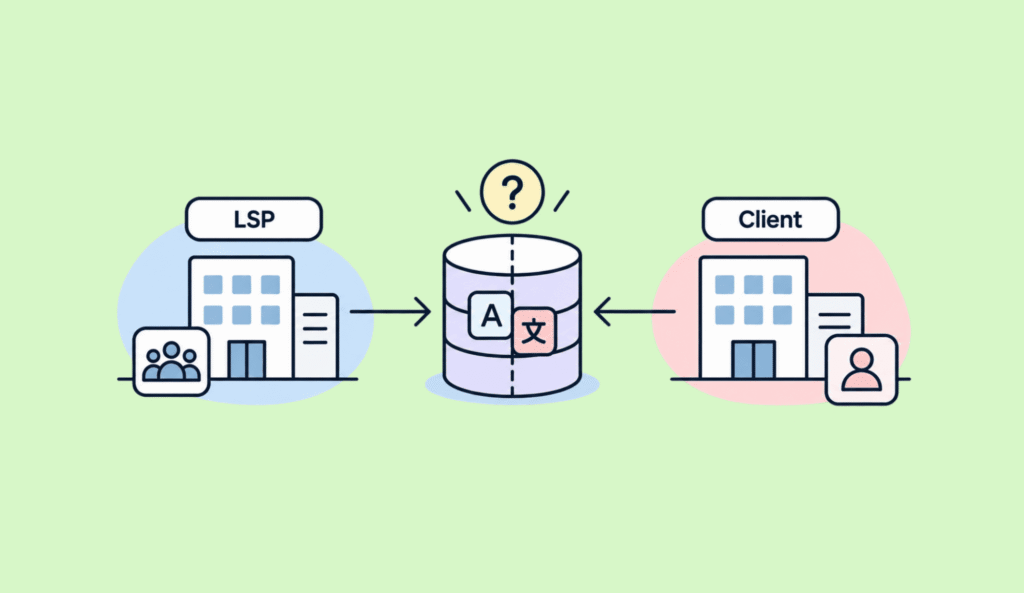
Translation memory ownership is one of those topics that rarely comes up until it really matters-usually when a client wants to switch providers, an LSP closes its doors, or someone asks for a TM export and gets silence in return. This article breaks down who typically owns the TM, what the law says, and how to protect this strategic asset in your contracts.
Key Takeaways
- Translation memory is a strategic asset built from paid projects. Clients typically own their translation memories by default, but this depends on contract wording, local copyright and database law, and how freelancers and LSPs are engaged.
- Translation memory ownership dictates control of the bilingual database created during localization. Without clear TM clauses, you risk vendor lock-in, higher long-term costs, and the potential loss of years of past work.
- TM ownership disputes often arise without clear contract terms. Contracts should clearly define ownership of translation memories to avoid disputes.
- Three common models exist: client-owned TM, LSP-owned TM, and shared or hybrid ownership. Each has trade-offs for cost savings, translation quality, and operational flexibility.
- Systems like Awtomated make it easier for LSPs to respect client TM rights while managing multi-vendor workflows, machine translation, and translation quality at scale.
What Translation Memory Is and Why Ownership Matters
A translation memory is a database that stores source and translation pairs-text segments called translation units-so they can be reused in future projects. Every time a professional translator works inside a CAT tool and confirms a sentence, that segment is saved. Over months and years, the TM grows into a rich repository of previously translated content covering product descriptions, legal documents, UI strings, support articles, and more.
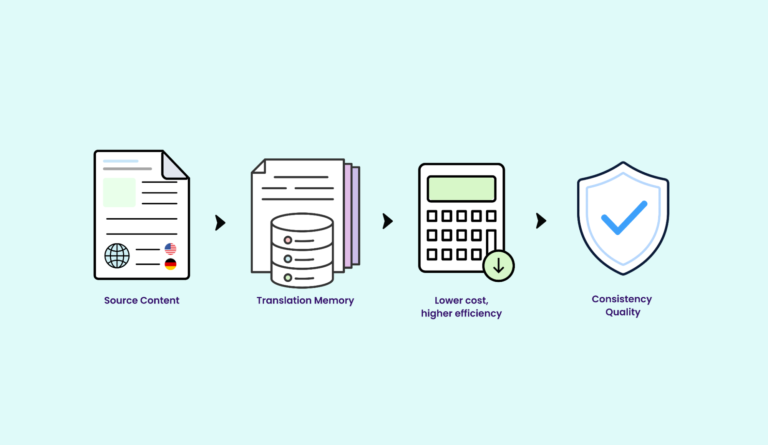
Translation memories improve workflow efficiency and reduce project costs. They also improve consistency across multilingual content, which is critical for companies translating into multiple languages. A strong TM allows faster turnaround times for translators because they spend less time retranslating recurring content and more time on genuinely new content.
But here's the core question: when a client commissions translation services from a language service provider, and the LSP uses translators and CAT tools to build a TM from that client's content, who actually owns the resulting translation memory? The answer is less obvious than most people assume-and it has real financial consequences.

How Translation Memory Works in Real-Life Projects
In a typical 2024–2026 LSP workflow, a project manager receives files from the client, sets up the project in a Translation Business Management System like Awtomated, and assigns tasks to translators. The translators open files in their CAT tool, where each source segment is automatically compared against the stored translations in the relevant TM.
The TM suggests exact or fuzzy matches during translation. An exact match (100%) means the source segment has been translated before word for word. Fuzzy matches-say, 75% or 90%-show a stored segment that is close but not identical, and they require human review before approval. Translation memory reduces translation costs by 40–70% on repetitive content such as product manuals, help center articles, or legal templates. In practice, 100% matches in TM often incur no translation cost, while fuzzy matches typically cost 50–70% of the full rate.
TM can also be combined with machine translation in hybrid workflows. The key difference: TM is based on approved translations created through human input, while MT output is generated by an engine and needs human review through post-editing. A TM improves as it collects more relevant content-a growing translation memory enhances future project efficiency, which is exactly why TM ownership carries such high stakes.
The Legal Landscape: Copyright, Databases, and TM Assets
There is no single global rule on translation memory ownership. It depends on jurisdiction, copyright law, database rights, and contract terms. Legal guidance notes that ownership of translation memories can differ based on copyright law, so understanding the basics matters.
From a purely copyright point of view, individual translations are usually protected as independent works. The translator (or their employer) initially holds copyright unless economic rights are transferred. Under the German Copyright Act, for example, a translation is considered an independent protected work; an agency does not automatically own the TM just because it managed the project.
The TM as a collection-a database of text segments-may receive additional protection. In the EU, the Database Directive 96/9/EC can grant a sui generis right to whoever made a substantial investment in obtaining, verifying, or presenting the data. In the US, there is no equivalent database right; protection depends on traditional copyright originality, which is often weak for typical TM structures.
In most disputes, courts look first at the contract. Who invested in creating and maintaining the database? What usage and ownership rights were agreed? Because law is still evolving-especially around linguistic data and AI training-relying only on generic copyright concepts without a contract is risky for both LSPs and clients.
Three Common TM Ownership Models Used by LSPs
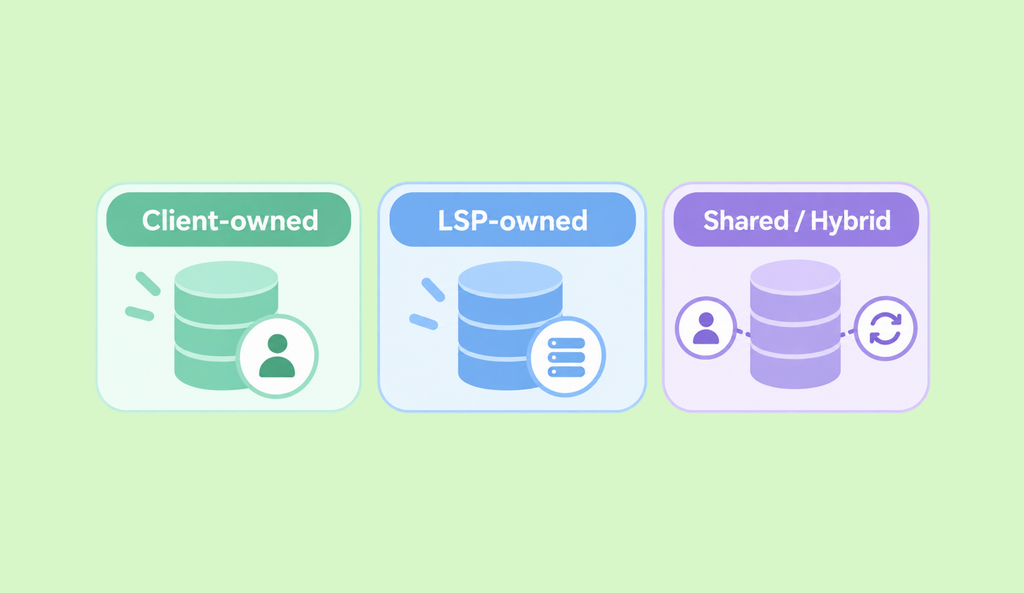
Most agencies effectively follow one of three TM ownership models, whether they name them or not. These models influence who can export TMX files, who can reuse translation memories with other vendors, and who can train machine translation engines with that data. A platform like Awtomated can support all three from an operational standpoint, but the strategic choice should be made explicitly in contracts and SLAs.

Model 1: Client Owns the Translation Memory
Enterprise buyers, governments, and large SaaS companies increasingly insist on full TM ownership-especially for large scale projects like global product launches. In this model, the contract clearly assigns TM rights to the client, includes regular TMX format exports, and grants the right to share TM data with other vendors or in-house teams.
Benefits for the client are significant. Clients owning translation memories can maintain consistent brand terminology across vendors and protect their investment in translation memory work. They gain freedom to switch LSPs without losing years of past translations, ensuring continuity for product descriptions, UI strings, and legal content. Clients benefit from owning translation memories as it prevents vendor lock-in.
From the LSP's perspective, this model can reduce incentive to invest heavily in TM curation if the asset can leave at any time. But a well-structured TBMS can help by tracking TM usage, match rates, and cost savings-showing both sides the value of maintaining a clean, high-quality client-owned TM.
Model 2: LSP Owns the Translation Memory
Some boutique agencies or highly specialized LSPs position their curated translation memories as part of their competitive advantage. In this model, the agency claims TM as its proprietary database. Clients get final translated documents but not necessarily full export rights to the underlying TM.
Why do some LSPs choose this? They aggregate segments from multiple clients (after anonymization), invest in dedicated terminologists, and use TM to drive down costs on future projects. Agencies may use translation memory ownership as a tool to retain clients-and in specialized domains, a well-maintained TM can genuinely be worth significant investment.
The client risks are real. Vendor lock-in becomes a problem when you cannot take your stored translations with you. Agencies can refuse to hand over TM if not specified in contracts. If the LSP is acquired, shuts down, or migrates to new translation memory software, the client's linguistic asset could disappear. Contracts must be explicit about what happens in those scenarios.
Model 3: Shared or Hybrid TM Ownership
Shared ownership is a compromise model increasingly common from around 2022 onward. In a typical arrangement, the client owns TM segments that relate specifically to their content, but the LSP may reuse de-identified or generic segments-common phrases, standard regulatory language-to improve its global translation memories.
Confidentiality is handled through NDAs and compliance with GDPR and CCPA rules: sensitive data, personal data, and confidential product details are excluded from any shared pool. Operationally, the client receives periodic TMX exports, while the LSP maintains its own larger, multi-client TM inside its CAT tool and TBMS for internal efficiency.
This model requires precise contract language. From 2024 onward, many corporate procurement teams now require explicit AI and data-training clauses on top of TM clauses, addressing whether TM data may be used to train machine translation models.
Vendor Lock-In, Cost Savings, and the Real Price of Losing a TM
Consider this example: a company has translated 500,000 words of product documentation between 2020 and 2025. They switch LSPs and discover they cannot obtain their TM. All those stored translations, the accumulated brand voice, the terminology consistency-gone.
The financial impact is immediate. Translation memory can reduce costs by 40–70% on recurring content. Without TM, routine updates that used to cost a fraction of full price now go back to full-rate new translations. Companies can save thousands by retaining their TM when switching providers. According to industry guidance for medical device manufacturers, unless TM delivery is spelled out in the contract, it is simply not implied.
Beyond hard costs, there are soft costs: delays in releasing localized product updates, lower translation quality due to inconsistent terminology and outdated entries creeping in, and frustration for regional teams. A strong TM improves cost control and production stability-losing it undermines both.
Awtomated's profitability tracking and reporting can show exactly how much value a client's TM is generating over time, making the business case for protecting that asset concrete and data-driven.
What to Put in Your Contracts: Practical TM Clause Checklist
TM ownership is not a purely technical question-it must be written into MSAs, SOWs, and rate cards. ISO 17100 requires agencies to have a clear TM policy, and the ATA Model Agreement (2023) distinguishes between deliverables (translations as client property) and linguistic resources (TM, glossaries) retained by the contractor unless transferred.
Here's a practical checklist:
- Ownership clause: State explicitly who owns the translation memory created from the client's projects.
- Export rights: Specify TMX as the standard format for exporting translation memories, define frequency (after each major release, quarterly, or on request), and clarify any fees.
- Access: Define who can access TM files, who can import TMX files into new tools, and who can share with third-party vendors.
- AI/MT training: State whether TM data may be used to train machine translation engines or shared with external AI systems.
- Confidentiality: Mark segments that cannot be shared; align with translation quality assurance requirements and GDPR obligations.
- End-of-contract: Document how TM will be handled at termination-final TMX file delivery, deletion, or archiving.
TM Ownership in the Client–LSP–Freelancer Triangle
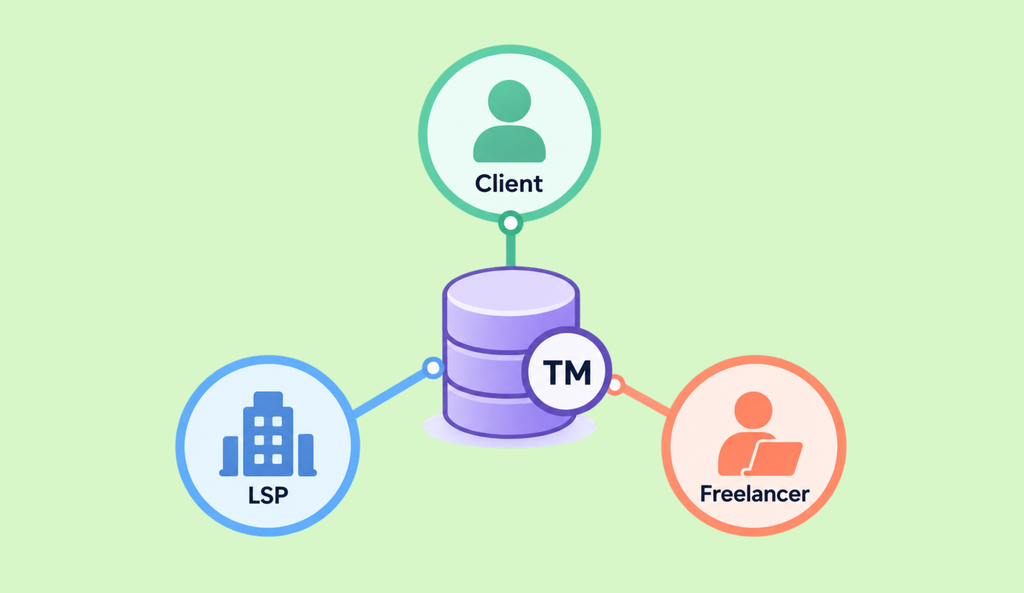
Picture a realistic scenario: an LSP uses five freelance translators and two reviewers to handle peak volumes across niche language pairs for a single client. Each translator contributes segments to the TM. But who owns what?
Freelance translators can leverage owned translation memories for faster future projects-but only if their contracts allow them to retain a copy. Translation memory ownership should be explicitly stated in Independent Contractor Agreements. Without clear terms, freelancers may lose the ability to reuse terminology if they do not own the translation memory. The LSP's agreements with freelancers should clearly permit storing segments in TMs and reusing them for the same client.
From the client's perspective, the contract is with the LSP. The client's TM rights depend on what the agency commits to, not on each freelancer's personal policy. That's why agencies should use a TBMS like Awtomated to keep a clear audit trail of which vendors worked on which projects and how TM segments were created-supporting both compliance and dispute resolution. For more on structuring vendor relationships effectively, clear contracts and systems matter equally.
How Cloud Platforms, Machine Translation, and AI Change TM Ownership
Between 2018 and 2026, the industry shifted heavily from local CAT tools to cloud-based TMS and TBMS platforms. That shift moved TM storage into vendors' and platforms' clouds-raising practical questions about who can log in, who can trigger TMX exports, and what happens if the LSP or client cancels a platform subscription.
Machine translation engines-DeepL, Google, custom MT models-may be trained or improved using client translation memories. This must be explicitly addressed in data-processing agreements. From a data privacy standpoint, if translation memories contain personal data or sensitive business information, clients may be legally required to keep control or ensure specific processing rules under GDPR. Translators work with sensitive context daily; that context lives in the TM.
Awtomated is designed to integrate with MT providers while giving LSPs and clients clarity over what is stored as translation memory versus what is sent to external MT or AI systems-a critical distinction as the translation process becomes increasingly hybrid.

How Awtomated Helps LSPs Manage and Respect TM Ownership
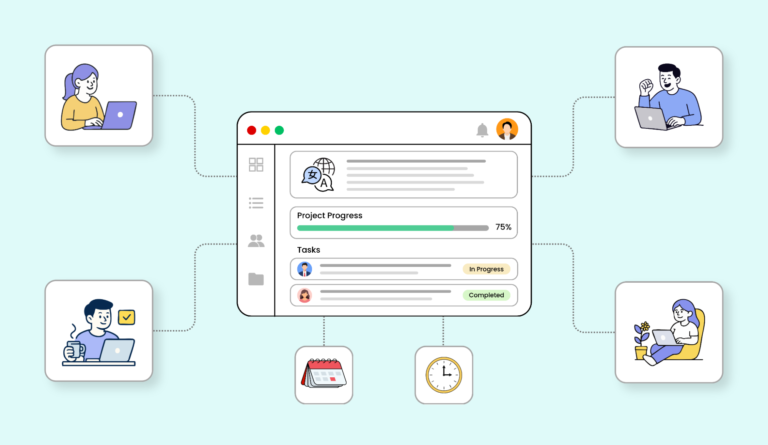
Awtomated is a cloud-based Translation Business Management System built for LSPs and in-house teams who need to manage full translation operations-from quoting and vendor assignment to invoicing and profitability tracking. It replaces the fragmented combination of email, spreadsheets, and disconnected tools with one coherent system.
While Awtomated is not itself a CAT tool, it connects to translation memory software and machine translation engines and keeps all translation memory work, vendor tasks, and financials aligned in one place. It can support different TM ownership models by tracking per-client TMs, logging who created which segments, and making it easier to produce TMX exports according to contract terms.
The operational benefits are clear: better visibility into cost savings from TM, easier multi-vendor assignments without losing control of who can access which client translation memories, and clearer profitability reporting. Awtomated helps LSPs honor client TM ownership commitments while still running efficient, scalable translation workflows with high translation quality.
FAQ: Translation Memory Ownership
These questions address practical edge cases that clients and LSPs often raise after initial discussions about TM ownership. Answers are non-legal-advice and focused on what you can do in 2024–2026 to protect your interests.
Do I automatically own the TM if I paid for the translations?
Not necessarily. Paying for translations does not automatically guarantee TM ownership. The default legal position often gives clients usage rights to the translated texts but not necessarily to the underlying TM database. Ownership rights and access depend on contract wording, so check your MSAs and SOWs for explicit TM language. If your current agreement is silent, start by requesting a one-off TM export from your LSP and formalize TM rights in your next contract renewal. Always negotiate clauses stating that translation memories created from your projects are either fully owned by you or accessible on request in TMX format.
Can an LSP charge me for exporting or cleaning my TM?
Many LSPs consider TM export and cleanup billable because they involve real effort-de-duplicating segments, removing outdated segments, stripping other clients' data, and preparing clean TMX files. Reasonable fees are normal if stated in advance in the contract or rate card. Surprise charges at the moment you're switching vendors are a red flag. Negotiate terms up front: for example, one free TMX export per quarter, with additional exports at an agreed hourly rate. A TBMS like Awtomated can make the scope of such work more transparent, reducing disagreements.
What happens to my TM if I change LSPs or my current LSP shuts down?
In a well-managed setup, the LSP should deliver a final TMX file and any agreed linguistic assets within a defined period after contract termination. If the contract is silent and no routine backups exist on the client side, the TM can effectively be lost. Request regular TM exports-at least annually or after each major product release-so you always hold a current copy independent of the LSP's infrastructure. If a TM is lost, partial reconstruction by aligning past source and target files is possible but slower, more expensive, and rarely as clean as the original. For more on managing new project transitions, translator qualifications and vendor onboarding, see how to build a reliable linguist pool.
Can my LSP use my TM to train machine translation or serve other clients?
Ethically and often legally, an LSP should not use identifiable client content for other purposes-including MT training-without explicit permission. Some contracts allow anonymized, generic segments to be pooled or used for engine training while prohibiting reuse of branded or confidential language. From 2024 onward, add explicit MT and AI clauses stating whether and how your translation memories may be used. Platforms like Awtomated help LSPs implement such policies consistently by controlling which data is exposed to external MT providers and which remains in protected translation memories. Human translators' work deserves the same respect when it feeds an engine as when it ships in a deliverable.
How often should we review and clean our TM, and who is responsible?
For active localization programs, review and clean TMs at least once a year-or after major product or terminology changes. Responsibility is usually shared: the client's language owners define terminology, brand voice, and style, while the LSP's linguistic team performs the actual cleanup in the CAT tool. A clean TM directly impacts translation quality and cost savings; outdated entries can propagate old product names, legacy pricing, or deprecated features into new translations. Track TM-related metrics like match rates, rework, and quality issues, and use them as triggers to schedule TM maintenance. Reuse content effectively by keeping your database current-not just large.

Building software that helps small and medium-sized language service providers run their business.
About Rishi →Table of Contents
- What Translation Memory Is and Why Ownership Matters
- How Translation Memory Works in Real-Life Projects
- The Legal Landscape: Copyright, Databases, and TM Assets
- Three Common TM Ownership Models Used by LSPs
- Vendor Lock-In, Cost Savings, and the Real Price of Losing a TM
- What to Put in Your Contracts: Practical TM Clause Checklist
- TM Ownership in the Client–LSP–Freelancer Triangle
- How Cloud Platforms, Machine Translation, and AI Change TM Ownership
- How Awtomated Helps LSPs Manage and Respect TM Ownership
- FAQ: Translation Memory Ownership