Building and Managing Remote Teams for Translation Agencies: 2026 Guide
Introduction: Remote Teams in Translation Agencies (2020–2026 and Beyond)
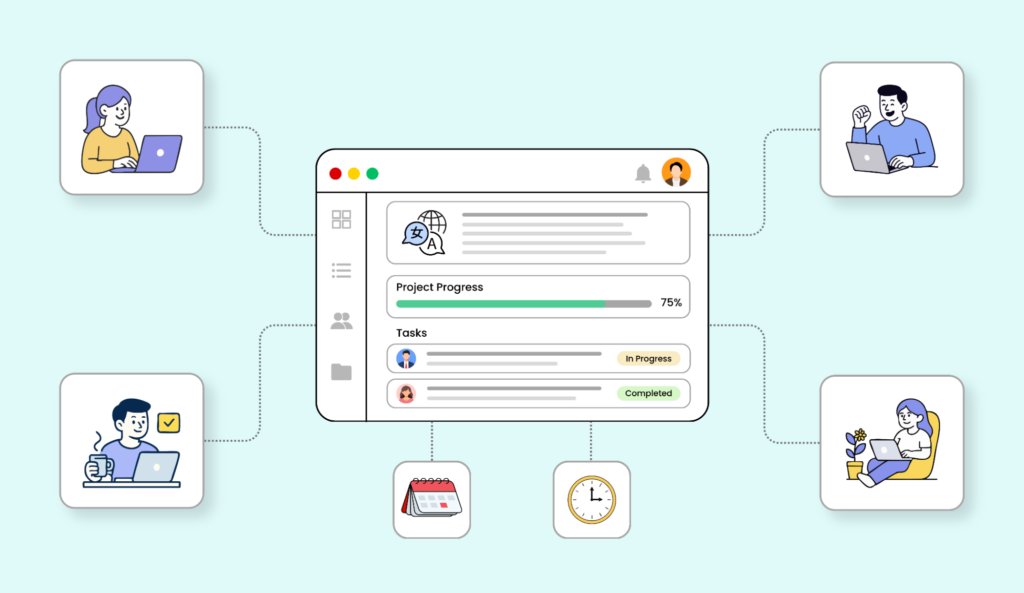
Since 2020, translation agencies have moved from emergency remote work to mature remote and hybrid operations. By 2026, distributed teams are no longer a workaround; they are how many Language Service Providers scale multilingual delivery, manage global linguist networks, and serve clients across time zones.
At Awtomated, we see this shift every day. As a Translation Business Management Software built for LSPs, Awtomated helps agencies run end-to-end operations: quoting, project management, vendor coordination, file sharing, performance management, billing, and delivery from one place.
In this guide, remote employees include freelance translators, in-house linguists, project managers, QA reviewers, DTP specialists, and reviewers working across continents. A single project might involve a client in Germany, a PM in the UK, translators in Argentina and Vietnam, and reviewers in India or the US.
The promise is practical: how to manage remote teams effectively for multilingual website localization, 24/7 SaaS support, legal translation, medical review, and high-volume MTPE. Awtomated centralizes team communication, project tracking, and key performance indicators so a remote team manager can focus on quality, margin, and client satisfaction.

Understanding the Unique Challenges of Remote Translation Teams
Translation agencies face “double distance”: remote work plus cross-cultural collaboration. Managing remote teams is harder when every brief, tone choice, glossary decision, and deadline must travel across languages, cultures, and working hours.
Common friction points include:
- Misinterpreted briefs when the client, PM, translator, and reviewer each bring different assumptions about tone, terminology, or layout.
- Deadline risk when remote managers cannot track progress without sending constant “where are we?” messages.
- Time zone differences that complicate team meetings, live review sessions, and hand-offs between North America, Europe, and APAC.
- Weak team culture when remote workers rarely experience face to face interaction or in person interactions.
- Scattered files across email, spreadsheets, chat, and drives, which creates missed updates, duplicated work, and unclear ownership.
Real-world examples make the issue clear:
- A 20-language product launch needs simultaneous translation, review, QA, and DTP. Without centralized project management tools, one late reviewer can delay the entire team.
- A SaaS client with 24/7 support content needs fast updates across time zones. Asynchronous communication allows team members to respond in their own time, but only if the workflow is visible.
- A regulated legal or medical project needs security, reviewer traceability, and clear error thresholds. One unclear hand-off can become a compliance issue.
Designing a Remote-First Management Style for LSPs
A remote-first management style means the agency assumes people are remote by default, even if some colleagues still do occasional in office work. Processes, tools, documentation, and communication norms must work for a fully remote team, not just for people sitting near the PM.
Effectively managing a remote team requires a focus on results. The best remote managers measure deliverables, on-time delivery, LQA scores, client satisfaction, and margin instead of seat time. They understand CAT tools, translation memory, glossaries, MTPE, and cultural nuance.
Document availability clearly. For example: PMs online 09:00–17:00 CET, translators confirm new jobs within 2 business hours, reviewers acknowledge queries by the next workday, and rush escalations go to a senior PM. Onboarding should clarify working hours and communication norms from day one.
To balance support with accountability:
- Empower employees with ownership over their work to increase accountability.
- Define deliverables with specific deadlines to focus performance management.
- Set clear expectations for response times, ownership, quality checks, and escalation.
- Keep open communication channels so linguists can ask terminology or style questions early.
- Use regular check ins to support direct reports, freelancers, and vendor managers without micromanaging.
Awtomated supports this remote management approach by centralizing tasks, deadlines, assignments, and project status. Centralize information to maintain transparency in project tracking; it reduces interruptions and helps managers track what matters.
Setting Clear Expectations and Workflows
Every LSP should create a “Ways of Working” document. It should explain preferred communication tools, response times, core hours, hand-off rules, quality standards, and ownership for intake, quoting, translation, review, delivery, and invoicing. Document workflows to clarify preferred communication tools and response times.
In Awtomated, a standard workflow might look like:
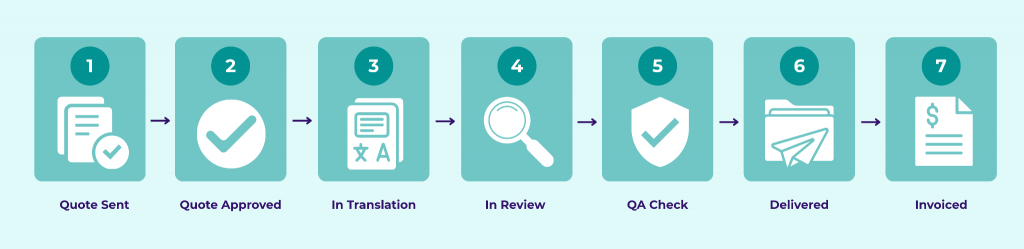
Each stage has an owner. PMs assign tasks, translators complete work and self-check, reviewers categorize issues, and finance handles invoicing. For medical and legal work, add mandatory review, certification steps, and stricter quality thresholds such as maximum critical errors per 1,000 words.
First-day checklist for new remote employees:
- Sign NDA, contract, and confidentiality clauses.
- Watch a welcome video and review agency values. Clearcover's onboarding includes a welcome video and swag, and agencies can adapt that idea with branded welcome notes or small digital gifts.
- Receive role-specific training during onboarding.
- Access Awtomated, CAT tools, style guides, glossaries, and reference guides.
- Complete a low-risk test assignment with mentor feedback.
Providing reference guides helps new employees find answers quickly, especially in a remote setting where over-communication helps prevent misunderstandings.
Choosing the Right Management Tools Stack (with Awtomated at the Core)
Translation agencies often combine a TBMS, CAT tools, collaboration tools, video conferencing platforms, finance software, and file storage. The problem is not having tools; it is having too many places where truth can hide.
Awtomated should be the operational center: vendor portals, CAT integrations, project management software, billing, files, status updates, and dashboards. Around it, agencies may use Zoom or Google Meet for video calls, microsoft teams or Slack for daily chatter, and Google Drive for large assets. Slack integrates with third-party apps like Jira and PagerDuty. Zoom allows recording meetings for later viewing. Google Drive enables real-time collaboration on documents. Trello uses boards and cards for project management. Asana helps manage tasks and timelines efficiently.
Those tools can help, but the TBMS should remain the single source of truth. Remote team management tools only work when the entire team knows where final instructions, files, owners, and deadlines live.
Building Strong Communication Routines Across Time Zones
In remote translation teams, good team communication matters more than speed alone. Clear communication is essential for remote team success because fast but fragmented messages create confusion.
Use synchronous communication for urgent blockers, complex disputes, and relationship-building. Use asynchronous updates for briefs, status notes, review comments, and routine sharing. This reduces “Zoom fatigue” and protects deep work.
Awtomated templates enhance collaboration by including source files, glossaries, style guides, reference files, intended audience, and client preferences from the start.
Useful rituals include:
- Daily hand-off notes between translators and reviewers in different time zones.
- Weekly PM syncs to review workload, risks, and capacity.
- Monthly group meetings or all-hands to keep the entire team aligned.
- Regular pulse surveys can help prevent employee disengagement.
- Casual spaces for non-project conversation, because creating casual spaces fosters team culture and relationship building.
Structuring Effective Team Meetings and Check-Ins
Team meetings should not repeat what the dashboard already shows. Keep weekly project calls under 45 minutes, use a clear agenda, and focus on risks, upcoming deadlines, and blocked decisions.
For PMs and vendor managers, brief daily or twice-weekly standups work well. Freelancers often do not need every live call; concise written updates respect their working hours and reduce unnecessary meetings.
During video conferencing, share Awtomated dashboards to review workload, overdue tasks, and overbooked team members. Rotate meeting times when virtual teams span Europe, the Americas, and APAC so one region does not always carry the time-zone burden.
Leave the final 5–10 minutes to clarify owners and update Awtomated directly. Regular check-ins help keep teams aligned and connected. Regular check-ins help build trust and accountability in remote teams. Regular check-ins foster collaboration and keep team members informed.
Codifying Communication Norms and Channels
Establish clear communication norms to avoid ambiguity. Clear communication guidelines improve information flow among remote teams.
A simple channel policy might be:
- Awtomated comments: project instructions, terminology questions, delivery risks.
- Chat: quick clarification during core hours.
- Email: contracts, payment, HR, and formal client issues.
- Video calls: sensitive conflicts, complex reviews, or relationship repair.
Set expectations clearly: chat within 2 hours during core time, email within one business day, Awtomated comments acknowledged by the next workday. For multilingual teams, define when English is required and when local language discussion is acceptable.
Keeping project communication in Awtomated ensures remote colleagues, reviewers, and PMs can see context without searching private threads.
Creating a Culture of Feedback and Transparency
Translation quality includes subjective choices: tone, brand voice, register, market expectations. Without structured feedback opportunities, small frustrations become distrust.
Use:
- Post-mortems after large launches.
- Quarterly vendor satisfaction surveys.
- 1:1s with key linguists and direct reports.
- Revision reviews using Awtomated history and error categories.
- Upward feedback on unrealistic deadlines or unclear briefs.
Ask questions like:
- What instruction was missing?
- Which glossary term caused confusion?
- Where did the hand-off fail?
- What should we change before the next project?
Using structured feedback opportunities strengthens trust in remote teams.
Building and Sustaining Remote Team Culture in Translation Agencies
Culture is harder when team members may work on only a few projects per month and never meet physically. A strong team culture enhances collaboration and engagement in remote settings, but it must be designed.
Trust is the foundation of high-performing remote teams, especially when assigning confidential legal, financial, medical, or unreleased marketing content. Transparent communication fosters trust among remote team members, and mentoring can establish trust and promote learning in remote teams.
Awtomated reinforces company culture through a consistent vendor portal experience: clear messages, branded workflows, project lists, and reliable payment visibility. That consistency helps employees feel connected even when they are working remotely.
Examples that work:
- Virtual coffee chats between PMs and top vendors.
- Recognition posts for linguists who rescued urgent launches.
- Internal newsletters with translator spotlights.
- Virtual team building activities for International Translation Day on 30 September.
Trust, Autonomy, and Quality in a Remote Setting
Trust is built through clear briefs, realistic deadlines, fair rates, and consistent payment terms, not surveillance. Empowering remote teams means giving experienced linguists autonomy while still protecting quality.
For example, senior translators may self-select eligible jobs in Awtomated under rules for capacity, subject expertise, and SLA acceptance. Quality remains measurable through LQA scores, revision rates, and on-time delivery percentage.
Setting clear expectations improves remote team performance. Transparent project history also prevents blame by showing decisions, changes, and approvals.
Connecting Distributed Team Members to Each Other
To build team cohesion across distributed teams:
- Create language-pair channels or Awtomated communities for terminology discussion.
- Pair new vendors with senior PMs or lead linguists for 4–6 weeks.
- Share personalized welcome messages.
- Highlight excellent work in internal updates.
- Offer mini-workshops on CAT tools, MTPE, or legal terminology.
These gestures are small, but they improve employee engagement and team morale. They also help remote employees engaged with the agency beyond a single job.
Supporting Well-Being and Preventing Burnout
Remote work can blur professional and personal life boundaries. Isolation in remote work can lead to decreased productivity, especially for freelancers handling late-night rush jobs across client time zones.
Protect well being by setting limits on weekend work, last-minute requests, and maximum daily word counts. Encouraging time off can support long-term employee engagement, and mental health resources are crucial for remote employee well-being. Include mental health resources or local support lines in long-term contractor packs where appropriate.
Awtomated workload views help remote team managers spot overbooked translators and rebalance work before quality drops.
Performance Management and Quality Control for Remote Translation Teams
Performance management directly affects client retention, profitability, and quality across markets. By 2026, managing remote employees across dozens or hundreds of vendors is too complex for spreadsheets alone.
Awtomated gives agencies unified dashboards for average turnaround time, rejection rates, revision counts, vendor reliability, and language-pair performance. The goal is a productive team, not a watched team.
According to industry KPI guidance, high-performing agencies often target roughly 95–97% on-time delivery. The European Language Industry Survey coverage also shows how AI and MTPE are reshaping translator work, making fair metrics even more important.
Defining KPIs and Quality Metrics Tailored to LSPs
Use translation-specific key performance indicators:
- On-time delivery %: percentage of jobs delivered by agreed deadline.
- Client satisfaction score: post-project rating or periodic account feedback.
- LQA error rate per 1,000 words: categorized by critical, major, minor, style, and formatting.
- Rework volume: projects or words requiring correction after review.
- Average response time to job offers: useful for SLA planning.
- CAT tool usage compliance: TM, glossary, and QA-check adherence.
- Collaboration quality: qualitative PM notes on reliability, crisis support, and team collaboration.
Store these metrics in Awtomated to report by date range, client, subject area, or language pair.
Running Fair and Effective Remote Reviews
Quarterly or bi-annual reviews should be two-way conversations. Share Awtomated dashboards in advance so vendors can prepare.
When addressing issues, use examples, agree on an action plan, set follow-up dates, and offer support such as mentoring, updated glossaries, or professional development. Praise should be specific too: “You handled complex medical terminology under a same-day deadline with zero critical errors” is more useful than “good job.”
Remote teams need structured feedback opportunities for improvement.
Continuous Improvement Through Data and Automation
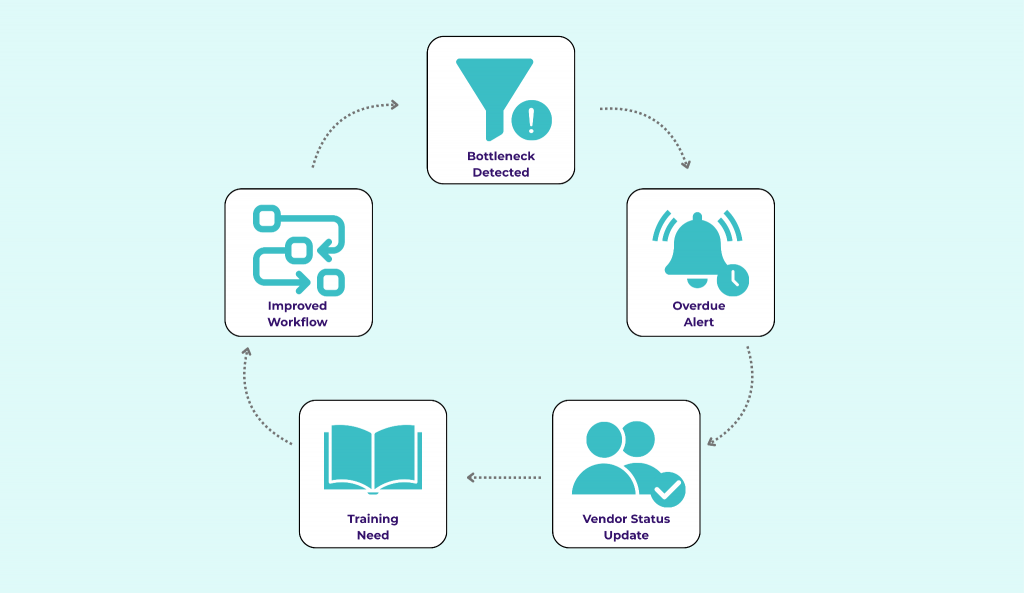
Awtomated can surface bottlenecks: repeated delays in a language pair, higher error rates in a subject area, or vendors who frequently miss acknowledgments.
Use automation to trigger overdue-task alerts, repeated-quality-issue workflows, and vendor status updates. Promote high performers to preferred status, pause low performers, and identify training needs quarterly. Automation reduces manual chasing so remote managers can coach, plan capacity, and improve processes.
Onboarding, Security, and Compliance for Remote Translation Work
In 2026, many agencies onboard linguists and PMs fully remotely. Poor onboarding creates real risk: unsigned NDAs, missing reference materials, weak data handling, and inconsistent quality.
80% of employees would stay longer with better onboarding. That matters for LSPs because retaining reliable linguists protects quality and margin. And it is worth repeating: 80% of employees would stay longer with better onboarding, so onboarding is not admin; it is retention strategy.
Awtomated standardizes onboarding with tasks, documents, access permissions, and role-specific workflows.
Designing a Remote-Friendly Onboarding Journey
A practical 7-day onboarding flow:
- Day 1: NDA, contract, welcome video, agency values, working hours, and communication norms.
- Day 2: Awtomated login, CAT setup, glossary access, and reference guides.
- Day 3: role-specific training during onboarding, including project statuses and QA expectations.
- Day 4: video conferencing session with a PM or mentor.
- Day 5: test translation or sample review.
- Days 6–7: first small live project under supervision.
Use collaborative tools to simulate an in-office experience for remote setups, but keep core instructions in Awtomated.
Managing Security, NDAs, and Access Permissions
Translation agencies handle sensitive content: legal documents, patient information, product launches, financial reports, and confidential campaigns.
Awtomated role-based permissions ensure remote team members only see relevant projects and files. Add SSO, 2FA, encrypted storage, secure transfer, and client-specific confidentiality clauses.
Document simple security rules: avoid public Wi-Fi for medical work, lock screens, use password managers, and never download files to unmanaged devices unless approved.
Ensuring Compliance Across Jurisdictions
Remote workforce models often include vendors in many countries. Agencies need consistent policies for PII, GDPR, and sector-specific rules such as HIPAA when handling health data through US partners.
Use Awtomated audit trails and role-based access controls to support client audits. Document where data is stored, how long it is retained, and how access is revoked when freelancers or employees leave.

Conclusion: Turning Distributed Teams into a Strategic Advantage with Awtomated
Remote team management is no longer only about keeping people online. It is about building systems that make remote employees clear, connected, secure, and accountable while giving clients faster, more consistent multilingual delivery.
With the right tools, remote communication habits, documented workflows, and strong culture, translation agencies can turn virtual teams into a strategic advantage. Awtomated brings project management, vendor coordination, performance data, finance, and secure access into one TBMS built for LSP operations.
If your current stack depends on scattered spreadsheets, private chats, and manual follow-ups, now is the time to review your processes, KPIs, and management tools. Book a demo with Awtomated and see how your distributed linguist network can be orchestrated from one platform.
Table of Contents
- Introduction: Remote Teams in Translation Agencies (2020–2026 and Beyond)
- Understanding the Unique Challenges of Remote Translation Teams
- Designing a Remote-First Management Style for LSPs
- Building Strong Communication Routines Across Time Zones
- Building and Sustaining Remote Team Culture in Translation Agencies
- Performance Management and Quality Control for Remote Translation Teams
- Onboarding, Security, and Compliance for Remote Translation Work
- Conclusion: Turning Distributed Teams into a Strategic Advantage with Awtomated
Ready to manage your Translation company easily?
Get Started for Free