Translation Agency Cash Flow Management: Avoiding Feast-or-Famine
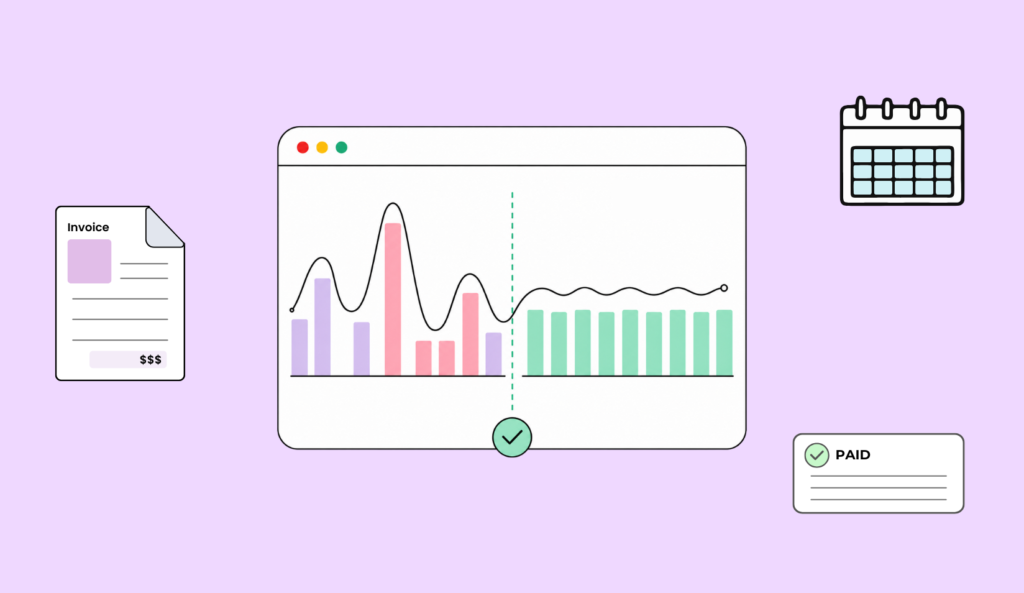
Every translation agency owner knows the feeling. One month, you're juggling five simultaneous localization projects, scrambling for freelancers, and watching revenue pour in. The next, your inbox goes quiet, but rent, salaries, and software subscriptions keep draining your account. This feast-or-famine pattern is not a quirk of agency life-it's a structural challenge baked into how language service providers operate.
Cash flow, in the context of a translation agency, is straightforward: it's the timing of money coming in from clients versus money going out for linguist payouts, project manager salaries, CAT tools, office space, and other expenses. It's different from profit. You can be profitable on paper and still unable to cover payroll this Friday because your largest enterprise client pays on Net 90.
The numbers confirm this isn't a niche problem. Across industries, 51% of small businesses cite uneven cash flow as a financial challenge. For LSPs specifically, the combination of long payment terms, project lumpiness, multi-currency complexity, and seasonal demand makes the challenge even sharper. Proper cash flow management is vital for the survival and growth of an agency-yet many agencies treat it as an afterthought until a crisis hits.
This article is written from Awtomated's perspective as a Translation Business Management Software built for LSPs. Our goal is to give agency owners concrete, actionable steps to manage cash flow, avoid the feast-or-famine trap, and build a more resilient business through better forecasting, billing structure, and automation.
What Cash Flow Really Means for Translation Agencies
Cash flow and profit are not the same thing. Profit is an accounting concept-revenue minus expenses over a period. Cash flow is what's actually in your bank account when bills are due. Understanding this distinction is the first step toward solving cash flow issues.
Cash inflows for a translation agency include payments from project-based work (a one-off website localization in Q3 2026), retainers with enterprise clients, managed services contracts, and interpreting engagements. Cash outflows include linguist and vendor payouts, in-house translator and PM salaries, CAT/TMS subscriptions, QA tools, marketing spend, rent, and taxes.
Here's a simple numeric example. Suppose your agency has €120,000 in cash inflows and €135,000 in cash outflows in a given quarter. Your net cash flow is −€15,000. Even if depreciation adjustments show a small profit on your cash flow statement, you're short on cash to meet obligations. That's negative cash flow in action, and it can force postponement of key investments-new hires, better tools, expanded marketing.
The critical issue for LSPs is the timing gap. Most agencies pay freelancers within 30 days of delivery, but many enterprise clients operate on Net 60 or Net 90 payment terms. Delayed payments from clients create a gap between expenses and revenue that you must finance somehow.
Key metrics every translation agency should monitor regularly:
- Operating cash flow: cash generated from core translation and localization work
- Free cash flow: what remains after capital expenditures
- Days sales outstanding (DSO): average days to collect after invoicing
- Vendor payment terms (DPO): how long you have before freelancer payments are due
Positive cash flow means inflows exceed outflows. Tracking metrics like free cash flow ensures money flows in faster than it goes out. If you aren't tracking these numbers, you're navigating blind.

Unique Cash Flow Challenges for Translation & Localization Agencies
LSPs share some cash flow challenges with other creative agencies and digital agencies, but several issues are industry-specific.
Long payment terms from large clients. Public institutions like EU bodies and global tech companies commonly enforce Net 60–90 payment cycles. Meanwhile, freelance linguists expect payment within 30 days-sometimes sooner. Agencies often endure significant gaps between project completion and client payments, and bridging that gap is expensive.
Project lumpiness. Translation demand is tied to external events: product launches, regulatory deadlines, marketing campaigns. A SaaS client may generate heavy localization volumes in Q4 but go nearly silent in Q1. This makes revenue unpredictable even when your client base is stable.
Multi-currency complexity. You might invoice in USD and EUR while paying linguists in PLN, JPY, or BRL. Exchange-rate fluctuations erode profit margins, banking fees add friction, and timing gaps between FX conversion and payment create additional risk.
Accounts receivable complexity. Many agencies deal with purchase orders, framework agreements, rate cards, and minimum fees across dozens of clients. Each has different invoicing requirements. When PO approvals are delayed or disputed, invoices sit unsent. Slow accounts receivable ties up working capital that could be deployed elsewhere.
Operational surprises. Rush jobs, weekend work, client-side delays, and unplanned scope changes drive up costs without always bringing additional revenue. These operational shocks make it harder to predict cash outflows with any precision.
Common Cash Flow Pitfalls Translation Agency Owners Need to Avoid
Here are the most frequent cash flow mistakes we see among LSP owners-and the underlying causes behind each one.
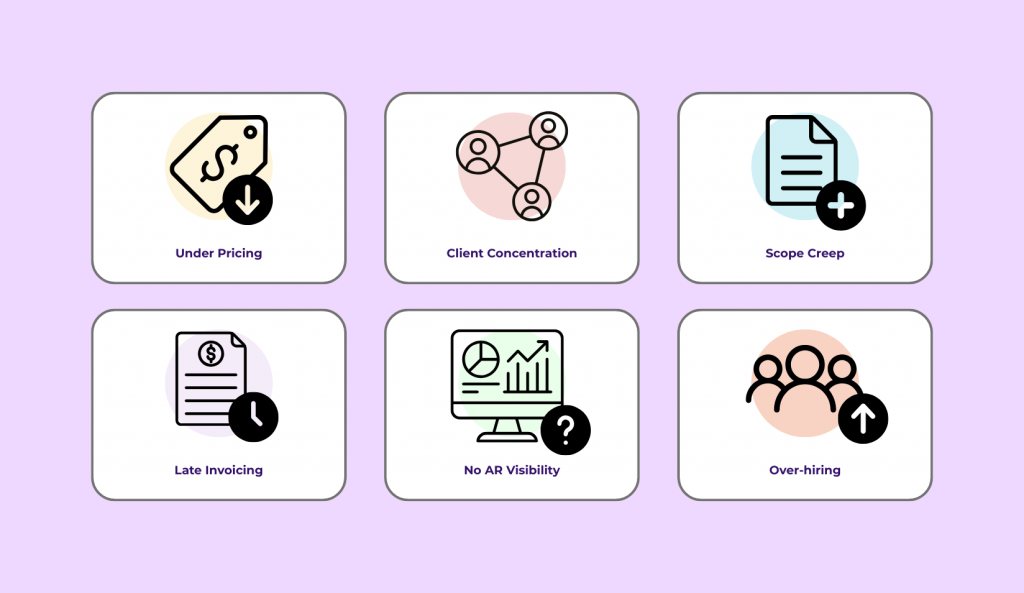
- Under-pricing specialized services. Legal, medical, or patent translation commands premium rates for good reason. Offering aggressive discounts to win clients erodes your margins so far that even high revenue doesn't leave enough cash after vendor and overhead costs. Your profit margins on specialized work should reflect the complexity and risk involved.
- Over-reliance on one or two clients. When a single major client represents more than 25–30% of annual revenue, you're one delayed payment or contract change away from a cash flow crisis. Your largest client should account for less than 15% of revenue. Diversifying revenue streams reduces dependence on any single client.
- Loose control of scope. "Including" extra languages, DTP, SEO, or transcreation for free is generous-and dangerous. Scope creep increases costs without an immediate increase in cash inflow. Your vendor payments rise, but your invoice stays the same.
- Poorly structured payment terms. Invoicing only at project completion for a large, multi-month localization program means you're paying freelancers for months before seeing a cent. Late client payments compound the problem.
- Slow or inconsistent invoicing. Projects close in the TMS, but the invoice doesn't go out for another two weeks because the PM forgot to mark it billable or was waiting for documentation. Every day of delay extends your cash flow gaps unnecessarily. Inaccurate financial records can signal cash flow problems before they become full-blown crises.
- No visibility on AR and DSO. Without a central dashboard showing overdue invoices by client, language pair, or project manager, problems fester. One underperforming PM can drag down your entire agency's collections.
- Over-hiring based on one big contract. Hiring in-house staff to serve a single large contract locks in fixed costs. When that client's volume drops, salaries keep draining cash during slow periods.
How to Build Predictable Revenue in a Translation Agency
Smoothing revenue is your first defense against feast-or-famine. The goal: shift your business model from purely project-based billing toward a mix that includes recurring, predictable income.
Target the 70:30 ratio. Agencies should aim for a 70:30 ratio of retainer to project-based clients. Retainers create steady, recurring payments for agencies-a €2,000/month continuous localization agreement with a corporate content client ensures baseline cash even in your slowest month. Agencies can create predictable income through retainers and subscriptions, and many established agencies report that 60–80% of revenue comes from recurring client relationships.
Create service tiers. Offer monthly packages: a basic tier (translation only), a mid-tier (translation + review + terminology), and a premium tier (localization + SEO + ongoing adaptive translation). Bundling encourages clients to commit to higher, steadier spend.
Diversify your client base. Spread across industries-SaaS, e-commerce, life sciences, manufacturing, legal. Some sectors are seasonal, others counter-cyclical. Diversifying client budgets helps mitigate risks during economic downturns and reduces the impact of any single sector's slowdown. Agencies should diversify clients to stabilize cash inflow.
Pricing for stability. Consider minimum monthly commitments, prepaid word bundles, or subscription-style plans. These strategies ensure you have enough cash on hand or a contractual guarantee of future income.
Use data to find opportunities. Analyze your past 12 months: which existing clients ordered monthly? Which language pairs recurred? Proactively propose retainers to clients who are already ordering regularly. Awtomated can help identify these patterns by analyzing historical project data per client and language combination.
Expect this shift to take 6–12 months. You won't overhaul your client mix overnight, but a deliberate effort to increase recurring revenue share from, say, 30% to 60% transforms your cash flow profile.

Designing Translation-Friendly Payment Terms and Billing Structures
Agency owners can significantly improve cash flows just by rethinking how and when they bill. Establishing strict payment terms helps with cash flow management, and strict payment terms help avoid ambiguity in client billing.
Collect deposits. For large, multi-language projects or year-long localization programs, request 30–50% upfront. Requesting upfront deposits can cover initial costs of new projects and signals client commitment. For smaller orders, consider 50–100% upfront.
Bill at milestones. Phasing payments can improve cash flow throughout projects. For a large localization rollout, structure billing as 30% on kickoff, 40% on first language batch delivery, and 30% on final sign-off. This way, you're not financing the entire project out of pocket.
Align client and vendor terms. If you pay freelancers at Net 30 but your client pays at Net 60, you're financing that 30-day gap. Where possible, negotiate payment terms so vendor payouts don't precede your own collections. Align payment cycles to minimize timing gaps.
Enforce late-payment provisions. Include clear Net 15/30/45 terms in every contract. Add late-payment fees or interest. Require purchase orders before work begins to minimize invoice disputes. Offering early-payment discounts (e.g., 2% for payment within 10 days) can encourage timely payments.
Automate invoice generation. Automating invoicing can reduce payment delays and improve cash flow. Awtomated's TBMS workflow-from quoting to job creation to PO to invoice-triggers automatic invoice generation when a job status changes to "completed" or when a milestone is reached. This supports per-word, per-hour, per-page, and minimum fee billing models, ensuring every billable item is captured. Automating invoicing can help maintain steady cash flow by eliminating the human delays that silently drain working capital.
Getting Paid: Accounts Receivable, Collections and DSO for LSPs
Strong accounts receivable discipline is essential for healthy cash flow, even when sales are strong. Late payments can lead to cash flow issues for agencies regardless of how full the project pipeline looks.
Invoice immediately. Send invoices on the same day as project completion or milestone delivery. Confirm billing details-PO number, billing address, client contact-before work begins, not after.
Track DSO religiously. Monitor days sales outstanding for each major client and set targets. Professional services firms generally aim for DSO below 45 days; exceeding 60 days is a red flag. Regular cash flow reviews help identify trends and inefficiencies before they become emergencies.
Automate reminders and escalation. Set up automated payment reminders: a friendly nudge at 7 days overdue, a firmer follow-up at 21 days, and a service pause notice beyond that. Automating invoicing can reduce payment delays substantially when paired with structured dunning.
Handle enterprise clients carefully. Public sector and large corporate clients often have fixed payment cycles. You can't change their processes, but you can eliminate avoidable delays: submit clean documentation, include all reference numbers, follow portal rules exactly, and raise invoices promptly.
The DSO math matters. Consider a €2M LSP with average DSO of 75 days and vendor DPO of 30 days-a 45-day cash flow gap. If 60% of revenue (€1.2M) is subject to this gap, roughly €100,000 is perpetually "stuck" in receivables. Reducing DSO from 75 to 45 days frees that cash. Awtomated integrates with accounting tools and payment gateways to sync invoices, record payments, and display real-time aging reports-giving you the visibility to act.
Controlling Cash Outflows: Vendor, Staff and Tool Costs
Cash flow management is not only about more money coming in-it's equally about smarter cash outflows. Strategic expense control is crucial for maintaining financial stability.
Understand your cost categories. Linguist and vendor payouts are typically the largest variable cost, often 40–50% of revenue. Internal salaries represent fixed costs that continue during slow periods. Technology subscriptions, marketing, and overhead round out the picture. Establishing a budget helps plan agency spending effectively.
Negotiate vendor payment terms. With trusted freelancers, negotiate Net 30 instead of immediate payment, or sync payouts to client payment dates when possible. This reduces the cash flow crunch during lean months.
Manage rates proactively. For rare language pairs or high-specialization fields, vendor rates can spike while client rates stay flat. Ensure you're charging enough money for complexity. Review vendor rate agreements periodically.
Audit subscriptions regularly. Regular expense audits help eliminate non-essential spending. CAT tools, MT engines, QA platforms, and other software subscriptions can accumulate unused seats. Agencies should review operational expenses quarterly to cut unnecessary expenses and consolidate platforms.
Staff flexibly. Use trusted freelance pools or part-time resources for peaks rather than committing to full-time hires too early. A smaller core in-house team supplemented by freelancers keeps fixed costs aligned to baseline revenue, not peaks.
Awtomated enables cost visibility at the project and client level-margin per job, margin per language pair, currency exposure-so agency leaders can make informed business decisions about resource allocation rather than guessing.

Cash Flow Forecasting for Translation Agencies: From Spreadsheets to TBMS
Forecasting turns cash flow from reactive panic into proactive planning. Without it, you're always one late payment or cancelled project away from financial stress.
What a forecast includes. For an LSP, this means expected cash inflows from confirmed projects, framework contracts, and retainers, mapped against scheduled cash outflows for vendor payments, payroll, tools, and overhead. Revenue forecasting predicts future income on a monthly basis, and a cash flow forecasting model helps identify future cash needs before they become crises.
Start with a 13-week model. Building a 13-week cash forecast helps spot financial shortfalls with enough lead time to act. Update it weekly, focusing on large projects, key clients, and recurring operating expenses.
Add a rolling 12-month view. This captures seasonality: spikes around product launches, regulatory deadlines, or Q4 marketing campaigns. Forecasting helps agencies plan for seasonal fluctuations in revenue that the 13-week window might miss.
Build scenarios. Create a base case (current pipeline with historical win rates), a downside case (two large projects delayed, a major client pauses), and an upside case (new enterprise client onboarding in Q1 2027). To manage cash flow effectively, accelerate inflows and optimize outflows across each scenario.
Automate where possible. Agencies should update cash flow forecasts during rapid growth, when manual spreadsheets quickly fall behind reality. Automated forecasting tools provide real-time cash flow projections. Awtomated pulls data from quotes, confirmed jobs, linguist POs, and historical win rates to auto-calculate forecasted inflows vs. outflows and alert you when cash balances are projected to fall below your threshold.
Act on what you see. Use forecasts to trigger concrete decisions: delay a hire, renegotiate payment terms, push for upfront payments, or accelerate sales efforts during slow periods. Forecasting without action is just a spreadsheet exercise.
Using Awtomated TBMS to Stabilize Agency Cash Flow
This section translates the best practices above into daily operations through Awtomated's platform.
End-to-end workflow. Awtomated connects CRM, quoting, project creation, linguist assignment, POs, time/word tracking, invoicing, and payment tracking in one system. When everything lives in one place, the delay between project completion and invoice creation shrinks from days to minutes.
Automation of cash-sensitive steps. Invoice creation triggers automatically on project closure or milestone completion. Payment reminders follow a pre-set schedule. Overdue accounts receivable generate alerts before they become how much working capital you've lost track of.
Real-time dashboards. See upcoming vendor payments, outstanding invoices, cash inflows expected this week and next month, gross margin per client, and DSO per client-all in real time. No more wondering how much cash is actually available.
Multi-currency and tax support. Invoice clients in USD, EUR, or GBP. Pay linguists in their local currencies. Track exchange rate gains and losses. Ensure tax invoicing is correct so invoices aren't held up due to missing VAT or GST information.
Results in practice. A mid-size European LSP reduced average invoice delay from 10 days to 1 day after adopting Awtomated, and improved monthly cash on hand by 20%. When you invoice €500,000/month, eliminating a 10-day delay frees up roughly €133,000 in working capital. That's the difference between scrambling to cover payroll and having enough cash to invest in growth opportunities.
Building a Cash Buffer and Emergency Plan for Your LSP
Feast-or-famine risk doesn't disappear entirely-even with perfect forecasting and billing. That's why intentional reserves and contingency plans matter.
Set a target. Agencies should aim for three to six months of cash reserves covering fixed operating expenses-payroll, rent, critical tools. Cash reserves should ideally cover three to six months of expenses to weather unexpected costs, client losses, or economic downturns without panic. Maintaining cash reserves protects against financial crises that can otherwise force desperate business decisions.
Build gradually. Set aside 10–20% of monthly profit, or add a small per-word "reserve fee" across all projects. Over 12–18 months, you'll accumulate meaningful reserves without dramatic changes to pricing.
Create an emergency plan. This should include:
- Access to a line of credit or overdraft-securing a business line of credit can provide an emergency safety net
- A prioritized vendor list (who you must pay on time vs. who can wait)
- Classification of expenses into essential vs. nice-to-have
- Hiring freeze triggers tied to cash balance thresholds
- Identification of which software subscriptions can be paused
Use data to set realistic targets. Awtomated's reporting on revenue and margin volatility-quarter over quarter, per client, per service type-helps you estimate what your worst months actually look like and plan ahead accordingly.
Review regularly. Agency owners should review the cash buffer and emergency plan at least twice per year, adjusting for the agency's growth, market changes, and new strategic goals.
Key Takeaways: Turning Cash Flow into a Strategic Advantage
Understand your numbers. Track operating cash flow, DSO, vendor payment terms, and margin per project as key metrics. You cannot manage cash flow if you can't see it. These are the foundations successful agencies build on.
Avoid the common traps. Don't over-rely on one or two clients. Don't under-price specialized work. Don't let scope creep eat your margins. Don't invoice late. Every one of these pitfalls is preventable with discipline and visibility.
Design billing for stability. Deposits, milestone billing, clear payment terms, and automated invoicing keep cash flowing steadily rather than in lurches. A steady cash flow is a choice, not luck-and it starts with how you structure client agreements.
Forecast proactively. A 13-week rolling forecast updated weekly, combined with scenario planning, turns cash flow from a source of anxiety into a tool for confident business decisions. Successful agencies plan for seasonal fluctuations, not just react to them.
Build resilience. Agencies should maintain cash reserves covering 3–6 months of operating expenses and have financing options ready. A cash flow surplus enables reinvestment into the business. Healthy operating cash flow allows for investment in marketing and new tools-fueling sustainable growth and future growth rather than just survival.
Leverage your TBMS. Platforms like Awtomated give agency leaders real-time visibility into every cash-critical process-from quote to payment-so problems surface early and opportunities don't slip through. When cash flow is cash flow positive and predictable, you can pursue growth opportunities with confidence.
Feast-or-famine doesn't have to define your translation agency. If you're ready to see how Awtomated can help stabilize your agency cash and support smarter resource allocation, we'd love to show you. Because when you stop worrying about whether there's enough money to cover expenses next month, you can finally focus on building the LSP you set out to create.
Table of Contents
- What Cash Flow Really Means for Translation Agencies
- Unique Cash Flow Challenges for Translation & Localization Agencies
- Common Cash Flow Pitfalls Translation Agency Owners Need to Avoid
- How to Build Predictable Revenue in a Translation Agency
- Designing Translation-Friendly Payment Terms and Billing Structures
- Getting Paid: Accounts Receivable, Collections and DSO for LSPs
- Controlling Cash Outflows: Vendor, Staff and Tool Costs
- Cash Flow Forecasting for Translation Agencies: From Spreadsheets to TBMS
- Using Awtomated TBMS to Stabilize Agency Cash Flow
- Building a Cash Buffer and Emergency Plan for Your LSP
- Key Takeaways: Turning Cash Flow into a Strategic Advantage
Ready to manage your Translation company easily?
Get Started for Free