Vendor Invoicing Fixed: How Self-Billing Solves Bad Invoices from Vendors in 40 Countries
Key Takeaways
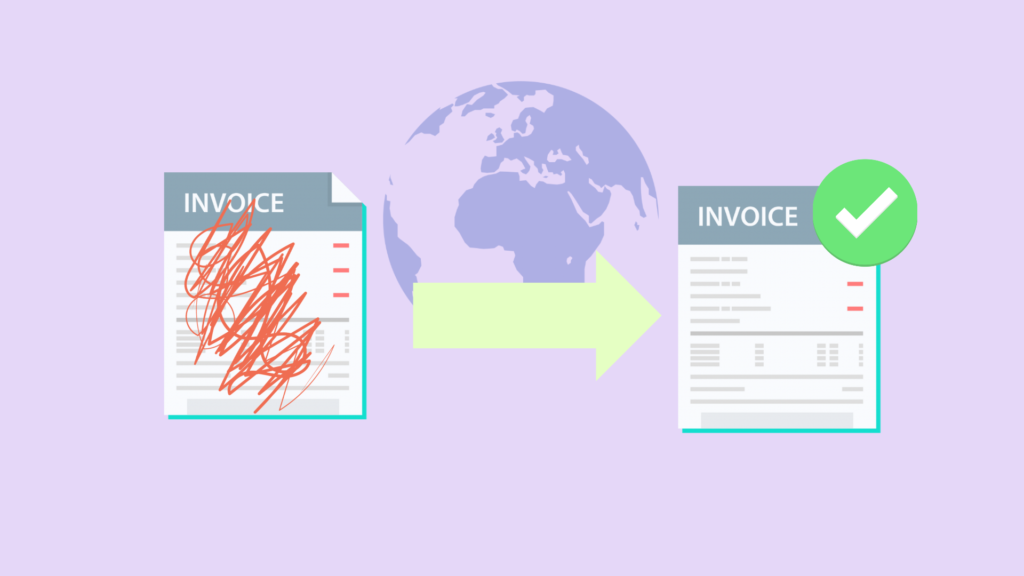
- Self billing shifts invoice creation from the vendor to the LSP (buyer). Instead of waiting for hundreds of freelancers to send invoices in varied formats, currencies, and tax configurations, the LSP generates one self billing document per vendor per currency from confirmed project data. This eliminates bad or missing vendor invoices across 40+ countries.
- In Awtomated, self billing invoices are auto-generated for every completed and approved job. Each invoice pulls language pairs, word counts, agreed unit prices, and the correct VAT or GST rate from the vendor profile. The result: consistent line items, correct totals, and a sequential numbering system on every invoice.
- Measurable outcomes include fewer invoice disputes, faster payments to linguists, improved cash flow predictability for the LSP, and a lower administrative burden on finance teams. A clear self billing agreement plus correct local tax handling ensures compliance, while a vendor portal gives linguists full visibility into every line item and payment status.
Introduction: Why Vendor Self-Billing Matters for Translation Businesses
Picture a mid-size LSP in 2025, working with 700 freelance translators in 40 countries. Every month, the finance team receives invoices in 15 currencies, dozens of PDF templates, and at least three languages. Some arrive two weeks late. Others list the wrong rate per word, reference an outdated purchase order, or apply the wrong VAT rate. A few never arrive at all.
Traditional vendor invoicing disrupts project close-out, payment speed, and cash flow because linguists invoice late, miscalculate amounts, or use inconsistent templates. Translation billing often involves complex calculations based on various service parameters: match categories from CAT tools, per-word rates for new words versus fuzzy matches, rush surcharges, and proofreading fees. Translation agencies often manage a high volume of micro-transactions among freelancers, making manual processing of each invoice time-consuming and error-prone.
Self billing is a buyer-created invoicing model where the LSP generates the invoice on behalf of the vendor after work is delivered and approved. It is suited to translation projects because the LSP already holds the exact quantity of words, the predefined pricing from rate cards, and the PO numbers in its project management system. The vendor sends no invoice; the buyer creates it.
This article is written from Awtomated's perspective as a Translation Business Management System (TBMS) provider. We will cover definitions, compliance considerations, practical rollout steps, and how Awtomated automates the self billing process end to end.
What Is Self Billing and a Self-Billing Invoice in an LSP Context?
Self billing is a financial arrangement in which the customer (the LSP) issues an invoice on behalf of the supplier (the translator or subcontracting agency) for goods or services already delivered and approved. Ireland's Revenue Commissioners define it as the scenario where "a VAT registered customer assumes responsibility for issuing their supplier's VAT invoice." This self invoice then serves as the payables document for the buyer and the revenue record for the vendor.
A self billing invoice for translation work contains:
- Job IDs and delivery note number references
- Language pairs and service type (translation, editing, DTP)
- Word or hour volumes with the exact quantity per task
- Agreed rate and currency
- Supplier's VAT registration number and address
- VAT or GST fields with the applicable rate
- A clear label: "Self-billing invoice"
Self billing invoices must follow a sequential numbering system, just like any standard invoice. Customers must include supplier details on self billing invoices to avoid confusion and meet legal requirements. Different regions use different terms: "buyer-created invoice," "self invoice," or "buyer-issued invoice." All refer to the same concept: the buyer generates the invoice instead of the vendor.
In Awtomated, the self billing document is generated from confirmed project and task data rather than from vendor-supplied spreadsheets or PDFs. This allows the customer to manage their invoices directly, shifting invoice management from hundreds of vendors to one central finance workflow. The difference from a traditional purchase order and invoice flow is that the vendor never needs to create invoices at all for services covered by the agreement.
Why Traditional Vendor Invoicing Breaks at Global Scale
Common pain points with vendor-issued invoices include: missing PO references, wrong currency, incorrect rate per word, wrong VAT rate applied, duplicated lines, and invoices covering the wrong date range. Published benchmarks report invoice error rates between 0.8% and 39% depending on region, invoice volume, and vendor diversity.
Many LSPs in 2025 still rely on email plus Excel or generic accounting tools. When a finance team processes 1,200 vendor invoices per month, even a 5% error rate means 60 invoices need manual intervention, queries, and corrections. Each rejected invoice triggers a back-and-forth cycle that delays payment by one to three weeks. If you have tried to stop invoicing in Excel, you already know the scale of this problem.
The ripple effect on operations is real: project managers and vendor managers become part-time invoice checkers, slowing down quote-to-cash cycles and vendor relationship management. Finance teams lose time savings they could otherwise invest in forecasting and margin analysis. Self billing is a structural fix because it removes the root cause (vendor-side invoice creation) instead of just adding more validation checks on top of a broken invoicing process.

How Self Billing Works for Translation Vendors Step by Step
Here is the end-to-end flow specific to translation:
- Project creation and task assignment. The LSP creates a project in Awtomated, assigns tasks to vendors with agreed unit prices per language pair and service type.
- Work delivery and quality approval. The vendor delivers files. A project manager or reviewer approves the work.
- Amount calculation. Awtomated calculates the payable amount from word counts, match categories, and the vendor's rate card. The payable figure is locked.
- Self billing invoice generation. The system auto-generates a self billing invoice for the vendor. No vendor sends an invoice; the buyer creates the document.
- Payment. Finance schedules payment based on the self billing invoice and the agreed payment cycle.
LSPs can set weekly or monthly self billing cycles. For example, all completed jobs between 1 and 31 March 2025 produce one self billing invoice per vendor per currency. This consolidation reduces high transaction volumes into fewer, cleaner documents.
Corrections work differently than in traditional invoicing. If a quantity or rate was wrong in the project data, the LSP fixes it in Awtomated and adjusts the next self billing invoice or issues a credit note. Vendors receive an itemized copy via email or the vendor portal and can query or dispute lines, but they no longer prepare their own invoice PDFs.
Self-Billing Agreements and Compliance Across Multiple Countries
A self billing agreement is a formal agreement between buyer and supplier authorizing the LSP to issue invoices on the vendor's behalf. A self billing agreement must be formalized in writing. This is a legal requirement in the EU and UK, not just a best practice.
The agreement must meet the following criteria:
- Identification of parties. Names, addresses, and tax IDs of both the supplier and customer.
- Scope. Which services are covered (translation, editing, DTP, etc.).
- Acceptance procedure. The self billing agreement must specify the acceptance procedure for invoices, including how the vendor reviews and confirms each self billing document.
- Duration. Self billing agreements should specify the duration and scope of operations. HMRC guidance requires start and expiry dates; the supplier issues no VAT invoices for the services covered during that period.
- VAT registration requirement. Both parties must be VAT registered for self billing to be valid. Both the supplier and customer must be registered for VAT to implement self billing.
EU invoicing rules under Directive 2006/112/EC require member states to permit self billing if both parties agree, and the invoice must carry the words "self-billing." Country-level variations exist: France requires explicit mention; Belgium requires prior written agreement and vendor acceptance; the UK requires the supplier to confirm they will not issue vat invoices for the same supply.
Awtomated helps ensure compliance by storing the agreement status per vendor, enforcing required invoice wording, and including country-specific tax fields. This makes it possible to manage self billing across multiple regions from one system instead of maintaining separate spreadsheets per country.
Financial Impact: Faster Payments and Improved Cash Flow for LSPs and Vendors
Self billing delivers faster payments because customers can begin accounts payable processes immediately on job approval. There is no two-week wait for the vendor to prepare and send invoices. Self billing leads to faster payments for suppliers; payment speed improves because the bottleneck (invoice creation by the vendor) is gone.
For vendors, predictable self billing cycles create a regular payment rhythm. If the LSP runs cycles on the 15th and last day of each month, freelance linguists know when to expect payment. They get paid faster and more reliably, which reduces the "invoice chasing" stress that damages vendor relationships. Automated payment systems can enhance financial visibility for language service providers by giving finance teams real-time data on liabilities and scheduled outflows.
For the LSP, consolidated, system-generated vendor payables provide improved cash flow forecasting. Instead of surprise invoices arriving weeks after project completion, every payable is visible the moment work is approved. The finance management workflow becomes predictable.
This financial arrangement benefits vendor loyalty too. Translators who receive quicker payments and face fewer disputes are more likely to prioritize your jobs, offer preferred rates, and stay in your vendor pool long-term.
Operational Benefits: Cleaner Invoice Management and Less Admin
Self billing reduces the administrative burden on finance teams. They no longer key data from PDFs, chase missing invoices, or reconcile mismatched line items against POs and job reports. Automating self billing reduces manual entry errors because every invoice line is generated from validated project data.
In Awtomated, self billing invoices are automatically matched to projects, tasks, and POs. This removes the need for three-way matching in external spreadsheets. Self billing reduces administrative costs for suppliers too, because vendors no longer spend time creating, formatting, and sending invoices.
Data quality improves because amounts on self billing invoices always match project records. Those records are based on word counts from CAT tools and contract rates from vendor profiles. Self billing minimizes invoicing disputes between suppliers and customers because there is no mismatch between what the vendor claims and what the project system recorded.
Risk reduction follows from fewer human touchpoints: calculation errors drop, and internal controls strengthen. Every amount is traceable back to a job, a rate card, and an approval event, eliminating the weak audit trail that plagues manual processing. This streamlined invoicing approach allows project managers to refocus on margins, quality, and capacity planning.
How Awtomated Implements Self Billing for Translation Vendors
Awtomated is a TBMS built for translation and localization businesses, replacing fragmented email, spreadsheet, and accounting workflows with one connected platform. The self billing module lets users enable self billing status per vendor, define billing frequency, default payment terms, and per-currency preferences.
When a job is completed and approved, Awtomated pulls language pairs, services, volumes, and rates from the project management side to generate self billing invoices that are always in sync with actual work delivered. Self billing integrates with existing accounting systems for efficiency; Awtomated supports export to common accounting and ERP tools.
The vendor experience matters. Vendors log into the vendor portal to see their self billing invoices, underlying job lines, payment status, and can download PDFs or export data for their local accounting tools. Transparency and trust are concerns for freelancers in self billing systems, so portal access addresses those directly. Awtomated also handles multi-currency invoicing, automated FX conversion reporting, and real-time profitability tracking by project and vendor. For a full overview of Awtomated's features, visit the features page.

Rolling Out Self Billing with Your Existing Vendor Base
Start with a pilot group. Select 20 to 30 high-volume vendors in the EU with stable rate cards. These vendors handle repetitive language pairs, invoice frequently, and benefit most from faster processing and quicker payments.
Segment your vendor base:
| Vendor type | Self billing suitability | Recommended approach |
| Frequent EU freelancers | High | Pilot group, first billing cycle |
| LATAM/APAC vendors with clear tax status | Medium | Second wave after pilot validation |
| Occasional specialists or one-off vendors | Low | Keep on traditional invoicing initially |
Send a concise policy update explaining why you are moving to self billing, how payment speed will improve, and what changes in the vendor's process. Building a reliable linguist pool depends on clear communication during transitions like this.
Use Awtomated to track who has accepted the self billing agreement, capture tax IDs, banking details, and define the start date. In the first two to three billing cycles, measure invoice disputes, processing time, and payment speed to refine rate cards, templates, and cut-off dates. Self billing offers efficiency gains only if the underlying project data is accurate, so fix data quality issues before expanding.
Handling Taxes, Reporting, and Audit Trails with Self-Billed Invoices
The main tax considerations for LSPs across 40+ countries include VAT regulations in the EU and UK, GST in Australia and New Zealand, and withholding tax in certain LATAM or APAC markets. Compliance and tax considerations are crucial in self billing arrangements because the self billing document is the legal invoice for both parties.
Self billing does not remove tax obligations. It changes who creates the invoice. Both the supplier and customer must still report output tax correctly. Self billing invoices must include the supplier's VAT registration number, the applicable VAT rates, and correct VAT calculations. The invoices must indicate "Self-billing" on the document face. Self invoices must include the supplier's VAT registration number for tax authorities to accept them.
Awtomated supports correct tax handling through per-vendor tax profiles, automatic application of VAT rates by country, support for reverse charge where applicable, and optional withholding tax fields. SAP supports self billing integration with S/4HANA Cloud since 2020, and Peppol enables structured self billing document exchange across Europe, both of which can connect to Awtomated's export layer.
Every self billing invoice in Awtomated is fully traceable, with timestamps, issuer identity, version history, and links to underlying projects and approvals. We recommend LSPs coordinate with their tax advisor during implementation to review standard templates and ensure accuracy in every jurisdiction.
When Self Billing Is (and Isn't) the Right Choice
Self billing represents a strong fit when the LSP has a high vendor count, repetitive work patterns, clear rate cards, and systems that already hold accurate volume and pricing data. Evaluated receipt settlement (a related concept in procurement where goods received trigger payment without a separate invoice) follows similar logic: if you know what was delivered and at what price, a vendor-issued invoice adds friction without adding information.
Self billing may be less appropriate for ad-hoc consulting services, complex multimedia projects with many non-standard expenses, or jurisdictions with restrictive rules. Canada, for example, does not permit self billing under its GST framework, according to EY's indirect tax guide.
Hybrid models work well. Some LSPs use self billing for freelancers and small agencies while keeping traditional invoicing for strategic suppliers who have their own strict billing systems. The supplier issues invoices in those cases; the LSP processes them through a separate validation flow. Evaluate internal data quality first: self billing depends on reliable project data. If word counts or rate assignments are often wrong, fix those processes before switching. When conditions are right, self billing becomes a core competitive advantage: faster payments, cleaner books, and scalable invoice management.

FAQ
Do vendors still need to send invoices if we use self billing?
Under a valid self billing arrangement, the self billing invoice generated by the LSP is the only official billing document for the services covered. Vendors should not issue parallel invoices for the same work. However, if both parties agree that certain items (travel expenses, equipment) fall outside the self billing scope, the vendor may still issue separate invoices for those. In Awtomated, you can mark which services or cost types are included in self billing transactions and which remain manually invoiced. The supplier receives a copy of every self billing document for their records.
How does self billing affect vendors' accounting and tax reporting?
Vendors treat the self billed invoice as if they had issued it themselves. They record it as revenue and use its tax amounts and dates for VAT, GST, or income tax reporting in their local jurisdiction. The supplier receives the self billing document and should archive it alongside bank statements and local bookkeeping entries. Awtomated provides downloadable PDFs and CSV exports that vendors can import into popular accounting tools. VAT information on the self billing invoice serves as the vendor's output tax record.
Can we run self billing and traditional vendor invoicing in parallel?
Many LSPs operate a mixed model. Awtomated supports per-vendor configuration: finance teams can mark some vendors as "self billed" and others as "vendor-invoiced," with different validation rules for each. This hybrid approach lets you manage self billing for scan based trading-style high-volume vendors while keeping traditional invoicing responsibilities for others. We recommend comparing processing times, payment speed, and error rates between the two models to build an internal business case for broader rollout. Grocery retailing has used similar hybrid models for decades when dealing with raw materials suppliers alongside packaged goods vendors.
What happens if a vendor disagrees with a self-billing invoice?
Dispute procedures should be defined in the self billing agreement, including time limits for raising objections and the correction method (credit note, adjustment on next cycle). In Awtomated, vendors can flag specific lines via the portal or by referencing invoice and job IDs. Finance or project managers investigate, and once the correction is agreed, Awtomated regenerates or amends the invoice. The original version is preserved for audit history. This keeps invoicing based on verified data and protects both parties.
How long does it take to implement self billing with Awtomated?
A small LSP can pilot self billing with 20 to 30 vendors in four to six weeks. A larger agency operating in 40 countries may need a few months for legal review, template configuration, and staged rollout. The main tasks are: configuring vendor profiles and tax settings in Awtomated, defining templates with correct VAT information, drafting a written agreement for each vendor, and communicating the change. Awtomated's team supports onboarding, template setup, and integration with existing accounting tools to shorten the timeline. The cost savings and time savings from eliminating manual invoice chasing typically justify the implementation effort within the first two billing cycles.

Building software that helps small and medium-sized language service providers run their business.
About Rishi →Table of Contents
- Introduction: Why Vendor Self-Billing Matters for Translation Businesses
- What Is Self Billing and a Self-Billing Invoice in an LSP Context?
- Why Traditional Vendor Invoicing Breaks at Global Scale
- How Self Billing Works for Translation Vendors Step by Step
- Self-Billing Agreements and Compliance Across Multiple Countries
- Financial Impact: Faster Payments and Improved Cash Flow for LSPs and Vendors
- Operational Benefits: Cleaner Invoice Management and Less Admin
- How Awtomated Implements Self Billing for Translation Vendors
- Rolling Out Self Billing with Your Existing Vendor Base
- Handling Taxes, Reporting, and Audit Trails with Self-Billed Invoices
- When Self Billing Is (and Isn't) the Right Choice
- FAQ