Translation Agency Operations Audit: 10 Signs Your Workflow Is Costing You Money
Introduction: Why Translation Operations Audits Matter in 2026
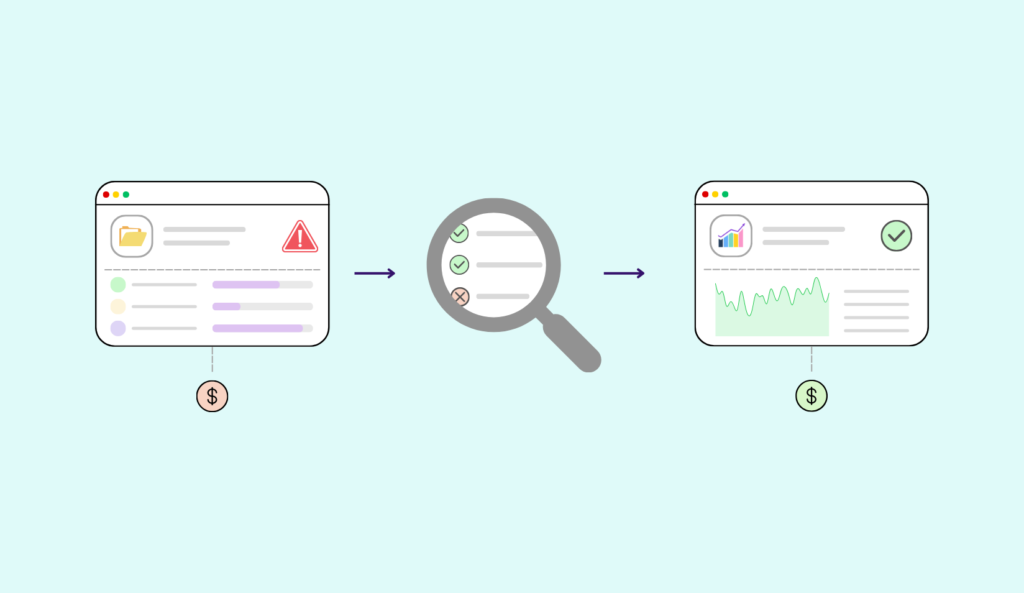
In 2026, a translation agency operations audit is no longer a nice-to-have management exercise. It is a comprehensive evaluation of how an LSP turns enquiries into quotes, projects, deliveries, invoices, financial reports, and repeat business.
Margins are tighter because clients want fast turnaround, lower rates, regulatory compliance, data protection, and measurable translation quality. Meanwhile, project managers are absorbing more work across email, CAT tools, spreadsheets, vendor portals, and accounting systems.
A strong audit process examines project intake to final delivery, including planning, document review, interviews, and data testing. Operational audits evaluate efficiency, effectiveness, economy, and ethics; they also identify gaps to improve organizational performance. The 2024 IIA Global Internal Audit Standards, effective since January 2025, require risk linkage in audits, which makes risk management central to every operational review.
At Awtomated, we built Translation Business Management Software for LSPs because audit findings should not sit in a folder. They should become workflows, automations, dashboards, audit trails, and continuous improvement.
Sign 1: Your Cost per Project Is a Guess, Not a Data Point
In 2024, a mid-size LSP ran its first serious operations audit and discovered 12–18% margin leakage. The work was profitable in the financial statements, but not once PM time, vendor overruns, unpaid review steps, and rework were allocated correctly.
This happens when translation services are managed across email, spreadsheets, CAT tools, and disconnected finance software. The key components to test are time tracking, vendor cost capture, overhead allocation, actual vs estimated effort, and internal controls.
The audit should map the translation process from quote to invoice: intake, file analysis, vendor assignment, Translation Cycle steps such as translating, editing, and proofreading, quality control, delivery, billing, and payment. Awtomated centralizes this data and produces audit reports showing profitability by client, project, language pair, and document type.
Sign 2: Quotes Take Hours and Still Miss the Mark
Slow quoting is expensive. Many agencies lose 20–30% of RFPs because a faster competitor responds first with a cleaner price.
Ask: What was the average quote turnaround time in 2025–2026? What is the quote win rate by client segment? How often do you re-quote because word counts, discounts, file complexity, or scope were wrong?
Workflow evaluation identifies bottlenecks and areas for automation. In quoting, those bottlenecks are usually manual word counts, rate lookups, discount decisions, and missing pricing rules for legal translation, technical documentation, machine translation, or specialised translation. Awtomated automates file analysis, applies client-specific rate cards, uses translation memory data where appropriate, and routes approvals so quotes move from hours to minutes.
Sign 3: Project Managers Are Doing Data Entry, Not Project Management
Many project managers begin the day chasing translators, checking portals, copying data into spreadsheets, creating POs, and answering status emails. That is coordination, but it is not strategic project management.
An audit should measure PM hours per project, tools used per workflow, manual status updates, PO creation time, invoice prep, and vendor assignment effort. Prioritizing findings here often gives the fastest ROI because PM time is one of the highest operating costs.
Awtomated creates jobs from client portals, automates vendor assignment, sends reminders, updates statuses, and connects project activity to financials. That improves operational efficiency and lets PMs focus on risk mitigation, quality assurance, effective communication, and client experience.
Sign 4: You Can’t Trust Your Deadlines or Your Capacity Planning
In Q4 2023, one LSP accepted a rush enterprise launch without clear vendor availability. Weekend coverage failed, review slipped, and the client moved the next campaign elsewhere.
Your audit should review historical delivery performance, rush surcharge policies, weekend coverage, vendor capacity, and promised vs actual delivery by client, service type, and language pair. Translation throughput is not infinite; general content may move faster than technical terminology, regulatory review, or critical documents requiring meticulous attention.
The operations audit identifies bottlenecks and inefficiencies in translation processes, especially where resource allocation is invisible. Awtomated gives calendar views, capacity dashboards, and alerts when workloads exceed thresholds, turning deadline confidence into a managed capability.
Sign 5: Quality Issues Keep Reappearing with the Same Clients
Quality problems cost more than pride. They create rework, discounts, client complaints, damaged NPS, and sometimes legal liabilities.
Include error types, root causes, corrective action status, LQA outcomes, reviewer scores, client complaints, terminology management, glossary use, and termbase adherence. Linguistic Quality Assurance assesses the entire translation quality program, not just the final product.
Recurring translation errors around terminology, style, omissions, cultural nuances, or linguistic accuracy show where training, vendor changes, or review steps are needed. Using glossaries ensures terminology consistency in translations; Translation Memory software should be maintained for terminology consistency; translation memory tools enhance efficiency and consistency. Awtomated tracks QA scores, vendor history, client quality profiles, and the cost of correction, helping agencies produce quality translation, consistent translations, and accurate and consistent translations in every target language.
Sign 6: Your Vendor Management Is Reactive, Not Strategic
Assigning “whoever is free” feels practical until the same client keeps receiving uneven translated text. The better question is: who has the domain expertise, subject matter expertise, acceptance rate, availability, and past quality score for this work?
Your vendor audit process should compare rates vs quality scores, on-time delivery, subject-matter match, response speed, NDAs, data security checks, and onboarding evidence. Agencies must have effective vetting procedures for freelance linguists. Subject-matter expertise is vital for translators to ensure accuracy in specific domains, and subject matter experts may be needed for regulatory or technical review.
Segment vendors into preferred, backup, and probation. Awtomated automates vendor selection rules, tracks SLAs, stores confidentiality agreements, and helps ensure confidentiality through contract and NDA tracking. Translators must adhere to non-disclosure agreements for confidentiality, especially when handling sensitive information.
Sign 7: Data Security and Confidentiality Are Handled by “Hope”
From 2024–2026, enterprise buyers increasingly ask for SOC 2-style questionnaires, ISO 27001 evidence, GDPR practices, and audit trails. ISO 27001 focuses on data security in translation processes, while data security compliance includes checking adherence to laws like GDPR.
Your audit must examine access controls, file transfer methods, storage locations, vendor NDA compliance, data integrity, version control, retention rules, and how agencies handle data storage and sharing to comply with regulations. Translation services must implement secure file handling protocols, advanced encryption technologies safeguard sensitive translation data, and confidentiality policies are essential for protecting sensitive information.
Weak security causes lost contracts, remediation costs, reputational harm, and legal liabilities. Awtomated supports secure client and vendor portals, role-based access, strict confidentiality, full audit trails, and compliance documentation to strengthen your compliance posture.
Sign 8: Your Financials Don’t Match Your Operational Reality
Many LSPs see revenue in accounting but miss the operational truth: unbilled work, unpaid vendor POs, hidden change orders, and project margins that do not match financial reports.
Review unbilled WIP, vendor commitments, margin by client segment, cash flow, financial statements, accounting standards, and project-level audit results. Expert translators ensure accurate financial terminology in translations, and accurate audit report translation ensures effective communication across cultures. Errors in audit report translation can significantly impact profitability, while specialized translators ensure technical accuracy in audit report translations.
Awtomated links jobs, POs, deliveries, invoices, and accounting integrations so operational reality and finance agree. That matters for audit report translation, compliance reviews, international expansion, and international markets where financial accuracy affects trust.
Sign 9: You Have No Continuous Monitoring of KPIs
A one-time audit helps. But without continuous monitoring, old habits return.
Track key performance indicators including on-time delivery, gross margin per project, rework rate, quote win rate, client churn, vendor quality, and PM utilization. The audit should assess reporting frequency, data sources, manual extraction, data collection quality, and whether leaders can identify areas before losses appear.
Awtomated provides real-time dashboards, scheduled audit reports, and alerts. Effective audits drive continuous improvement in performance and operational effectiveness; operational audits help optimize resource allocation and reduce costs. This is also where technology audits assess the integration of Translation Memories and Machine Translation. Management of machine translation requires clear guidelines and quality standards.
Sign 10: Nobody Owns the Audit Results or the Improvement Plan
Many LSPs write an audit report, discuss it once, and return to the same workflow. That is not improvement. That is documentation without ownership.
Each finding needs an owner, deadline, budget, KPI, and severity: critical, major, or minor. Prioritizing findings should be visible in shared dashboards, with regular review meetings for ensuring transparency.
Awtomated becomes the backbone of implementation by embedding new automations, permissions, approval paths, and reporting rules. The result is better compliance, stronger quality control, and measurable operational effectiveness.
How to Run a Translation Agency Operations Audit Step by Step
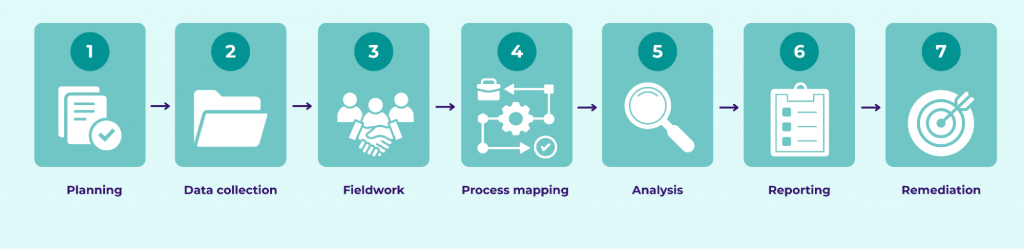
Run your translation agency operations audit over 30–60 days:
| Phase | What to do | Output |
| Planning and scoping | Define goals, risks, sample projects, stakeholders | Audit plan |
| Data collection | Gather quotes, invoices, QA, vendor, finance, and delivery data | Evidence set |
| Fieldwork | Fieldwork involves interviews and documentation reviews during the auditing process | Interview notes |
| Process mapping | Map intake, translation, editing, proofreading, delivery, and invoicing | Process maps |
| Analysis | Test accuracy, costs, SLA performance, and gaps | KPI baseline |
| Reporting | Draft findings, risk ratings, and recommendations | Formal audit report |
| Remediation | Assign owners, timelines, budget, and dashboards | Improvement roadmap |
Quality Management System reviews ensure adherence to quality standards. Compliance audits enhance operational efficiency in regulated industries, and compliance audits minimize legal liabilities for enterprises. ISO 17100 provides guidelines for translation services in compliance audits, and ISO 17100 provides guidelines for translation services more broadly. A robust compliance audit framework ensures adherence to international standards and compliance audits fortify an enterprise's global brand integrity.
Collaboration with auditors improves translation accuracy, especially when a professional translator, certified linguists, or expert translators support audit report translations involving technical terminology. Maintaining terminology consistency is vital in audit report translations.
Use Awtomated data to accelerate every phase: client records, vendor profiles, QA logs, POs, invoices, audit trails, and dashboards are already connected. Schedule a full follow-up audit every 12 months, with quarterly mini-audits on quoting, vendor performance, or PM time.
Turning Audit Insights into Profit with Awtomated
The point of an audit is not to criticize your team. It is to provide insights, protect accuracy, improve data security, and build a workflow where accurate translation is repeatable, profitable, and easier to manage.
With Awtomated, audit findings become configurable workflows: automated quoting, vendor rules, secure portals, QA tracking, financial reconciliation, and real-time analytics. That is how LSPs move from reactive delivery to controlled growth.
Start small. Audit quoting or PM time first, then scale to a full operational review. If you want to see what your 2024–2026 data reveals, book an operations audit demo with Awtomated and turn hidden leakage into measurable profit.
Table of Contents
- Introduction: Why Translation Operations Audits Matter in 2026
- Sign 1: Your Cost per Project Is a Guess, Not a Data Point
- Sign 2: Quotes Take Hours and Still Miss the Mark
- Sign 3: Project Managers Are Doing Data Entry, Not Project Management
- Sign 4: You Can’t Trust Your Deadlines or Your Capacity Planning
- Sign 5: Quality Issues Keep Reappearing with the Same Clients
- Sign 6: Your Vendor Management Is Reactive, Not Strategic
- Sign 7: Data Security and Confidentiality Are Handled by “Hope”
- Sign 8: Your Financials Don’t Match Your Operational Reality
- Sign 9: You Have No Continuous Monitoring of KPIs
- Sign 10: Nobody Owns the Audit Results or the Improvement Plan
- How to Run a Translation Agency Operations Audit Step by Step
- Turning Audit Insights into Profit with Awtomated
Ready to manage your Translation company easily?
Get Started for Free