ClickUp for Translation Agencies: Why LSPs Build Their Whole Business on a Tool That Was Never Made for One
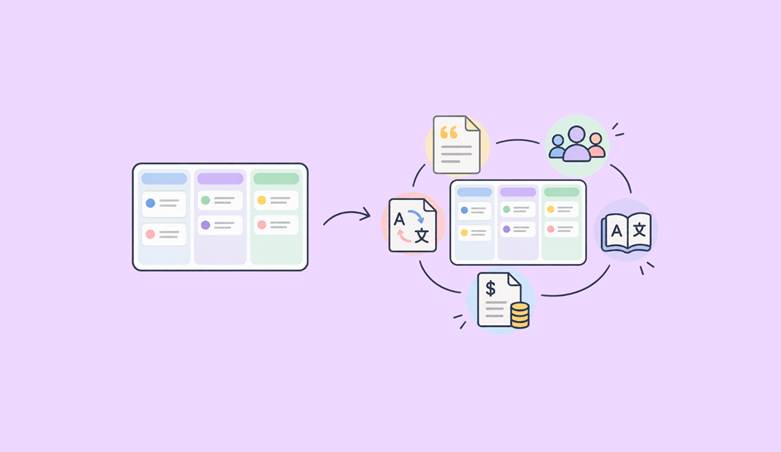
Many translation agencies run their entire operation in ClickUp even though it was never designed as a Translation Business Management System. ClickUp is excellent for generic project management, but it cannot natively handle core LSP needs like automated quoting, vendor payouts, CAT-tool integration, or translation-specific quality assurance. This article is written from Awtomated's perspective as a TBMS vendor working with agencies who are currently stuck in ClickUp and spreadsheets, and it will show you exactly where the cracks appear.
Key Takeaways
- ClickUp is a strong horizontal work OS, but it lacks native support for language pairs, word counts, translation memory, vendor rates, and multi-currency financials that translation agencies depend on daily.
- The hidden cost of building a "quasi-TBMS" in ClickUp grows rapidly as agencies add more languages, vendors, and clients, eroding margin and creating data silos.
- A purpose-built TBMS like Awtomated handles automated quoting, vendor management, invoicing, quality assurance, and real time profitability tracking in one platform designed for the translation lifecycle.
- Agencies don't have to abandon ClickUp entirely. A hybrid model works: Awtomated manages translation operations while ClickUp stays for marketing, HR, and internal tasks.
- Migration from ClickUp-only to TBMS-first can be done in stages, with most agencies seeing benefits within the first month of a pilot.
Why Translation Agencies Fell in Love with ClickUp
Between 2019 and 2024, many small and mid-sized LSPs adopted ClickUp because it felt modern, flexible, and inexpensive compared to legacy tools. ClickUp's Free Forever plan offered unlimited tasks and members, making it accessible for lean teams entering global markets.
The appeal was real. Customizable views, lists, and dashboards let agencies map jobs, deadlines, and localization tasks without any formal translation process in place. Translation agencies can build dashboards in ClickUp to visualize workload and project statuses, and ClickUp is used by translation agencies for centralized project requests and workflow management.
The common setup Awtomated sees: one Workspace per agency, Spaces for each key client or department, Lists for languages or service lines, and tasks representing individual projects. Many translation agencies use ClickUp for effective resource management of translators and vendors, and agencies use ClickUp to track deadlines and manage multiple translation projects simultaneously. ClickUp supports customizable project templates tailored for translation services and provides built-in templates specifically designed for translation work management. ClickUp Brain and basic features to translate text added to the perception that ClickUp could cover multilingual content needs out of the box.

Where ClickUp Works Well for LSPs (And Where It Clearly Doesn't)
There is a meaningful difference between generic work management and translation business management. ClickUp excels at the former.
Where ClickUp genuinely helps:
- Task tracking, assigning work to in-house team members, due dates, and attachments
- Collaboration comments for seamless communication between PMs and linguists
- ClickUp features tools for managing quality control in translation processes through checklists and templates
- Effective project management in translation requires tracking and managing client communication within tasks, and ClickUp handles this well
- ClickUp allows integration with existing tools for enhanced workflow in translation projects
- Agencies can automate critical tasks in ClickUp such as assigning and notifying team members about project changes
Where it clearly breaks:
Translation agencies often require custom fields to capture language pairs and project metadata, but ClickUp has no native concept of translation jobs, language pairs, word counts, rates, or translation memory. Everything is hacked via custom fields and manual rules. There is no built-in vendor marketplace, no structured hand-off between professional linguists, editors, and proofreaders, and no standardized quality assurance workflows for translated content.
Agencies can get surprisingly far in ClickUp. But operational cracks appear as soon as they add more languages, more vendors, and more complex content creation pipelines serving a global audience.
The Translation Process You're Forcing ClickUp to Imitate
A typical LSP translation process in 2026 follows a clear chain: request intake, quoting, file preparation, translation (often MT plus human expertise), review, QA, delivery, invoicing, and vendor payment. A Translation Management System centralizes linguistic assets, and a TMS automates multilingual workflows for efficiency. A capable TMS provides a unified dashboard for tracking progress, and modern TMS integrates with development environments for automation. Translation Management Systems enhance collaboration between global teams.
Most agencies try to mirror each step with ClickUp statuses, checklists, and sub-tasks. On paper, it works. In practice, ClickUp has no notion of language pairs, service combinations like T+E+MTPE, or per-word pricing. PMs must calculate everything manually or in Excel.
Automation streamlines multilingual workflows for faster global expansion, and an always-on localization pipeline eliminates traditional translation lag. Continuous localization integrates translation with development workflows, and APIs enable custom automation in the localization process. Agencies should provide pre-built connectors for version control systems. Time to Edit (TTE) measures translation efficiency in continuous localization, and successful continuous localization allows simultaneous global releases. An always-on localization pipeline eliminates translation lag entirely.
A TBMS like Awtomated is designed around this translation lifecycle by default, so agencies don't have to reinvent it with custom fields and workarounds.
Hidden Costs of Building a "Quasi-TBMS" in ClickUp
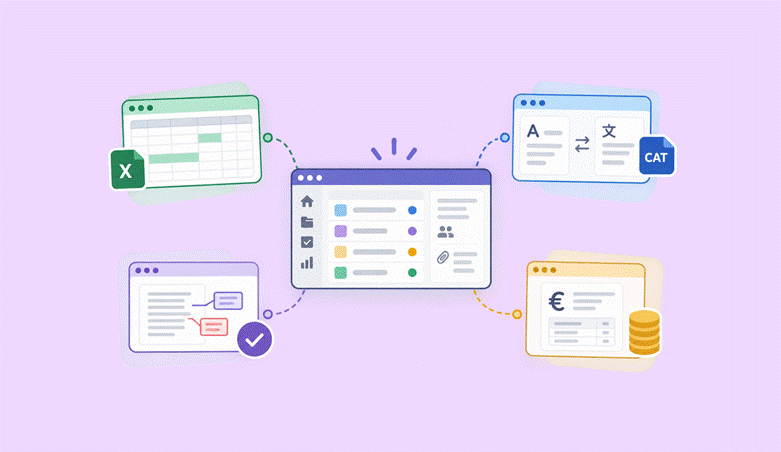
ClickUp looks cheap, but the real cost appears in time, errors, and lost margin as the agency scales.
Concrete pain points Awtomated sees in agencies right now:
- Manual quoting: PMs spend hours per week building quotes in spreadsheets because ClickUp cannot calculate totals from word counts and vendor rates. Automation can help reduce manual coordination work in translation project management, but ClickUp lacks the translation-specific data model to deliver it.
- Scattered data: Word counts live in CAT tools, costs in spreadsheets, deadlines in ClickUp, and vendor payments in accounting systems. No single source of truth.
- Quality gaps: No enforced QA checklist, no centralized history of defects per vendor, no way to track revision times or objective quality scores. Time to Edit (TTE) measures efficiency in translation workflows, but there is nowhere in ClickUp to capture it.
- Custom field limits: On ClickUp's Free plan, there is a 60-use limit on custom fields. Heavy task volume exhausts this quickly, blocking further edits.
These workarounds break at global scale, especially when running multi-vendor, multi-currency projects across dozens of languages every month. Users on Reddit report that ClickUp dashboards can show task counts but cannot calculate margin because essential financial data is disconnected.
What a Translation Business Management System (TBMS) Actually Does
A TBMS is a centralized platform built from the ground up to manage translation operations, finance, vendors, and technology in one connected system. Translation Management Systems centralize linguistic assets for better control.
Core capabilities Awtomated provides that ClickUp doesn't:
- Request intake forms and client portals for structured job submission
- Automated quoting based on word counts, translation memory leverage, and price lists
- Vendor selection by target language pair, specialization, and availability
- Structured job assignments with clear workflow stages
Vendor management ensures quality and consistency in translations. Effective vendor management reduces costs and improves efficiency. A centralized platform enhances vendor management capabilities, and vendor management is crucial for scaling translation services globally.
Finance features include automated client invoicing, vendor payables, multi-currency support, and real time profitability tracking per project, client, and service.
Technology integrations connect CAT tools, machine translation engines, translation memory, and terminology to a single TBMS backbone instead of isolating them in ClickUp tasks.

ClickUp vs. Awtomated: How They Fit Together (Or Don't)
Think of ClickUp as a strong horizontal work OS and Awtomated as a vertical TBMS specialized for language service providers. They serve different purposes.
Some agencies keep ClickUp for marketing, HR, or generic project tracking while moving translation operations into Awtomated as the system of record. A realistic hybrid model: Awtomated manages translation jobs, vendors, and profitability in one platform; ClickUp holds higher-level client initiatives, campaign boards, and internal to-do items.
Awtomated is not a competitor to ClickUp in generic work management. It is a replacement for the fragile "TBMS built in ClickUp plus spreadsheets." For LSPs beyond a certain size-say, more than ten linguists and fifty jobs per month-staying ClickUp-only means sacrificing margin, visibility, and scalability. For a detailed breakdown of how TBMS options compare, see Awtomated vs Plunet vs XTRF.
How Awtomated Handles the Tasks You're Currently Hacking in ClickUp
Here is a practical, side-by-side view:
| What you do in ClickUp | How Awtomated handles it |
| Custom task templates for job types | Native project/job types that already know source/target languages, services (translation, revision, MTPE), and units (words, pages, hours) |
| Manual quote calculation in Excel | Automatic quotes from CAT-tool word counts and rate cards |
| @mentions to assign translators | Filtered vendor assignment by language pair, specialization, availability, and agreed rates |
| Reconciling tasks with accounting | Automatic purchase orders and client invoices generated from a single project record |
| Status columns for TEP steps | Structured workflow stages with role-based access for translators, editors, and reviewers |
Instead of relying on custom fields that break at scale, Awtomated treats language pairs, translation agency pricing models, and vendor rates as first-class data types.
Quality Assurance and Human Expertise: Beyond Generic Task Checklists
Translation quality lives at the intersection of tools, process, and human expertise-not in a generic "Done" status column. Awtomated lets agencies define specific QA workflows such as TEP, linguistic sign-off, and client review, with clear roles for translators, editors, reviewers, and in-country specialists.
Quality assurance in vendor management is essential for compliance, particularly in regulated industries like life sciences, legal, and finance where audit trails are mandatory. Awtomated records objective quality data-error categories, severity, pass/fail results-aligned to industry standards rather than burying feedback in ClickUp comments.
Adaptive AI reduces cognitive load on translators over time, and Time to Edit (TTE) measures efficiency in AI translation workflows. But human expertise remains central. Awtomated doesn't replace linguists with AI; it supports them with translation memory, MT integration, and consistent workflows that deliver accurate translations across clients and content types.
Real-Time Profitability and Operational Visibility for LSPs
Most agencies running in ClickUp today only discover their margins weeks later, when finance reconciles jobs manually. That delay is critical when you need to understand which clients, language pairs, or services are actually profitable.
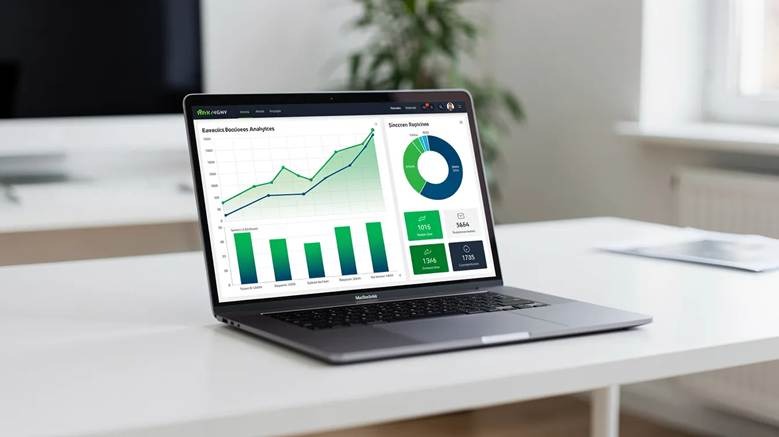
Awtomated tracks profitability in real time. As soon as a job is quoted, assigned, and delivered, the platform knows expected and actual revenue, costs, and margin at project, client, and service level. These are the KPIs every LSP owner should track.
ClickUp dashboards can show task counts and deadlines but cannot calculate margin because they don't understand vendor rates, currency, or units. This real time visibility lets agency owners make faster decisions on pricing, vendor selection, and which services to grow-or cut. Awtomated's reports are designed specifically for translation agencies serving diverse audiences, not generic "number of tasks done" charts.
From ClickUp-Only to TBMS-First: A Practical Migration Path
If you are deeply invested in ClickUp today but know you have outgrown it, here is a low-risk roadmap:
- Audit phase: List every custom field, status, Space, and List currently used for translation jobs in ClickUp. Map them to native objects in Awtomated.
- Pilot: Start with one or two key clients, or a specific language pair, and run their projects end-to-end in Awtomated while tracking high-level milestones in ClickUp.
- Gradual shift: Move quoting, vendor management, and invoicing into Awtomated first-these are the biggest time sinks. Keep ClickUp for non-translation work and internal communication.
- Cut-over date: Define the day when translation operations officially become TBMS-first and ClickUp downgrades from "core TBMS" to "supporting work OS."
For smaller agencies with fewer than ten linguists, migration typically takes a few weeks. More complex setups with many vendors and multiple languages may take a couple of months. Most agencies begin seeing benefits within the first month of a pilot.
AI, Automation, and the Future Stack for Translation Agencies
AI-including neural machine translation, large language models, and tools like ClickUp Brain-is reshaping content creation and the localization process. Neural machine translation improves accuracy by processing entire sentences rather than fragments. AI translation tools can process text in over 100 languages. Generative AI adapts translations to cultural nuances and tone, opening doors to global growth.
But while ClickUp can use AI to summarize tasks or translate text fragments, it does not provide the translation-specific automation that companies need across multiple languages, clients, and vendors. Training AI models and connecting them to production workflows requires more than a generic app feature.
Awtomated integrates MT engines and CAT tools at the project level, so agencies can automate repetitive steps while keeping human expertise in control of critical, brand-sensitive content. The ideal future stack is not "AI inside a generic PM tool" but "AI and MT connected to a TBMS that understands languages, rates, and quality metrics."
Awtomated is the operational backbone where automation, professional linguists, and client workflows meet. Tools like ClickUp remain optional, not foundational. The message for agencies targeting a global audience at global scale: build your systems around software that speaks your native language-the language of translation operations.
FAQ
Can I keep using ClickUp if I move my translation operations into Awtomated?
Yes. Many agencies keep ClickUp for marketing, HR, education initiatives, and generic project tracking while using Awtomated as their TBMS for translation jobs, vendors, and finance. In this model, ClickUp becomes a high-level planning tool for resources and collaboration, while Awtomated holds the detailed operational and financial data specific to translation work. Users rely on each platform for what it does best.
Is Awtomated only for large translation agencies?
No. Awtomated is built for small-to-mid-sized LSPs and in-house localization teams that are outgrowing email, spreadsheets, and improvised ClickUp setups. Agencies typically feel the importance of a TBMS once they manage multiple vendors, multiple currencies, or more than a few dozen projects per month. You don't need to be enterprise-scale to benefit.
How long does it take to migrate from a ClickUp-based workflow to Awtomated?
A realistic range is a few weeks for smaller agencies and a couple of months for more complex setups, depending on data volume and the localization process complexity. Starting with a pilot-one or two clients-usually lets agencies begin seeing value within the first month while they continue refining their configuration and understanding the new workflow.
Can Awtomated integrate with my existing CAT tools and machine translation engines?
Awtomated is designed to connect with popular CAT tools and MT engines, so agencies can keep their existing translation technology while centralizing operations on one platform. This integration removes manual copy-paste between tools and preserves translation memory and terminology consistency across projects, supporting accessible and reliable delivery.
What kind of reporting can I get from Awtomated that I don't get from ClickUp?
Awtomated offers translation-specific reports: margins by client, language pair, and service; vendor performance over time; and real time profitability per project. ClickUp provides generic metrics like task counts, due dates, and statuses, which cannot automatically incorporate word counts, language pairs, or financial data. For agencies that need to plan, create strategy, focus on growth, and deliver to ecommerce platforms or web pages across global markets, this level of reporting clarity is the key difference.

Building software that helps small and medium-sized language service providers run their business.
About Rishi →Table of Contents
- Why Translation Agencies Fell in Love with ClickUp
- Where ClickUp Works Well for LSPs (And Where It Clearly Doesn't)
- The Translation Process You're Forcing ClickUp to Imitate
- Hidden Costs of Building a "Quasi-TBMS" in ClickUp
- What a Translation Business Management System (TBMS) Actually Does
- ClickUp vs. Awtomated: How They Fit Together (Or Don't)
- How Awtomated Handles the Tasks You're Currently Hacking in ClickUp
- Quality Assurance and Human Expertise: Beyond Generic Task Checklists
- Real-Time Profitability and Operational Visibility for LSPs
- From ClickUp-Only to TBMS-First: A Practical Migration Path
- AI, Automation, and the Future Stack for Translation Agencies
- FAQ