Certified Translation Workflows: Managing Templates, Versions and Government Requirements Without Chaos

A single missing date on a certification statement can trigger a USCIS Request for Evidence and delay an immigration case by months. The translation itself might be flawless; the process around it failed. This article breaks down how to build a certified translation workflow that handles templates, version control, and jurisdiction-specific requirements inside a single system, and how Awtomated supports that workflow for translation agencies.
Key Takeaways
- A certified translation is a complete, accurate translation paired with a signed statement attesting to its quality, prepared for official use by government agencies, courts, and universities.
- A repeatable certified translation workflow (templates, version control, quality assurance, approvals) matters more for turnaround time than the specific machine translation engine or CAT tool used.
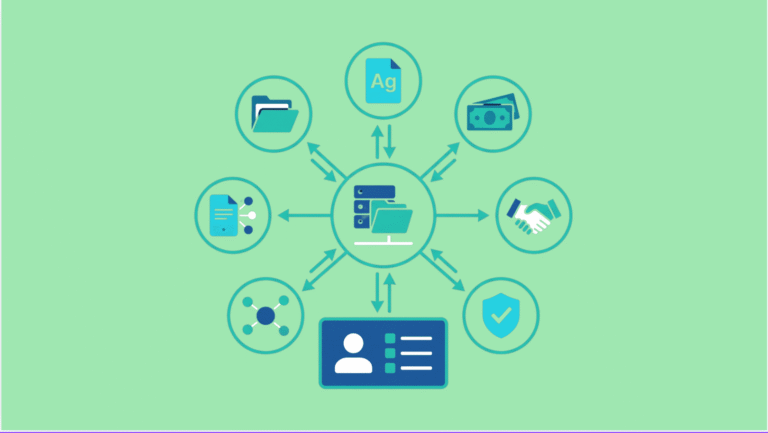
- Awtomated, as a translation management system, centralizes project management, templates, vendor assignments, and quality control for certified translations, replacing email and spreadsheet chaos.
- Different government agencies (USCIS, UK Home Office, EU authorities) have specific requirements for certification statements; configurable templates and workflows handle those differences without ad-hoc processes.
- Every certified translation project needs audit-ready records: who translated, who reviewed, when, and which template version was used.
What Is a Certified Translation and Why Workflow Matters More Than Tools
A certified translation is a translation of a document accompanied by a signed certificate of accuracy. The translator or agency attests that the translation is complete and accurate, and that the translator is competent in both the source and target languages. Certified translations are required for immigration and legal documents, academic admissions, and corporate compliance filings. Government agencies and universities accept them as proof that a translated document maintains the meaning of the original document.
A "certified translation" is not the same as a "certified translator." In the U.S., any competent translator can sign a certification statement; there is no government license. In civil-law countries like Germany, Spain, or France, only sworn translators appointed by judicial authorities may issue legally binding translations. End-users confuse these terms constantly, which creates intake problems for any language service provider.
Common use cases include USCIS immigration filings, UK visa applications, court exhibits in legal proceedings, university transcript evaluations, and KYC/AML checks. Managing a certified translation project requires compliance with legal and regulatory standards. The document translation workflow, not the choice of CAT tool or machine translation engine, dictates whether the completed translation gets accepted or bounced back.
At Awtomated, we focus on building a reliable, auditable, and scalable translation workflow that LSPs can reuse on every certified job rather than reinventing processes each time.
Preparation: Intake, Scoping and Pre-Checks for Certified Jobs
A certified translation service starts well before any translator opens a file. Document intake involves assessing the source document for completeness and clarity. Defining the purpose and target audience for a translation is essential before starting a project, because a birth certificate destined for USCIS has different requirements than the same certificate going to a German Ausländerbehörde.
Proper preparation mitigates risks in translation projects. Here is what intake should capture:
- Document type: birth certificate, diploma, court judgment, legal contracts, marriage certificate
- Source and target languages, including the language pair and language combination
- Receiving authority: USCIS, UK Home Office, IRCC, specific court or university
- Deadline and turnaround time expectations
- Notarization or apostille needs
- Legibility: scans, handwritten notes, partially visible seals
In Awtomated, clients see pre-configured "certified translation" request types so required fields are never skipped. A project manager does not chase basic info by email; the system disallows submission without it.
Scoping follows: assess word count, layout complexity (stamps, seals, tables), and subject matter expertise needed (legal, medical, academic). Early risk checks for illegible scans or missing pages are recorded in the project record. If a government office later queries the translation, the agency can point to documented client approval of source material quality.
Managing Government and Institutional Requirements Without Losing Your Mind
The certification process may vary by jurisdiction and specific requirements. A workflow that treats all certified translations identically will eventually produce rejections.
Here are concrete differences:
- USCIS (8 CFR §103.2(b)(3)): requires a full English translation, a signed statement certifying completeness and accuracy, and a declaration of translator competence with contact details. Missing any one of these four elements triggers an RFE.
- UK Home Office: expects translator or agency identification, professional membership (ATC, ITI), declaration of accuracy, date, and signature on letterhead. No sworn translator system exists in the UK.
- Civil-law EU countries: only court-appointed sworn translators may issue official translations. Pagination, binding, and per-page stamping are often prescribed by court rules.
- EU Regulation 2016/1191: eliminates apostille requirements for certain public documents between EU member states and allows multilingual standard forms to replace translations.
Awtomated stores end-user requirement profiles per country and per authority, linking them to project templates. When USCIS updates its guidance or a court changes format expectations, an admin updates a single template. No ad-hoc email instructions to linguists. No guesswork.
Templates, Certification Statements and Version Control
The certification statement is the legal heart of any certified translation. It must be controlled like a legal document, not copy-pasted from an old job.
A certification statement should include:
- Translator or agency name and full contact address
- Language pair (source and target language)
- Statement of completeness and accuracy
- Declaration of the translator's qualifications and competence
- Date of certification (in the date format the receiving authority expects)
- Signature (wet ink or digital, depending on acceptance)
- Identification of the source document translated
Short-form certifications work for non-notarized USCIS submissions. Long-form statements with additional details serve notarized translation needs or court filings.
Awtomated lets agencies manage multiple certification templates ("USCIS; English," "Home Office; UK English," "IRCC; Canadian English/French") with version numbers and change logs. Every certified translation project is tagged with the exact template version used, making audits traceable. If a government officer questions wording months later, the agency can pull up the exact version and change history. ISO 17100:2015, a standard for translation service providers, requires this kind of documented process transparency.
Core Document Translation Workflow for Certified Projects
The typical certified translation workflow includes project management phases that mirror standard document translation but with stricter rules about completeness. Certified translations are typically delivered within 24 hours for standard documents, so each step must be tight.
The core sequence:
- Assign translator based on language pair, credentials, and familiarity with the receiving authority
- Translate: reproduce every element of the source content; stamps, signatures, seals, handwritten margins, and illegible sections marked as "[illegible]"
- Internal review/editing by a second linguist (required under ISO 17100)
- Final QA: automated checks plus manual formatting review
- Attach certification statement using the correct versioned template
- Optional notarization/apostille
- Secure delivery with logged timestamps
Formatting adjustments ensure the final document closely resembles the original layout. Creating glossaries ensures consistency in translations across related documents (e.g., a bundle of court filings). Translation memory reuses past translations for consistency when translating large volumes of similar official documents.
AI tools can reduce translation time and costs. Machine translation can speed up the translation process for long legal documents used as drafts. But the final certified translation must pass through human review. Awtomated can integrate with MT engines while enforcing mandatory human review tasks before any certification statement is attached.

Assigning the Right Translators and Reviewers for Certified Work
Selecting qualified linguists is crucial for certified translation accuracy. Assigning the right linguistic talent improves translation quality. A professional translation of a court judgment requires more than fluency; it requires familiarity with legal terminology, specific authority expectations, and formatting norms.
Vendor profiles in Awtomated capture:
- Language pairs and direction
- Subject matter expertise: immigration, family law, education, financial
- Credentials: ATA-certified, sworn translator status, court-approved
- Past quality scores and RFE rates on previous certified jobs
- Turnaround capacity
Project managers can build vendor pools specifically for certified translation services, ensuring only vetted linguists are assignable. Proofreading by an additional linguist ensures translation accuracy before delivery, and Awtomated enforces this separation: the translator and reviewer must be different individuals, preventing shortcuts that compromise the review process.
Quality Assurance, Multi-Step Review and Compliance Records
Certified translations may be scrutinized in court or by immigration officers years after submission. Maintaining accurate documentation and delivery records is crucial for legal submissions. Quality assurance is integrated into every document translation process.
A multi-step review process enhances translation accuracy and cultural nuances:
- Linguistic review: bilingual quality control ensures the translated document matches the original content for accuracy, completeness, and terminology
- Formatting/layout check: stamps, seals, signatures reproduced or described; columns and tables aligned
- Pre-certification check: certification statement present, correct version, all fields filled, date format matches authority expectations
Automated quality assurance checks identify grammatical errors and inconsistencies. Automated quality checks reduce manual proofreading time. Awtomated triggers these checks before a job can move to certification: missing segments, date/number format mismatches, terminology consistency against client glossaries.
Layered quality control helps address potential errors and formatting issues systematically. Effective project management for certified translation involves multiple quality assurance steps. For every project, the system stores who translated, who reviewed, which QA checks passed or failed, and which certification template was used. This compliance logging creates an audit trail retrievable for 5-7 years.
Handling Notarization, Apostilles and Secure Delivery
Notarization may be required for specific legal or institutional submissions. A notary public verifies the identity of the person signing the certification statement; notarization does not verify linguistic accuracy. Notarization for certified translations costs around $19.95 per order through services like RushTranslate. Apostilles under the Hague Convention authenticate the original document's signature for use in signatory countries.
Awtomated treats notarization and apostille as additional services and workflow steps, with due dates, costs, and responsible parties tracked in the project. For example, a translation of a marriage certificate for a 2026 U.S. K-1 visa application needing notarization before consular submission gets its own task with a deadline.
Secure delivery options for translated content include encrypted client portals, password-protected PDFs, and limited-time download links. Delivery events are logged with timestamps. Translated assets and their certificates are archived under the client profile, making it easy to reissue copies for repeat filings.
Using Awtomated to Scale Certified Translation Services Without Chaos
Centralized project management streamlines communication in translation workflows. Centralized project management enhances communication among stakeholders. Here is how Awtomated as a translation business management system supports scaling:
- Standardized project templates: "USCIS certified translation," "Court-certified translation; Germany," "University transcript; Canada" pre-load translation tasks, pricing models, and certification statements
- Coordinated workflow: translators, reviewers, DTP staff, and admin receive automatic notifications and deadlines, replacing fragmented email threads
- Finance tracking: predefined price lists for certified translation services (per page or per word), automatic invoice creation, vendor POs, and real-time profitability per project
- Resource allocation: project managers see translator availability and workload across all active translation projects
- Integration: connect to machine translation engines for draft support on long documents while enforcing human review for all certified outputs
This is not about adding features for the sake of it. Each capability maps to a failure mode that causes rejections, missed deadlines, or lost revenue for translation agencies handling high quality translations at volume.

FAQ
These questions address practical issues translation companies and in-house teams face when setting up or refining their certified translation workflow.
Do I need to use only human translation for certified translations, or can I include machine translation?
Authorities care about translation accuracy and accountability, not the tools used. Some LSPs use machine translation as a draft, especially when translating large volumes of legal documents. The final accurate certified translation must be reviewed and corrected by a qualified human translator. Awtomated marks projects as "certified" and enforces mandatory human review tasks before a certification statement can be attached.
How long should I keep records of a certified translation project?
Many agencies keep certified translation records for 5-7 years. Immigration offices and courts can audit submissions years after filing. Records should include source files, translated files, the signed statement, and workflow metadata (who translated, who reviewed, template version, QA logs). Awtomated supports long-term archiving with searchable metadata for fast retrieval.
How do I handle illegible or partially visible content in official documents?
Translators should never guess. They mark illegible parts as "[illegible]" or "[stamp, illegible]" per accepted practices. The project manager communicates issues to the client early and requests a clearer scan when possible. Awtomated stores comments, flags, and client approvals directly in the project record as evidence.
Can a translation agency reuse a certified translation for multiple applications?
If the source document has not changed, many authorities accept reissued certified translations. Some require a recent certification date or freshly signed statement; always check the authority's rules. In Awtomated, agencies locate previous certified translations, clone the project, update the certification statement date, and regenerate deliverables without redoing the entire workflow. This can save money and reduce turnaround on repeat filings.
How can I ensure consistent pricing for certified translations across different document types?
Set standard pricing models: per-page for short civil documents (birth and marriage certificates) and per-word for complex legal bundles. RushTranslate, for reference, offers certified translations starting at $24.95 per page. Define surcharges for notarization, urgent turnaround, or apostille handling. Transparency in pricing and budget estimates builds client trust. Awtomated lets you create service catalogs and price lists so quotes, invoices, and profitability reports are consistent and automatically generated.

Building software that helps small and medium-sized language service providers run their business.
About Rishi →Table of Contents
- What Is a Certified Translation and Why Workflow Matters More Than Tools
- Preparation: Intake, Scoping and Pre-Checks for Certified Jobs
- Managing Government and Institutional Requirements Without Losing Your Mind
- Templates, Certification Statements and Version Control
- Core Document Translation Workflow for Certified Projects
- Assigning the Right Translators and Reviewers for Certified Work
- Quality Assurance, Multi-Step Review and Compliance Records
- Handling Notarization, Apostilles and Secure Delivery
- Using Awtomated to Scale Certified Translation Services Without Chaos
- FAQ